Basic First Aid Kit: Compact Essentials for Small Spaces (With 10 Photo Ideas)
A basic first aid kit is essential for households and travel, yet most guides assume you have a garage full of storage. This listicle is built for people living in studios, tiny houses, and compact offices who need real emergency preparedness without the clutter.
Key Takeaways
- Every home and car should have at least one first aid kit, even in a studio apartment or small office. A well-stocked home first aid kit helps respond quickly to injuries and bridges the gap between an accident and professional medical help.
- A basic first aid kit for 2026 should cover cuts, burns, sprains, allergic reactions, and serious bleeding control while still fitting in a shoebox-sized container.
- You can build a reliable kit with about 25–40 concrete first aid supplies for a lower price than most prepacked premium aid kits if you buy smart.
- All recommendations here are tailored to small homes, tiny houses, and urban apartments, reflecting Small Space Emergency's focus on compact preparedness.
- The article includes 10 high-impact, HDR, photorealistic photo ideas designed to make each section visually eye-catching and practical.
1. What Is a Basic First Aid Kit (and Why You Need One in 2026)
A basic first aid kit is a compact set of first aid supplies that lets you handle everyday minor injuries like cuts and burns, and buy time in real emergencies until help arrives. Keep at least one first aid kit in your home and one in your car. For urban dwellers who rely on elevators, dense traffic, or shared hallways, immediate response to injuries can prevent complications such as infection long before emergency physicians arrive.
The difference between a basic aid kit and a full trauma kit is scope. A basic version focuses on cuts, burns, minor illness, and initial bleeding control rather than advanced medical gear designed for medical professionals. You don't need nursing credentials to use most items, but simple first aid training-like an evening American Red Cross class-greatly increases effectiveness. Proper training enhances the effectiveness of a first aid kit during emergencies, and knowing how to use first aid supplies effectively in an emergency can save lives.
U.S. injury data shows that sprains and strains account for 21% of nonfatal injuries, lacerations about 19%, and contusions roughly 14%. These common injuries are exactly what a basic kit is designed to handle.
2. Choosing the Right Container for Small-Space First Aid Kits
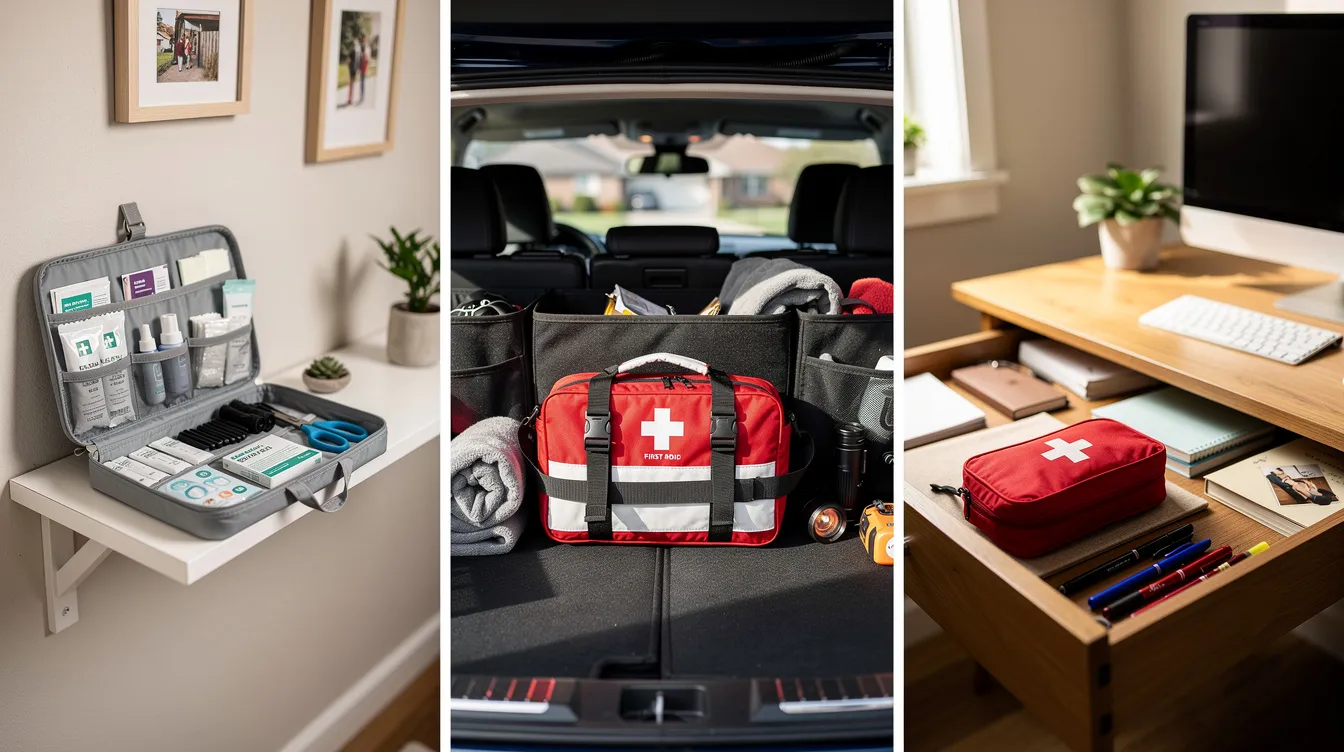
In tiny apartments and compact offices, the container is as important as the contents. Compact emergency kits are ideal for small living spaces, so pick a sturdy plastic tackle box, slim hard case, or soft zip pouch that fits in a 12-inch deep shelf or standard desk drawer.
Label the outside with bold "FIRST AID KIT" text plus simple icons so any family member or guest finds it fast in an emergency. First aid kits should be easily accessible and child-proof. Organize the inside into compartments: one for bandages and dressings, one for medications, one for tools like scissors and tweezers, and a small pocket for bleeding control items. For humid bathrooms or balcony storage, use a gasketed lid or water-resistant seams to protect contents.
3. Core First Aid Supplies: The Non-Negotiables
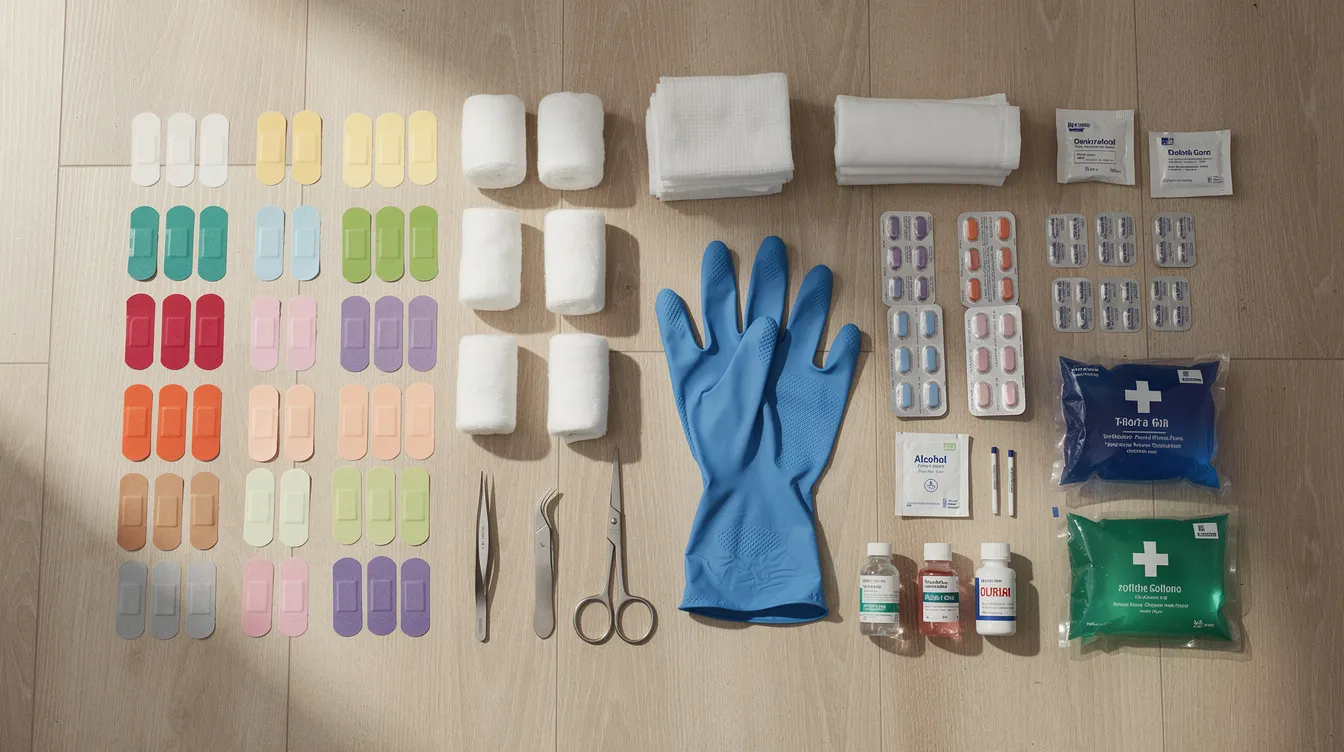
This section lists the absolute must-have items for any basic first aid kit. Essential items include band-aids, antiseptic wipes, and gloves-these form the backbone of every kit, regardless of size. Here are the non-negotiables:
| Category | Items | Suggested Quantity |
| Bandages | Adhesive bandages in assorted sizes, sterile gauze pads (3"×3" or 4"×4"), gauze roll, medical tape | 20 bandages, 4–6 pads |
| Wound cleaning | Hydrogen peroxide (3%) or saline spray, antiseptic wipes, antibiotic ointment | 1 small bottle, 10–20 wipes |
| Tools | Blunt-tip medical scissors, fine-tip tweezers, nitrile disposable gloves, small flashlight with extra batteries, digital thermometer, cotton tipped swabs | 4–6 gloves, 1 each tool |
| Medications | Ibuprofen, acetaminophen, antihistamine tablets, anti-diarrheal, aspirin | A few doses each |
| Sprains & bruises | Instant cold packs, elastic bandage wrap | 2 cold packs, 1 wrap |
Tweezers are essential for removing splinters and small debris. A digital thermometer is important for monitoring fevers during illness. Antiseptic wipes are used to clean wounds before bandaging, and disposable gloves protect against infection while treating wounds. Items like sterile gauze pads and adhesive bandages help control bleeding. Cold packs help reduce swelling and pain from minor injuries.
A first aid kit should include basic pain management medication. Consider keeping aspirin in your first aid kit-include aspirin specifically for chest pain scenarios, as nurses and emergency physicians recommend it as an immediate response measure during a suspected heart attack. Also keep a first aid manual and emergency phone numbers inside the kit.
4. Bleeding Control: Small-Space Gear for Big Emergencies
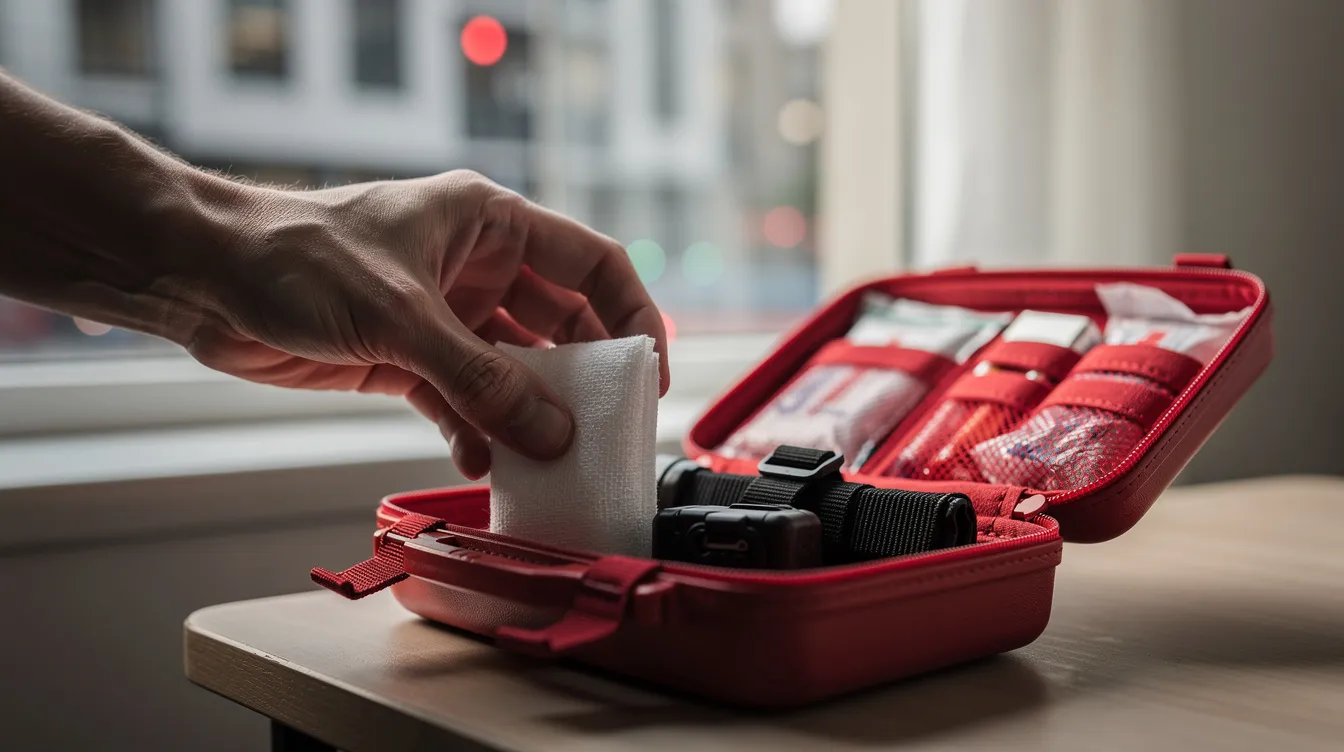
Serious bleeding can become life-threatening in minutes. Even a basic kit should include at least a simplified bleeding control setup. Include one trauma or pressure dressing (a 4-inch emergency bandage) and several large sterile gauze pads reserved for serious wounds-not everyday scrapes.
If budget allows, add one compact, reputable tourniquet. Store it on top of the kit for instant access. AHA First Aid Guidelines (2025) recommend manufactured tourniquets as first-line therapy for life-threatening extremity bleeding when standard methods fail-paired with training. Review an online tutorial or attend a local class before relying on one.
If no dedicated trauma dressing is available, create a makeshift pressure bandage using gauze plus the elastic wrap already in your aid kit. Apply firm direct pressure and wrap tightly. For major accidents, the priority is: call emergency services immediately, apply direct pressure, then leverage bleeding control tools while staying on the line with dispatch.
5. Tailoring Your First Aid Kit to Home, Car, and Tiny Office
First aid kits can be tailored to specific activities. One base kit can be cloned or adapted for different locations-a strategy that works especially well for renters and remote workers managing multiple small spaces. First aid kits can be customized for specific needs, including children or pets. Consider tailoring your emergency kit to your household's specific risks.
- Home kit: Add burn gel or calamine lotion for kitchen burns, extra bandages for everyday cuts, children's formulations of pain relievers if kids are in the household, and a small CPR face shield. Emergency contact information should be included in every first aid kit.
- Car kit: Include a high-visibility emergency blanket, extra gloves, a small bottle of drinking water, and extra gauze for roadside accidents-all in a hard case that can survive trunk heat in your vehicle. This kit should be easy to carry.
- Tiny office or desk kit: A slim pouch with bandages in various sizes, pain relievers, and allergy tablets. It slides into a laptop bag or file drawer without stealing workspace.
Label each kit with its location and last-check date-for example, "Apartment Hall Closet – First Aid Kit – Checked March 2026." This keeps you prepared when managing multiple aid kits across small spaces.
6. Budgeting and Finding a Lower Price Without Sacrificing Safety
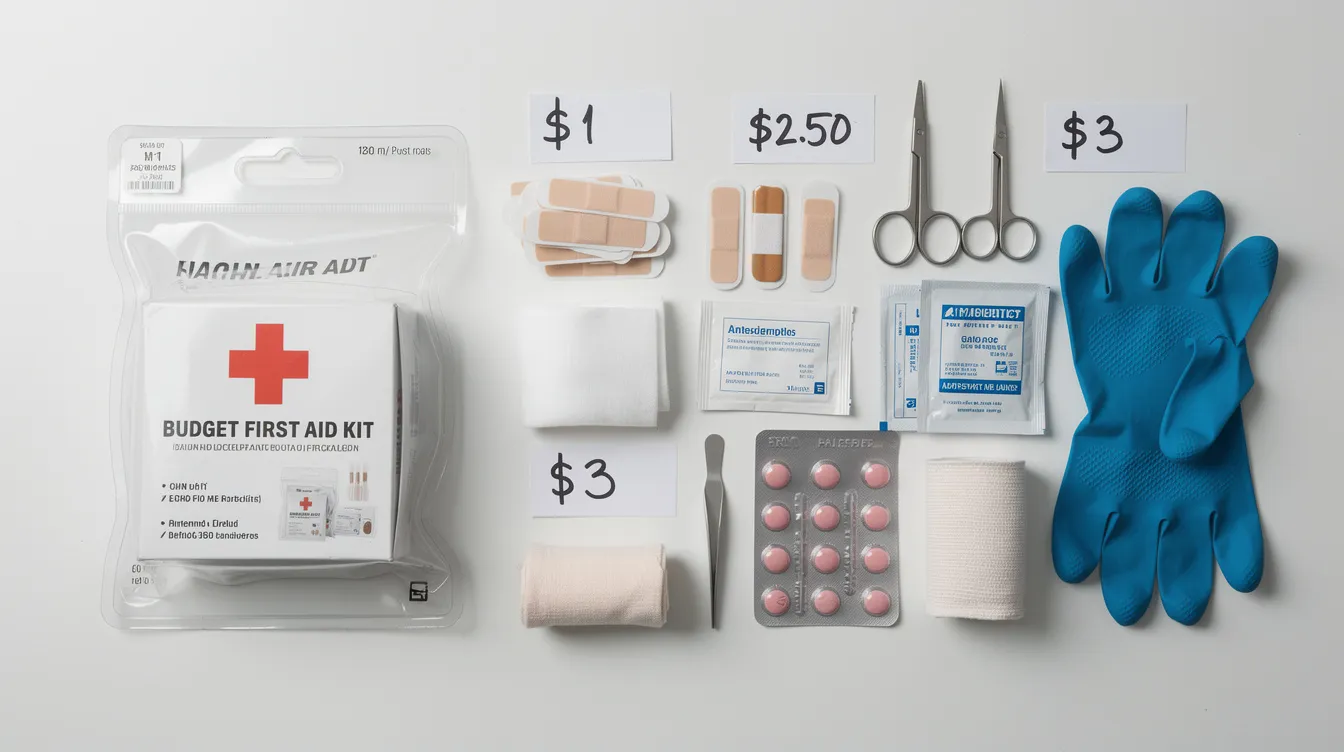
Many people assume first aid kits are expensive. They don't have to be. A prepacked 100-piece first aid kit might cost $10–$25 on the market, while building your own from drugstores or online could range from $25–$45 depending on brand choices. You can often sell yourself on the DIY approach once you see the price difference.
Items safe to buy as generic: gauze, adhesive bandages, tape, gloves. Components worth paying more for: a reliable tourniquet, quality trauma dressing, and sturdy case with durable zippers. Check for FSA/HSA eligibility where applicable and stock up on first aid supplies during seasonal sales before summer camping, outdoor travel, or back-to-school day.
From Small Space Emergency's perspective, prioritize a compact, durable container and high-value essentials over flashy extras packed with redundant items. Purpose-driven spending keeps the kit small, functional, and cost-effective.
7. Where to Store First Aid Kits in Small Homes and Apartments
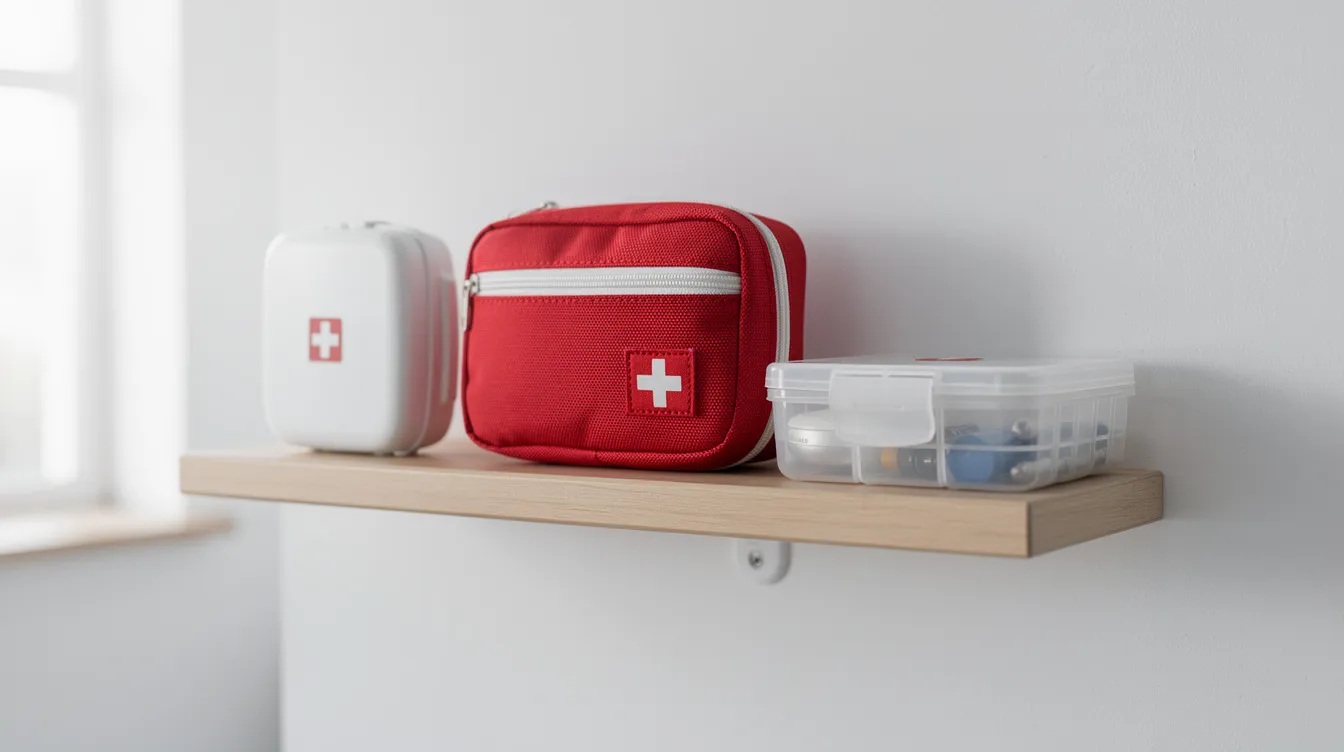
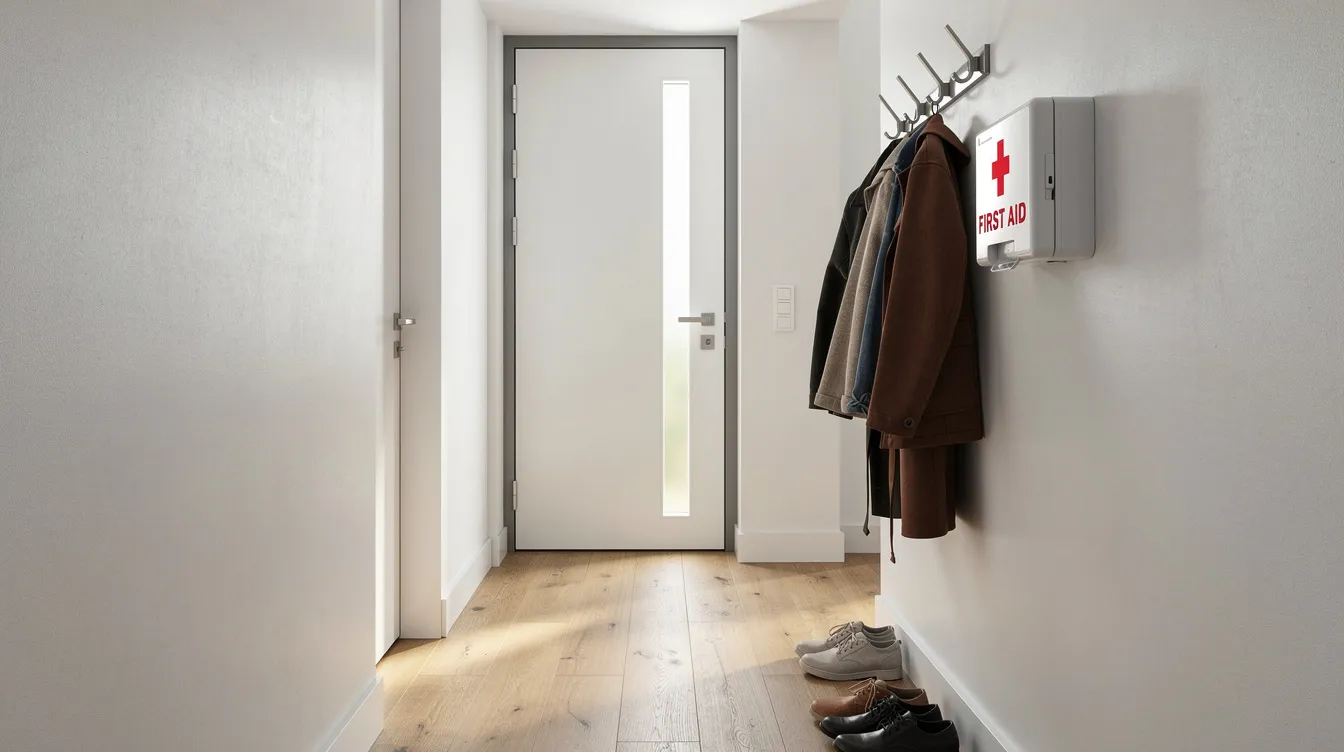
In small spaces, placement matters. Store first aid kits in easily accessible locations-reachable in a power outage or at night-yet kept away from very young children. Store emergency kits where you can grab them in seconds.
Best spots:
- Inside a hallway closet at chest level near the main exit
- On a wall-mounted shelf near common risk areas (kitchen, workshop corner)
- In a labeled bin in a micro-laundry nook
Avoid:
- Very top of high cabinets or behind stacked boxes
- Locations exposed to steam, direct sunlight, or extreme temperature swings
- Bathrooms with heavy humidity (more on this in the FAQ)
The car kit should be fixed in place using straps or a trunk organizer so it doesn't slide during work commutes. Tiny office kits can live in the same drawer as emergency documents-a natural, free spot that keeps everything in one location.
8. Maintaining and Using Your First Aid Kit Confidently
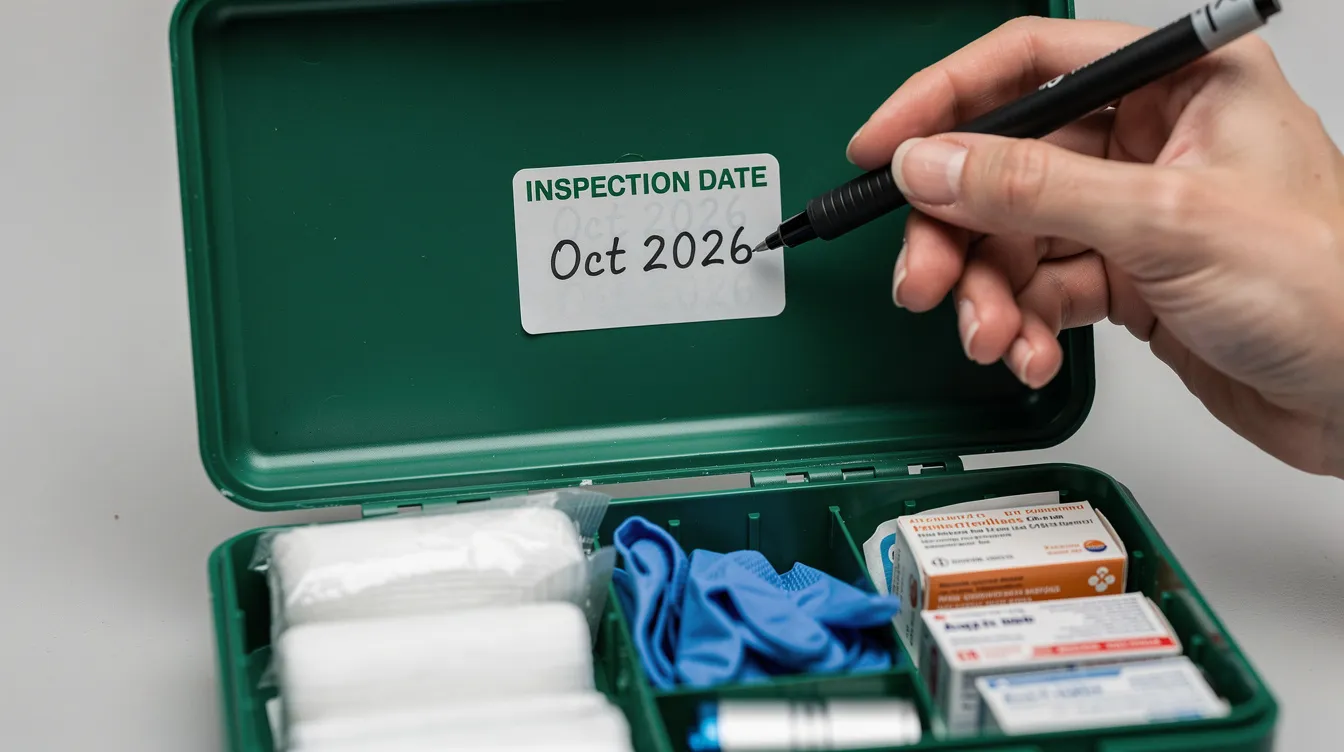
The most common failure isn't having no kit-it's a kit that's empty, expired, or unfamiliar. Maintaining a first aid kit requires regular inspection and replenishment of supplies. Regularly check first aid kits for expired supplies. Check first aid kits regularly-every 6 to 12 months-to replace expired medications, used bandages, and flashlight batteries.
Add a simple checklist or inventory card inside the lid with a "Last Checked" date. Sync this check with a recurring event like daylight saving changes or spring cleaning so it becomes habit, not a one-time task.
Encourage family members to practice: open the kit, touch or name key items (gloves, bandages, tourniquet) so that in an emergency they know where everything is. Short first aid classes, online CPR and bleeding control videos from the IFRC, and neighborhood workshops help turn a box of first aid supplies into confident first aid response actions that can save lives.
9. Visual Guide: 10 High-Impact Photo Ideas for a Basic First Aid Kit Listicle
These 10 photo concepts are HDR, photorealistic, and designed to match the article's clean, modern style. Use them as a shot list for your designer or photographer.
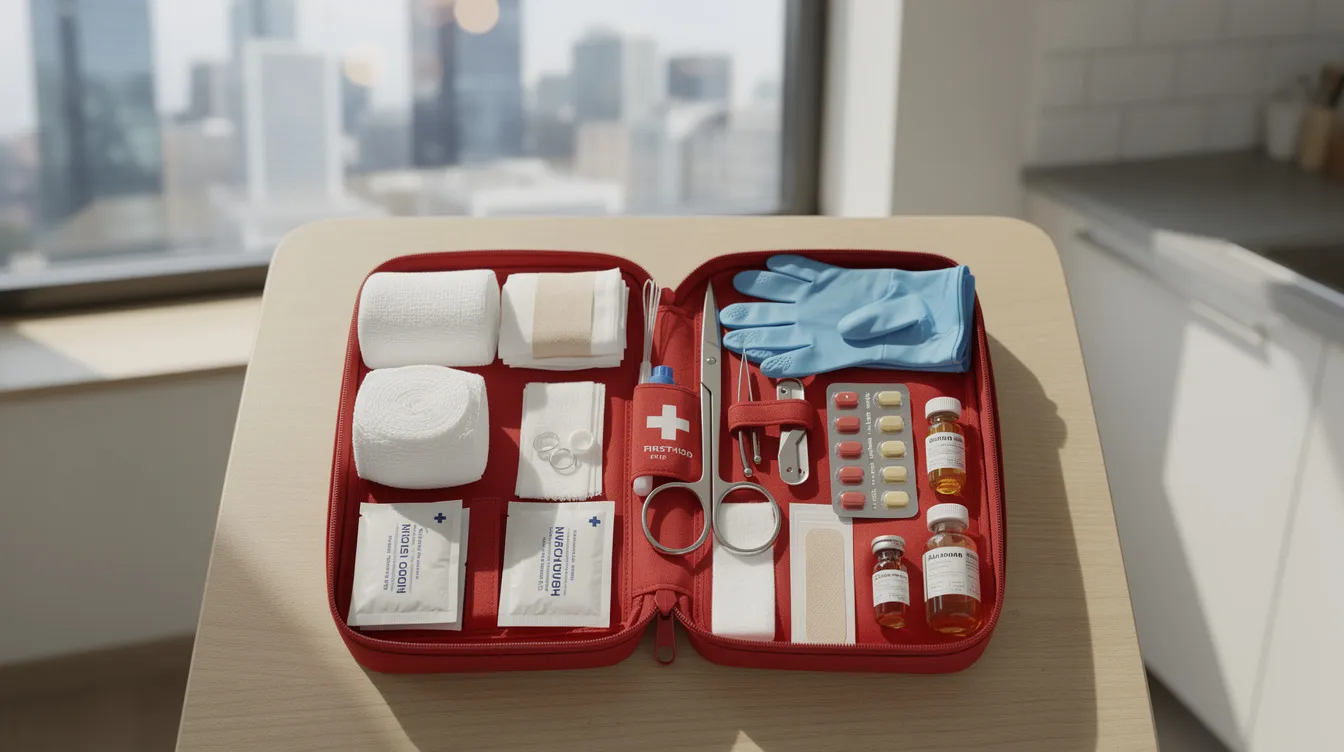
- 1Overhead kitchen table: Compact red first aid kit open on a small kitchen table in a city apartment, all items arranged, soft morning light.
- 2Hallway wall mount: Narrow hallway with a clearly labeled first aid box next to a door, shoes and umbrella stand visible for realistic scale.
- 3Hands applying gauze: Someone wearing blue nitrile gloves applying a sterile gauze pad and tape to a minor cut on a forearm.
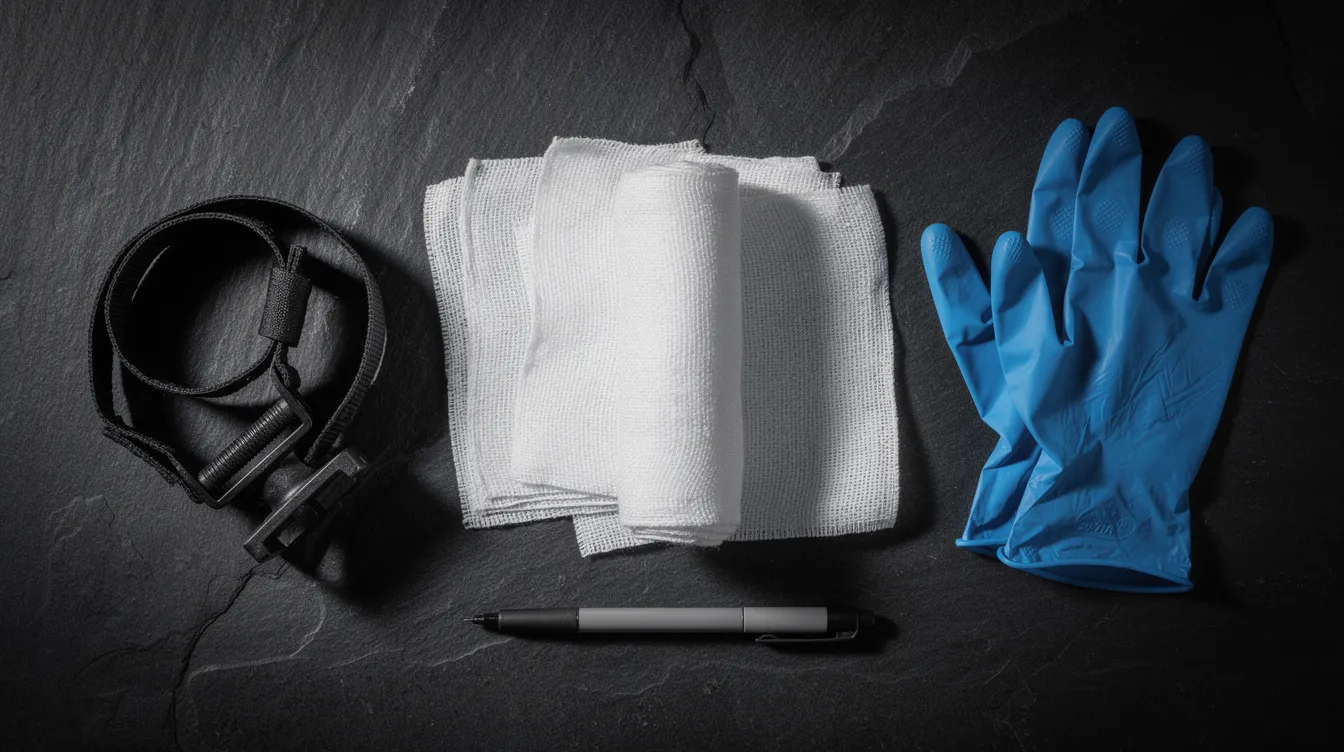
- 4Bleeding control flat-lay: Trauma dressing, tourniquet, large gauze pads, gloves, and marker on a dark background for dramatic contrast.
- 5Car trunk setup: Hard case first aid kit inside a car trunk organizer alongside jumper cables and an emergency blanket.
- 6Home office desk: Laptop, notebook, and a slim soft-pouch first aid kit partially unzipped in a drawer.
- 7Family education moment: An adult showing a school-age child where the first aid kit is stored on a low shelf in a tiny living room.
- 8Before and after comparison: Cluttered, overflowing first aid box versus a streamlined, well-organized compact kit side by side.
- 9Medication close-up: Digital thermometer, blister pack of ibuprofen, and antihistamine tablets next to a notepad with dosing instructions under warm indoor light.
- 10Nighttime power outage: A person using a small flashlight to locate and open a first aid kit on a shelf in darkness.
FAQ: Basic First Aid Kits for Small Spaces
How small can a first aid kit be and still be useful?
Even a kit that fits in a shoebox or large toiletry bag can be very effective if it includes bandages, gauze, tape, antiseptic wipes, gloves, a few medications, and at least one larger dressing for serious cuts. For extremely tight spaces like a studio apartment or motorcycle storage, build a micro kit the size of a smartphone power bank for daily carry, then keep a larger kit stored at home.
Should I buy a prepacked kit or build my own?
Prepacked first aid kits are fast and often come at a lower price per piece, but may include items you never use. DIY kits let you choose exactly what you need for your household and local risks. The best approach is a hybrid: buy a reputable prepacked aid kit as a starting point from a store or online, then add missing bleeding control items, preferred medications, and any personal prescriptions.
How often should I replace items in my first aid kit?
Check the kit every 6–12 months to replace expired medicines, dried-out wipes, and used bandages, and to test the flashlight batteries. Sync this check with a recurring event like spring cleaning or time-change weekends so it becomes habit rather than a forgotten task.
Can I keep a first aid kit in my bathroom?
While many people store first aid supplies in the bathroom, steam and humidity can damage bandages, adhesive strips, and labels. Store the main kit in a dry area like a hallway closet or bedroom shelf. A very small subset of items-a few bandages and a pain reliever-can stay in a bathroom drawer if needed, but the primary aid kit should live somewhere cooler and drier.
What's the difference between a first aid kit and a trauma kit?
A basic first aid kit focuses on everyday injuries and short-term care-cuts, scrapes, sprains, fevers-while a trauma kit emphasizes serious bleeding control and life-threatening injuries with more advanced gear. Most small homes can start with a solid basic kit and then add a few trauma-focused components like a tourniquet and trauma dressing to bridge the gap without needing a full professional responder kit.
Editorial note: this guide provides general preparedness information, not emergency, medical, legal, or engineering advice. Recommendations are cross-checked against public emergency-management guidance and adapted for small-space living. During an active emergency, follow your local authorities and emergency services. See our editorial standards and affiliate disclosure.