Personal Survival Pack for Small Spaces: Complete Outline & Visual Guide
A well-prepared personal survival pack increases self-reliance during unexpected emergencies. This visual guide covers exactly what goes inside a compact 72-hour kit, where to store it in a 400-square-foot apartment, and how to keep it ready to grab in under 10 seconds.
Key Takeaways
- A personal survival pack typically includes food, water, and first aid supplies packed into a single 20-30 liter bag weighing under 15 lbs, sized for one adult for 72 hours.
- Keep emergency kits accessible at home, work, and in cars so you are never more than arm's reach from survival kit supplies.
- Mini survival kits fit in a mint tin and serve as backups when your main pack is out of reach.
- Store items in airtight plastic bags and keep emergency supplies in one or two containers near your primary exit.
- A twice-yearly inspection of food, water, batteries, and medications keeps everything current and ready.
What Is a Personal Survival Pack (PSP)?
A personal survival pack is a grab-and-go emergency kit tailored to one person for at least 72 hours. FEMA recommends a 72-hour supply for emergency kits, and that benchmark reflects how long government aid typically takes to reach affected areas after events like winter blackouts, wildfires, or urban water main breaks.
A PSP differs from larger family survival kits in weight, mobility, and focus. Bug-out bags contain supplies for 72 hours but can balloon past 25-40 lbs when built for multiple people. A personal survival pack should be easy to carry and stored in an accessible location; the target is 10-15 lbs for most adults.
At Small Space Emergency, we design every recommendation for apartments, studios, and tiny homes where a cubic foot of storage has to justify itself. The rest of this article is a practical, visual listicle: each section pairs high-resolution photographs with scannable checklists and concrete tips.
Photo Guide: 10+ Visual Ideas for Compact Personal Survival Packs
Every image below follows a consistent style: shallow depth of field, soft natural light, neutral backgrounds, and color accents from high-visibility gear.
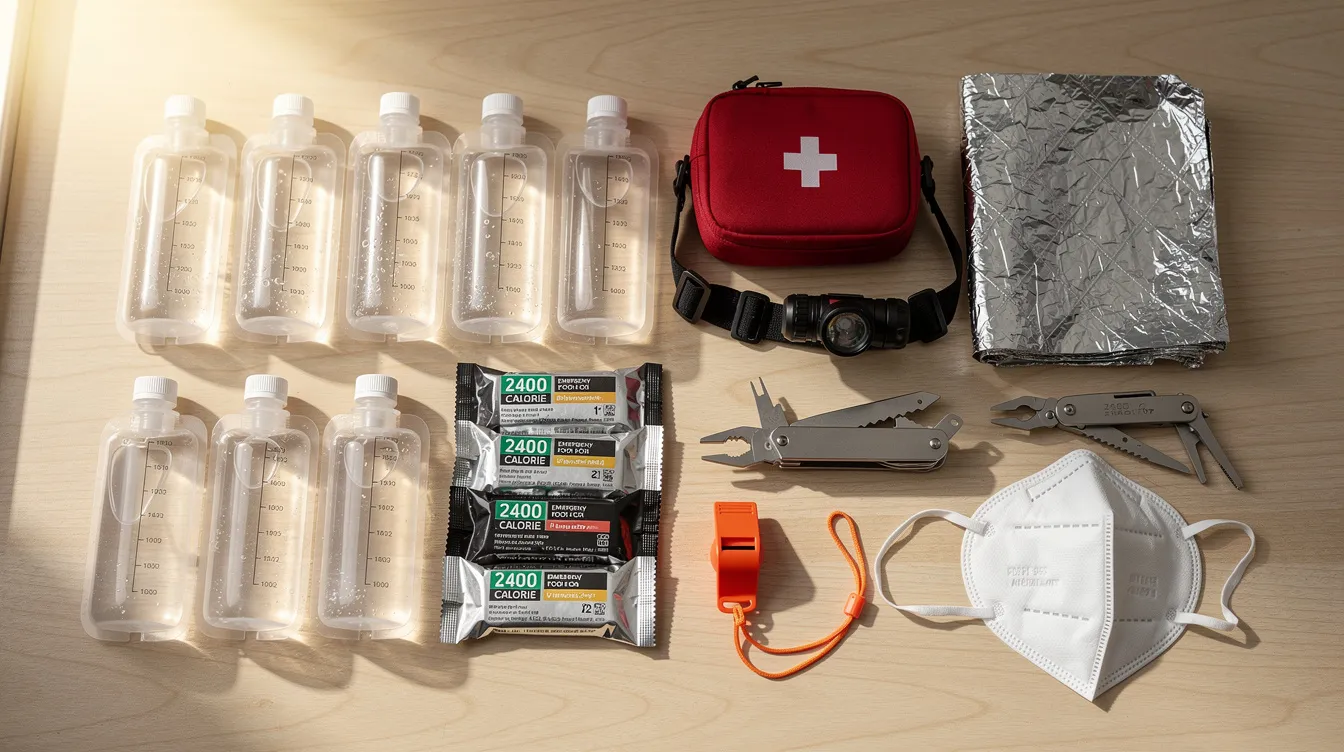
1. The Full Kit Flat Lay. Every basic survival item visible at a glance: water, food, first aid kit, light, shelter, tools, and documents.
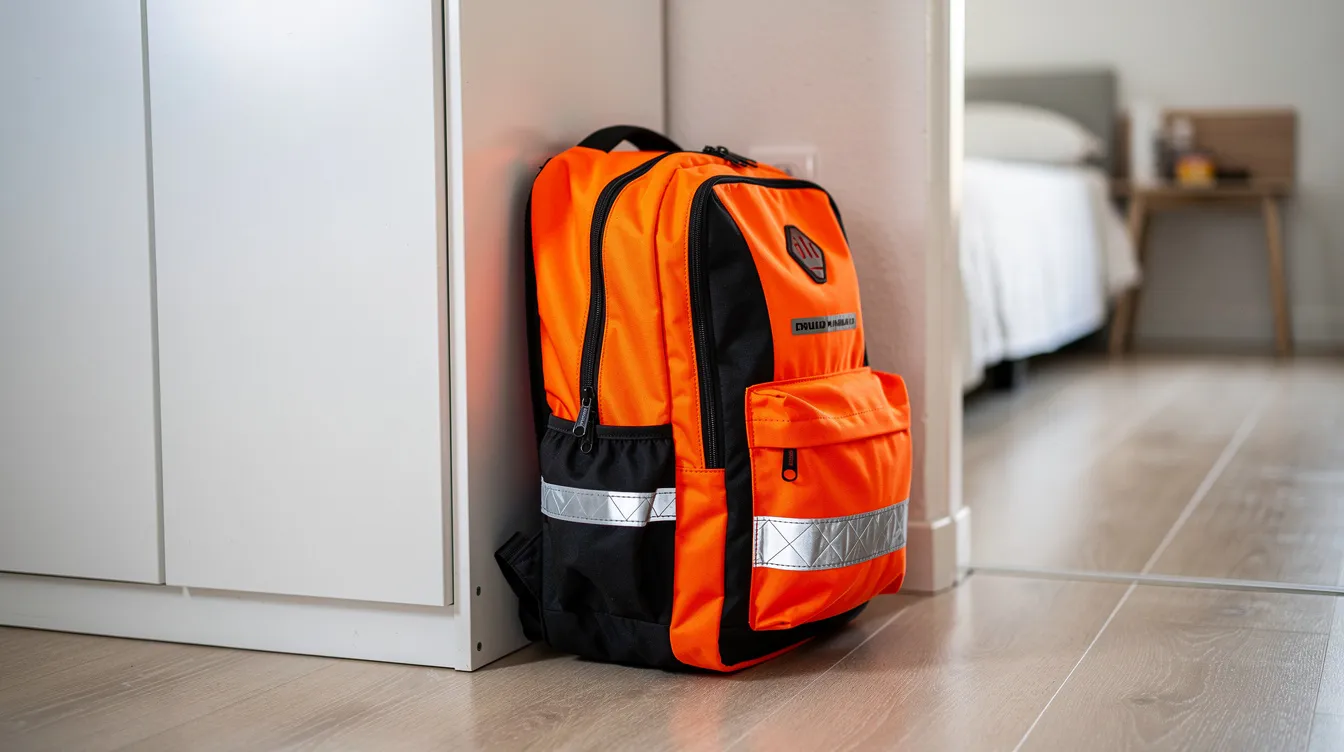
2. Vertical Storage in a Studio. A slim 25-liter pack takes up less than 6 inches of wall space between furniture.
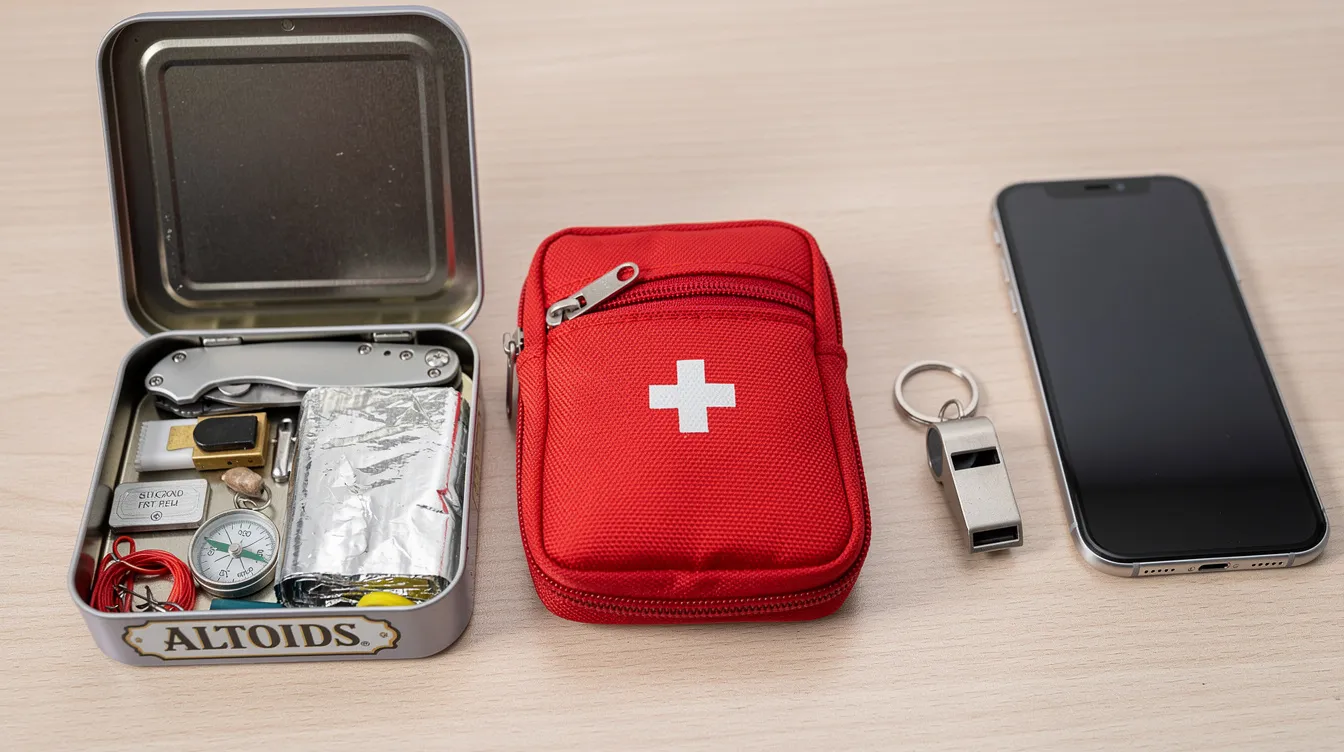
3. Mini Kit Scale Check. Three small kits next to a smartphone for size reference. Wearable survival kits integrated into bracelets or belts fit even tighter spaces.
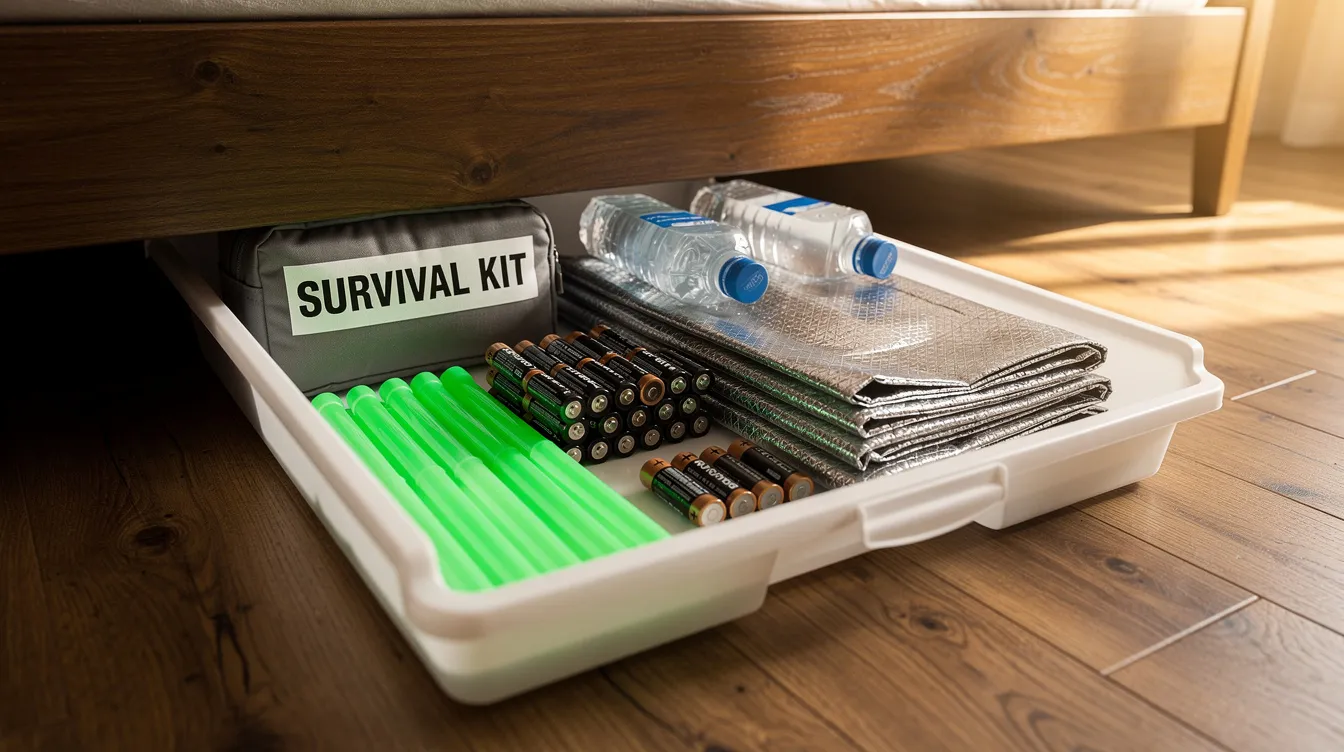
4. Under-Bed Pull-Out Bin. Emergency kits should be stored in easy-to-carry containers. This bin holds the main pack plus additional emergency supplies.
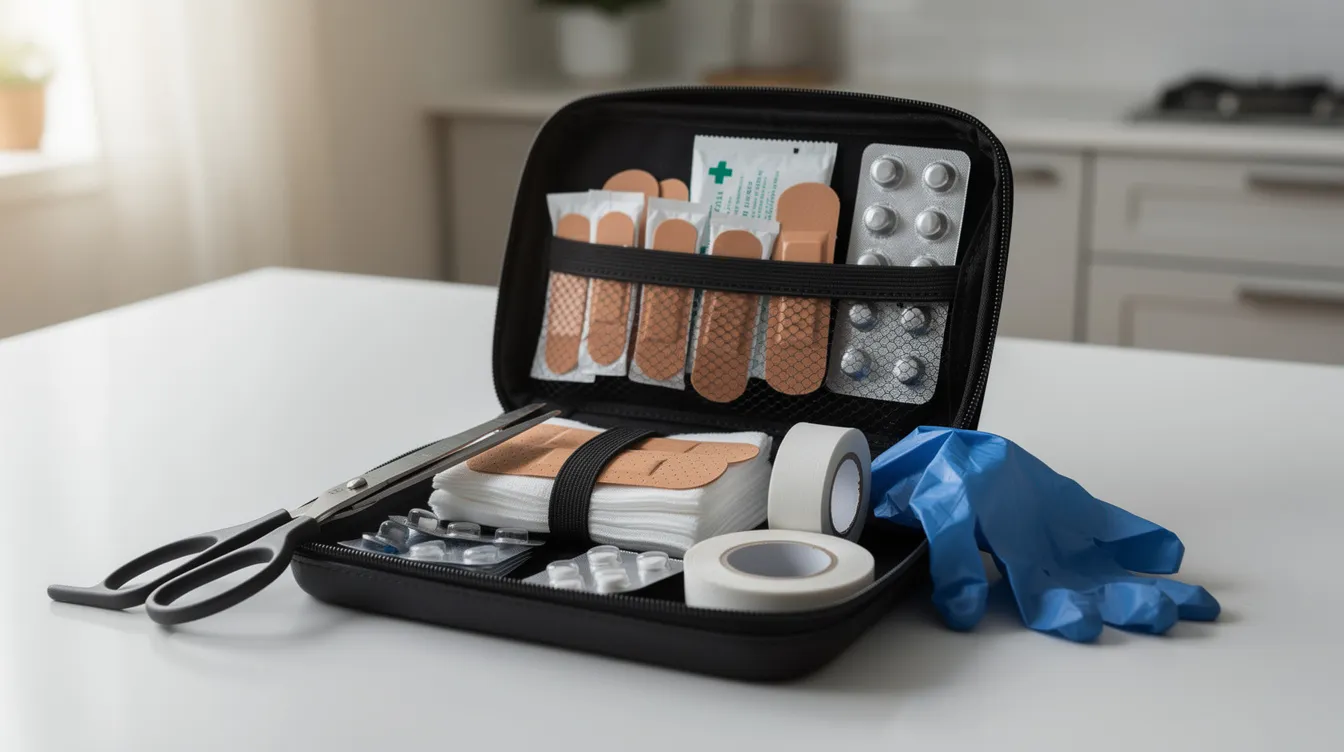
5. First Aid Kit Close-Up. A comprehensive first-aid kit is essential for managing emergencies. Label medication expiration dates with a marker.
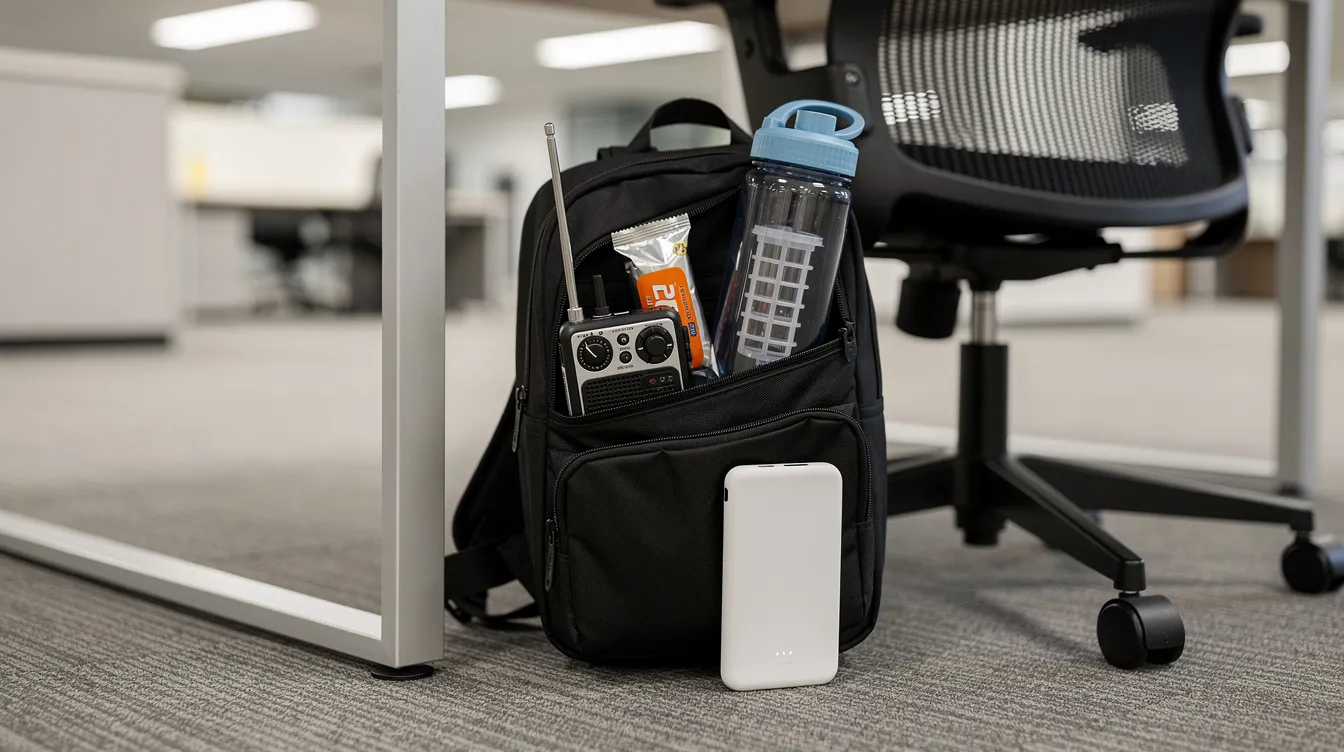
6. The Office Desk PSP. Get me home kits help return home during emergencies; keep one at work with a hand crank radio and a battery powered phone charger.

7. Stairwell Evacuation Test. A reliable flashlight with extra batteries should be included in every survival pack. Test yours on your building's stairs.
8. Closet Door Hook System. Vertical storage frees floor space and keeps your pack within reach in the dark.
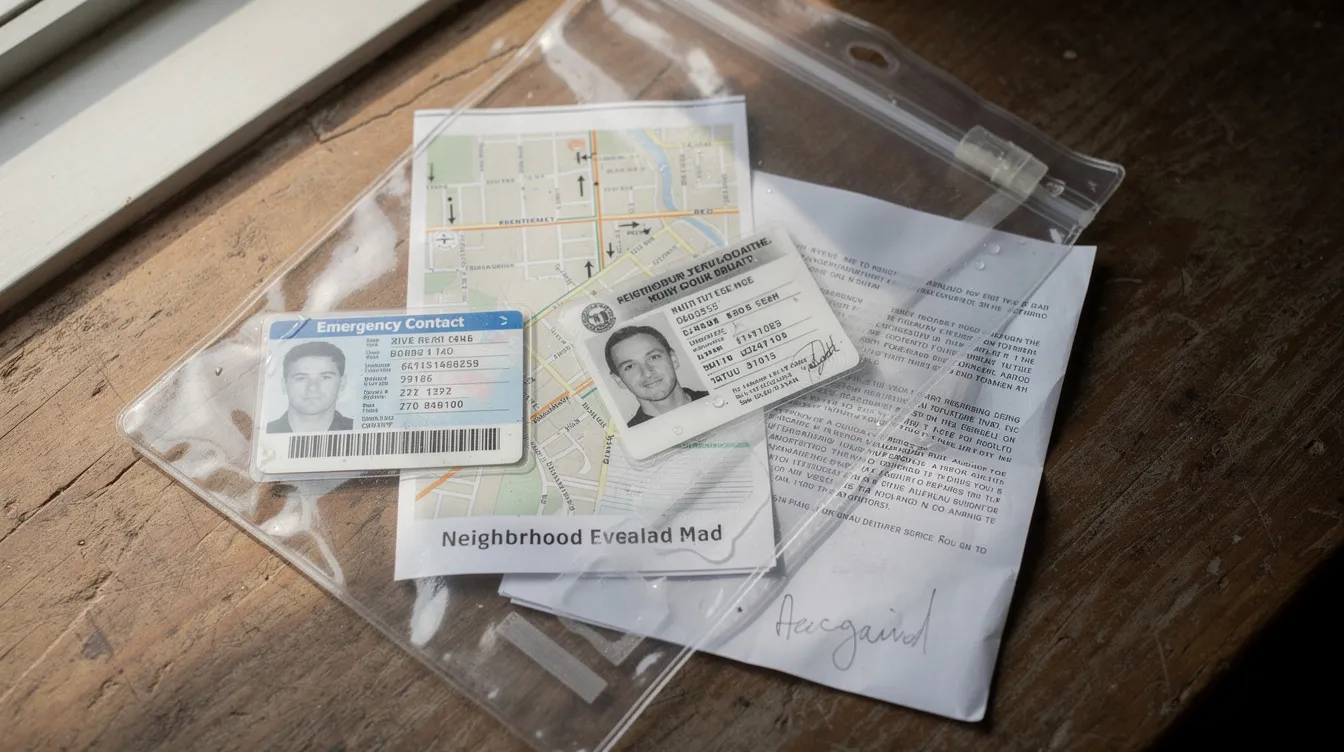
9. Document Pouch. Important documents should be stored in a waterproof container for emergencies. Include bank account records, photocopied IDs, and a printed contact list.
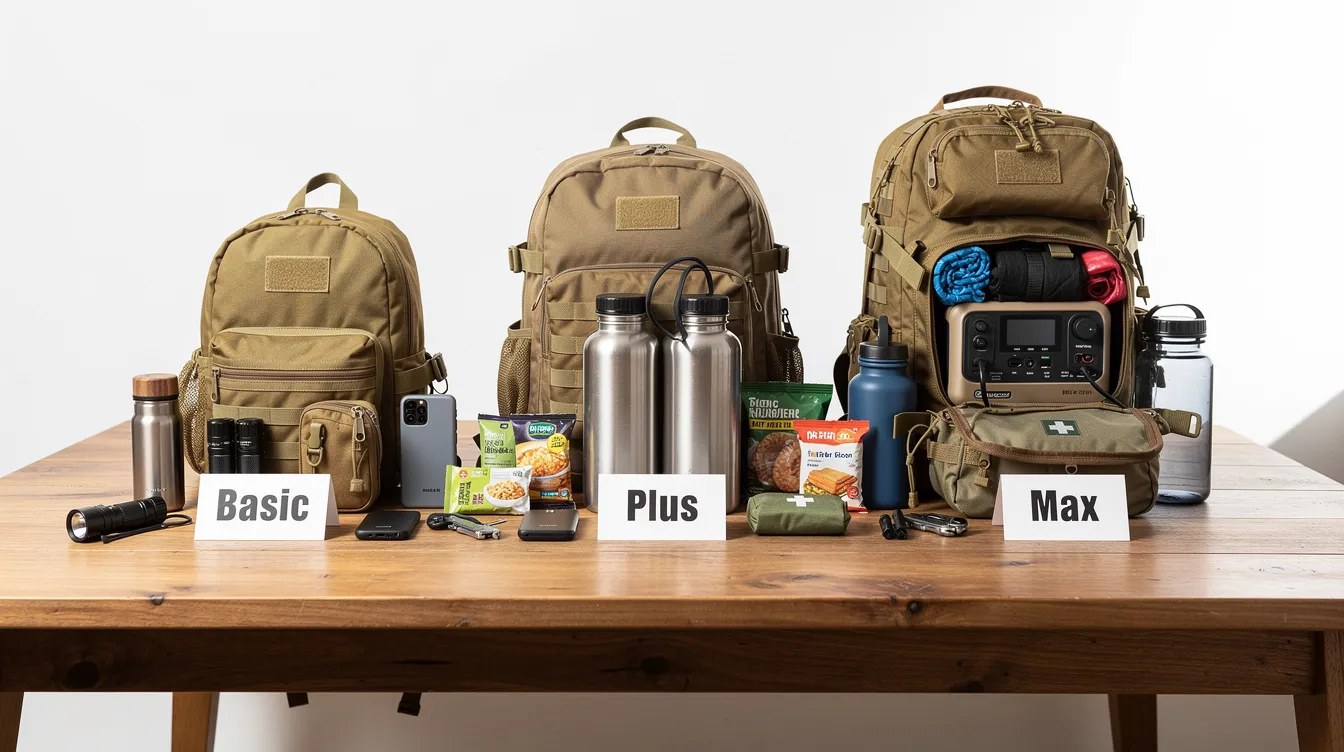
10. Three-Tier Comparison. From several basic survival kits to a fully loaded 30-liter pack, pick the tier that fits your space and budget. Pre packaged survival kits from trusted brands range from $120 to $350.
Core Contents of a Personal Survival Pack
Include basic supplies like water, food, and first aid. Below is a scannable checklist for a complete emergency supply kit that fits in one backpack.
Water & Hydration
- 2-3 liters of sealed emergency water pouches (5-year shelf life)
- Collapsible 1-liter BPA-free bottle for refill
- Water purification tablets (10-pack) or compact filter rated to remove 99.9999% of bacteria
Food & Nutrition
- Compact, high-energy food items are preferred: 2,400-calorie emergency food bars with 5-year shelf life
- Non perishable food like dried fruit, jerky, peanut butter packets
- Manual can opener if any canned items included
First Aid Kit
- Assorted adhesive bandages, 4x4 gauze, rolled bandage, antiseptic wipes
- Trauma shears, medical tape, nitrile gloves, safety pins
- Pain relievers, antihistamines, anti-diarrhea medication, anti infection tablets
- Personal prescriptions (3-7 days), prescription eyeglasses
Light & Power
- LED headlamp and LED flashlight with extra batteries whistle combo
- 12-hour light sticks (no batteries needed)
- Power bank (5,000-10,000 mAh); a NOAA weather radio or survival radio for emergency broadcasts
Warmth & Shelter
- Emergency thermal blanket, lightweight survival bivvy or poncho
- Spare wool socks, thin gloves, additional cold weather clothing for winter
- Compact emergency shelter or tarp with paracord
- Sleeping bags or a portable container sleeping bag for extended outdoor evacuations
Tools & Navigation
- Keep a multifunction tool or knife in the survival pack for repairs and cutting (3.5-inch blade)
- Maps and a compass are advised for navigation during emergencies; carry local maps cell phone charger backup
- Wind-storm whistle for signaling
- Basic survival tools: duct tape wrap, plastic ties for personal sanitation tasks, fire making kit contained in a waterproof pouch for fire starting
Respiratory & Safety
- Dust mask or N95/KN95 masks (at least two) to filter contaminated air
- Hand sanitizer, sanitizing wipes
- Garbage bags and plastic sheeting for improvised barriers or personal sanitation
- Paper towels for cleanup; plastic ties, garbage bags, and bags and plastic ties for waste disposal
Documents & Cash
- Waterproof pouch with ID copies, insurance, lease, car keys, emergency contacts
- Cash in small denominations ($40-$100) is important as ATMs may not function during outages
Don't Forget: Medical supplies like spare inhalers or EpiPens, pet food for animals, baby food and diaper rash cream for infants, and spare house keys.
Mini Survival Kits: Pocket, Desk, and Car Setups
Mini survival kits complement your main pack. They do not replace it.
Pocket / EDC Mini Kit: An Altoids-tin holds water purification tablets, stormproof matches, a tiny ferro rod, a small button compass, folded duct tape, a micro fishing kit with fish hooks and fishing line, and two pain reliever tablets. Weight: under half a pound.
Work Desk Kit: Sealed water pouch, energy bar, compact aid kit with bandages and antiseptic, light stick, whistle, spare phone charging cable, and basic first aid methods instructions printed on a card.
Car Kit: Two small water bottles, 2,400-calorie food bar, emergency blanket, light sticks, compact LED flashlight, multi-tool, phone charger, and a printed local map. Store under the seat where it tolerates temperature swings. Emergency kits should last for at least three days; a basic emergency kit should last for three days minimum even in your vehicle.
Designing a PSP for Small Spaces & Urban Living
Prepare supplies for home, work, and vehicles, but start with the home pack.
Bag Choice: A 20-30 liter high-visibility backpack or crossbody sling bag. Urban Go Prep's 3-day kit fits a roughly 30-liter bag at 11 lbs total.
Weight & Fit: Target 10-15 lbs for adults, under 10 lbs for anyone over 65. Test it on your building stairs.
Compression & Organization: Use labeled zip pouches (Water, First Aid, Tools, Food) and vacuum bags for spare clothing. Packing cubes cut rummaging time during a blackout.
Storage Ideas: Mount hooks inside a closet door. Place tall narrow bins next to the fridge. Hang the pack behind your bedroom door. Use a decorative storage ottoman near the entry. The goal: reachable in 10 seconds, even in darkness.
Discretion: Subdued exterior color with reflective strips balances theft deterrence and low-light visibility in shared hallways.
Building a Layered Survival Kit System (Home, Work, Vehicle)
Enough supplies spread across three locations means you are never caught empty-handed.
| Location | Priority Items | Weight Target |
| Home | Full 72-hr survival kit supplies, complete first aid, shelter gear, supplies prepared for 3+ days | 12-15 lbs |
| Work | First aid, light, communication, 1-day water and food, compact thermal blanket | 5-7 lbs |
| Vehicle | Heat-tolerant water pouches, food bars, jumper cables, basic tools, signaling devices, emergency shelter | 8-12 lbs |
Add pet food, baby items, or mobility aids to whichever layer makes sense. Create a one-page checklist mapping what lives where so you can spot gaps immediately.
For comparison, specialized kits like lifeboat survival kits are stored in life rafts and include items like a raft repair kit, fluorescent sea marking dye, fishing nets, fishing equipment, a fishing kit, and a sewing kit. US helicopter crews carry survival vests with mosquito head netting, sun shade hat, a camp stove with camp stove fuel, and additional insect repellent. These military and maritime kits apply survival techniques for prolonged isolation; urban kits prioritize mobility and speed. Helicopter crews also carry medical equipment and aid methods manuals specific to remote rescue.
Customizing Survival Supplies to Your Life & Health
Tailoring your kit to specific risks is important for effective emergency preparedness. Off-the-shelf basic survival kits are a starting point, not a finish line.
- Medical: Add prescriptions (3-7 days), backup inhalers, EpiPens, condition-specific items in a labeled red pouch
- Climate: Electrolyte packets and sun protection for heat; wool hat, chemical hand warmers, and sleeping bags for cold regions
- Household: Baby food, diaper rash cream, child-dose medications for children; easy-open packaging and printed medication lists for older adults; pet food, collapsible bowl, leash, and vet records for pets
- Urban vs. Rural: Urban kits prioritize masks to filter contaminated air, navigation when transit shuts down, and stairwell evacuation tools. Rural kits lean toward outdoor basic shelter, water collection, and signaling gear
Maintaining, Updating, and Practicing with Your PSP
Maintain your kit regularly to ensure readiness. Regular inspections of food, water, and medical supplies are important for maintenance of kits.
- Every 6 months (March and September): Check expiration dates on food bars, water pouches, OTC medications, and batteries. Rotate older supplies into daily use.
- Every year: Test flashlights, headlamps, and the emergency radio. Reassess individual needs after any move, new baby, or new diagnosis.
- Seasonal swap: Rotate clothing layers, sunblock, or storm-specific gear. Add wildfire smoke masks in fire season.
- Practice drill: Time yourself grabbing and shouldering the pack in the dark using only a light stick. Target: under 10 seconds.
- Inventory card: Tuck a printed list inside the kit noting contents, last-updated date, and next review date.
Small Space Emergency's Approach to Personal Survival Packs
Small Space Emergency focuses on compact, multi-use items that stack vertically, nest inside each other, or fold flat. Our recommendations prioritize slim high-visibility backpacks, fold-flat emergency toilets, compact first aid kits, mini survival kits for desks, and wall-mounted storage systems.
Whether you build a DIY kit from the checklists above or adapt one of our recommended pre packaged survival kits, use this article as your packing and shopping guide. Start with one kit, one location, one drill.
FAQ
How much should a personal survival pack cost on average?
A complete 72-hour personal survival pack runs $120 to $350 depending on the quality of the water filter, power bank, and first aid kit. Starting with a $50-$80 basic kit and upgrading components over time is a practical approach.
Where is the best place to store a PSP in a small apartment?
Next to your main exit door, on a low closet shelf, hanging behind a bedroom door, or under the bed near the side you usually get out of. It must be reachable in seconds at night without clearing obstacles.
How often do I really need to replace food, water, and first aid items?
Most sealed emergency water and food bars carry 5-year expiration dates. Over-the-counter medications often need replacing every 1-3 years. A twice-yearly check keeps everything current and avoids surprises during an actual emergency.
Should every family member have their own personal survival pack?
Adults and teens ideally carry individual PSPs sized to their abilities. Children's items can split between adult packs. In very small spaces, one shared family kit plus one lighter grab-bag per adult is a workable compromise.
Can I use a regular backpack instead of a specialized emergency bag?
A sturdy everyday backpack works if it fits the full checklist, has strong zippers, and stays dedicated as your emergency kit. High-visibility panels and water resistance are useful bonuses found in purpose-built bags; you can add reflective tape to any pack for under $5.
Editorial note: this guide provides general preparedness information, not emergency, medical, legal, or engineering advice. Recommendations are cross-checked against public emergency-management guidance and adapted for small-space living. During an active emergency, follow your local authorities and emergency services. See our editorial standards and affiliate disclosure.