Medical Kit for Travel: Compact First Aid Kits for Every Trip
A twisted ankle on a cobblestone street, a stomach bug from unfamiliar food, or a nasty blister halfway through a city walk - any of these can turn a great trip into a miserable one. The fix is simple: pack a medical kit for travel before you leave, and know exactly what's inside it.
This visual, listicle-style guide walks you through building and packing a compact travel first aid kit that fits into carry-ons, under-seat backpacks, and even glove compartments. Every recommendation is designed for travelers who live in small spaces and pack light.
Key Takeaways
- A well-prepared travel medical kit helps handle minor illnesses and injuries like cuts and scrapes, headaches, allergies, and digestive trouble when pharmacies are closed or miles away.
- Start with a compact personal first aid kit, then add extra medical supplies - like hemostatic gauze, elastic wraps, and rehydration salts - for remote locations, longer trips, or groups with kids and older adults.
- Small Space Emergency focuses on medical kits and aid bags that fit easily into carry-ons, under-seat backpacks, and glove compartments without wasting precious storage.
- Include trauma-focused items alongside basic bandages so you can dress larger cuts and control serious bleeding until emergency care arrives.
- Below you'll find 10 specific product layouts, concrete packing tips, and high-quality photo ideas in a consistent HDR, photorealistic style to help you build the right kit for every trip.
Why You Need a Medical Kit for Travel (Not Just "Hope for the Best")
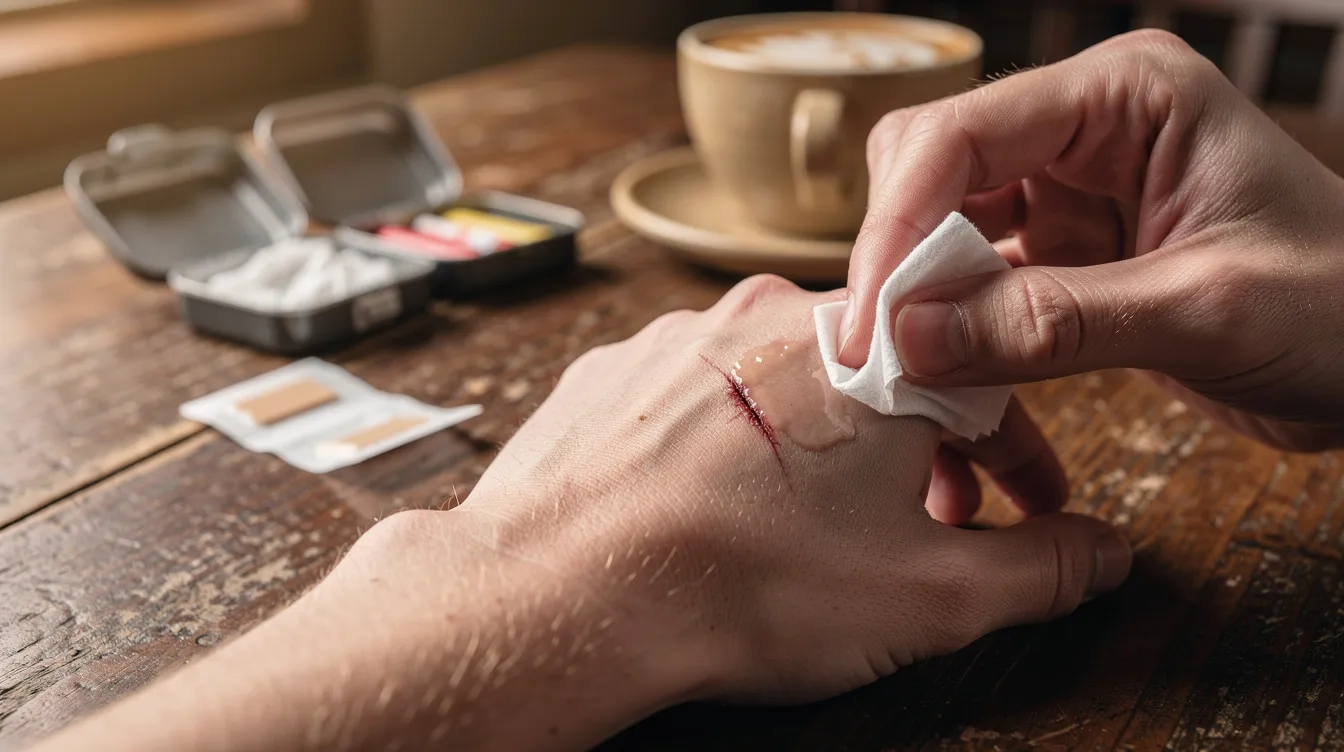
Picture this: it's 11 p.m. in a tiny Airbnb, every pharmacy within walking distance closed hours ago, and you've just sliced your palm opening a stubborn package. Without a travel health kit, you're improvising with napkins and tape. With one, you clean the wound with antiseptic wipes, apply antibiotic ointment, and cover it with a proper dressing in under two minutes.
The difference between a travel first aid kit and the generic first aid kit sitting under your bathroom sink is purpose. Travel kits prioritize compact design, Transportation Security Administration-aware contents, and focus on mobility plus limited access to medical care. Emergency physicians and organizations like the CDC consistently recommend every traveler carry one.
According to DAN's Travel Medical Guide, roughly 50% of travelers experience a health issue during their trip. Most are minor - but "minor" still means pain, lost time, and unnecessary expense if you're unprepared.
Real situations that happen constantly:
- Minor cuts on cobblestones or broken glass at a beach
- Blisters from walking 20,000 steps through a new city
- Food poisoning after adventurous street food
- Altitude headaches on a weekend hiking trip
- Insect bites that swell and itch for days
At Small Space Emergency, our readers live in small apartments, travel light, and need aid bags that take minimal space but cover common medical emergencies. Compact first aid kits fit in small spaces like backpacks, and that's exactly the philosophy behind every recommendation below.
Photo 1: Flat-Lay of a Complete Travel First Aid Kit
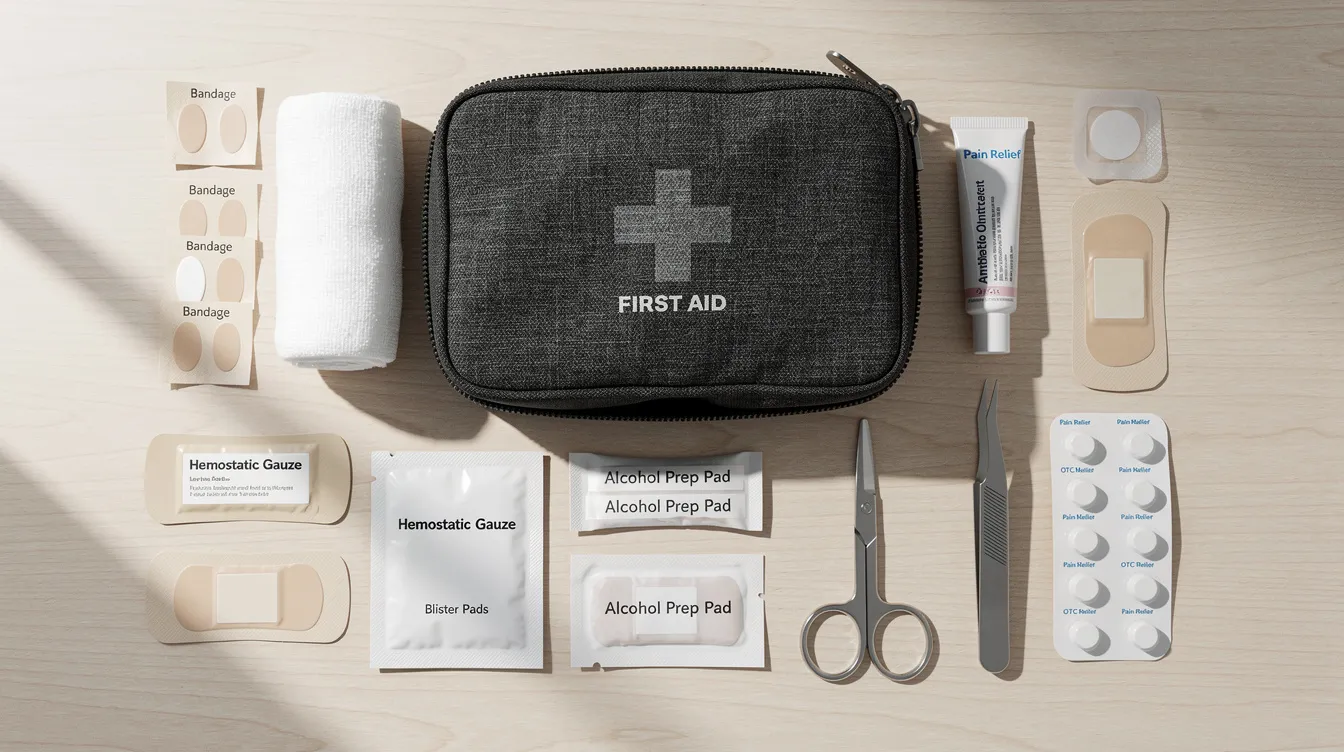
This is what a properly organized travel first aid kit looks like: everything visible, accessible, and sized to slip into a backpack or carry-on side pocket. The charcoal fabric pouch with a simple cross symbol keeps things professional and compact.
How to Choose the Right Travel Medical Kit for Your Trip
Match your first aid kit to your itinerary. A weekend city break demands different aid supplies than a two-week trek through remote locations or a family road trip with kids in the car.
Core factors to consider:
- Trip length and season - longer trips need more medication and backup supplies
- Destination healthcare quality - limited pharmacies mean you pack more; cities with good clinics mean you pack leaner
- Activities - urban sightseeing vs. backcountry camping vs. scooter rentals
- Traveler health conditions - chronic medicines, allergies, specific needs
- Luggage limits - carry-on only vs. checked bag available
The smartest approach is a "base kit" plus add-ons. Build a core personal first aid kit for everyone, then layer in extra medical supplies for higher-risk trips. Some compact kits can include up to 120 pieces, and some are waterproof and hard-shelled for durability - but bigger isn't always better. Avoid oversized, poorly organized aid kits. Compact, clearly organized medical kits work far better in small hotel rooms and hostels.
Budget ranges in 2026: an effective DIY kit costs under $25, while a pre-made premium trauma-capable kit runs $50–$100.
Photo 2: Size Comparison in a Small-Space Travel Setup
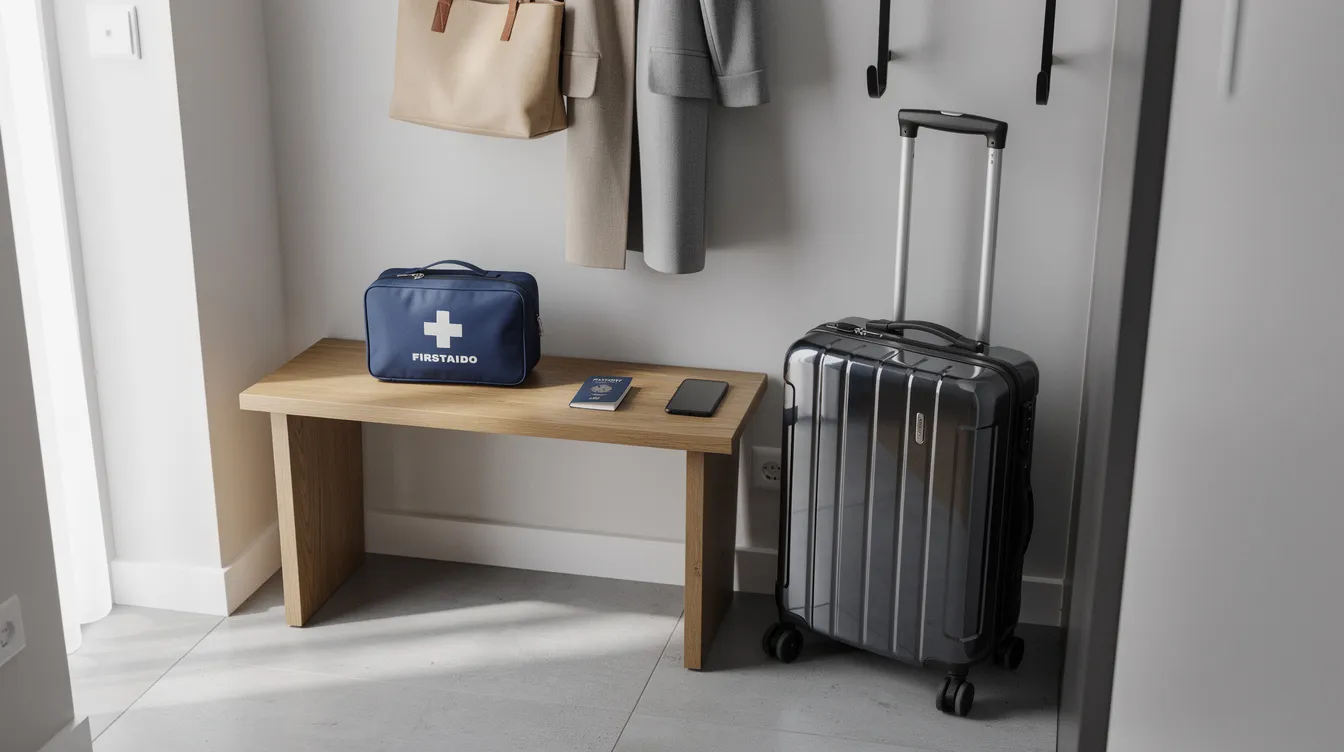
The kit fits into a small side pocket of the carry-on. If it's bigger than a paperback book, it's probably too bulky for carry-on-only travel.
Essential Contents of a Personal Travel First Aid Kit
This is the "minimum viable" kit that should live in your backpack or aid bag for every trip. A good travel first aid kit includes 10 essential items at minimum, organized into clear categories of first aid supplies.
Wound care (to cover minor cuts and scrapes):
- Adhesive bandages in assorted sizes for minor cuts
- Sterile gauze pads (2×2 and 4×4)
- Adhesive tape to secure dressings and cut tape to size as needed
- A small tube of antibiotic ointment to prevent infection
- Antiseptic wipes to disinfect wounds and clean hands
Pain, fever, and skin:
- Acetaminophen or ibuprofen to relieve headaches and reduce fever
- Hydrocortisone cream to relieve itching and relieve irritation from insect bites, rashes, and burns
- A thermometer (not mercury or glass) to check for fever
- Include a thermometer in every kit - digital compact models weigh almost nothing
Allergy and digestion:
- Antihistamine tablets to relieve allergy symptoms and treat reactions from bee stingers and bites
- Throat lozenges for cough and cold symptoms
Prevention:
- Hand sanitizer with at least 60% alcohol
- Insect repellent with 30% to 50% DEET for adults
- Broad-spectrum sunscreen with an SPF of 30 or higher for skin protection
Tools:
- Small bandage scissors (blade under 4 inches for TSA compliance)
- Tweezers to remove small splinters and foreign objects
- Safety pins to fasten splints or secure a triangular bandage
- Nitrile gloves to protect hands during wound care
Store everything in a durable, water-resistant pouch with internal pockets or elastic loops so items don't jumble. Keep medicines in original packaging or clearly labeled containers.
Photo 3: Close-Up of Wound Care for Minor Cuts
Medications to Pack: From Headaches to Food Poisoning
Pharmacies abroad may close early, stock unfamiliar brands, or sell counterfeit medicines. Pack a small, clearly labeled personal pharmacy so you can treat common issues immediately.
OTC medications by category:
| Category | What to Pack | Purpose |
| Pain/Fever | Acetaminophen, ibuprofen | Relieve headaches, reduce fever, manage pain |
| Digestive | Loperamide, oral rehydration salts | Treat traveler's diarrhea and dehydration |
| Stomach | Famotidine or similar antacid | Heartburn, indigestion |
| Nausea | Anti-nausea remedy | Flights, ferries, winding roads |
| Allergy | Antihistamines | Allergic reactions, bites |
Oral rehydration salts are crucial for treating dehydration from illnesses - especially in hot climates where fluid loss accelerates.
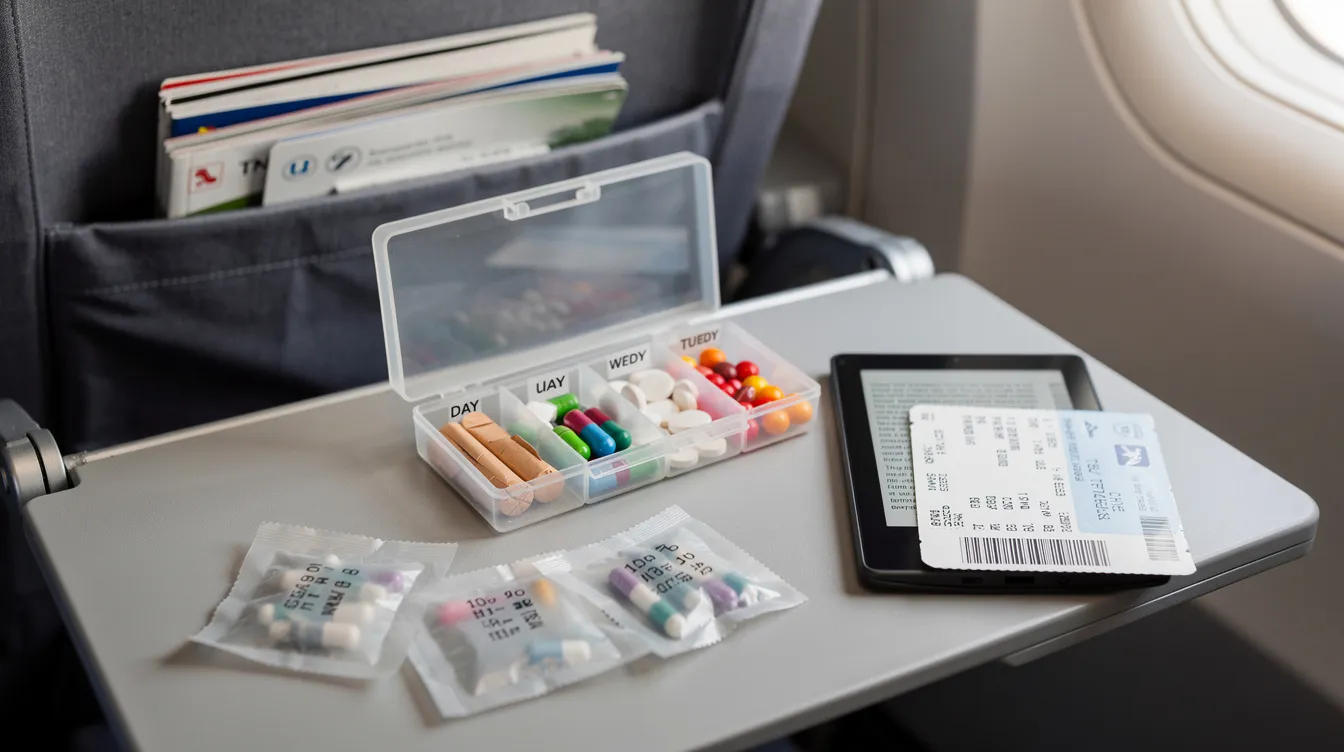
For prescription medications, always bring enough for the full trip plus 3–7 extra days in case of delays. Keep all prescription medications in their original containers for travel. Pack enough regular medications for the entire trip, and store a written list of each medication with dosages.
Consult a travel medicine clinic before departure for health advice - ideally 4–6 weeks out. Discuss travel-specific prescriptions like altitude sickness medication, malaria prophylaxis, or standby antibiotics for remote travel.
Photo 4: Compact Travel Medication Organizer
Beyond the Basics: Trauma and Bleeding Control for Remote or High-Risk Travel
Standard first aid kits are often weak on serious bleeding control. If you're planning road trips, hikes, scooter rentals, or adventure sports, upgrade your aid kit with the following items:
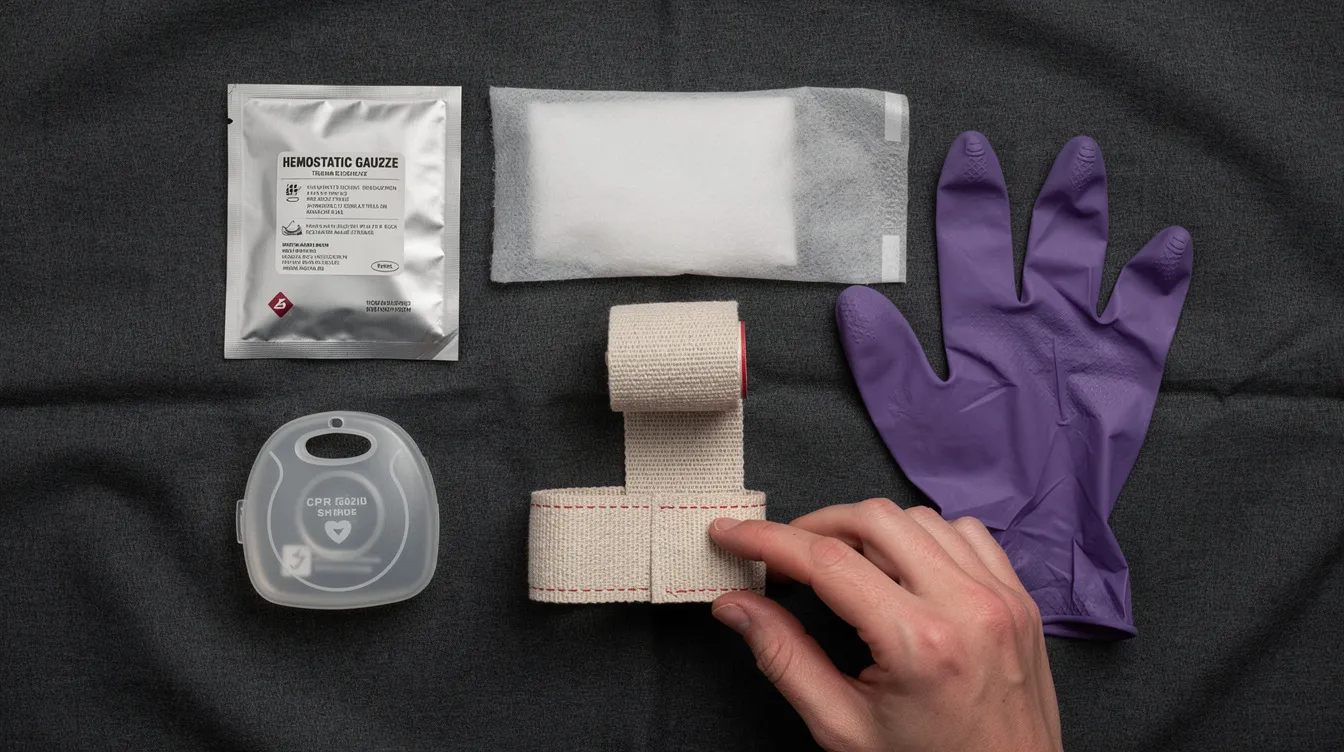
- Hemostatic gauze for rapid bleeding control - clinical data shows chitosan-based hemostatic dressings plus direct pressure controlled bleeding in under 5 minutes in roughly 51% of cases, compared to about 33% with pressure alone
- Larger sterile dressings to dress larger cuts and wrap injuries
- Elastic wraps for simple sprains and to wrap wrist or ankle injuries
- A compact tourniquet (if trained)
- A triangular bandage - multi-use for slings, head wraps, or to fasten splints
Be prepared with specific items like water purification tablets for remote areas where clean water isn't guaranteed. Instant activating cold packs fold flat and weigh almost nothing. A CPR face shield and emergency foil blanket also compress to near-zero thickness in compact medical kits.
Trauma gear is only as useful as your skills. Take a short bleeding-control or first aid course - programs like Stop the Bleed run nationwide - before relying on advanced supplies. An aid manual tucked into the kit helps too.
Photo 5: Hemostatic Gauze and Trauma Items Laid Out
Building a Family-Friendly Travel Medical Kit (Kids, Older Adults, Pets)
Families and multi-generational travel groups need to customize beyond a solo traveler's setup.
Child-specific additions:
- Age-appropriate liquid or chewable pain relievers with child safety caps
- Dosing syringe
- Fever thermometer
- Extra bandages in assorted sizes (kid-friendly designs help with compliance)
- Oral rehydration packets sized for small children
Older adult needs:
- Backup of chronic medicines
- Low-dose aspirin if clinically appropriate
- Extra blister care supplies (thinner skin tears more easily)
- Clear written medication lists for emergency care situations
Pets on road trips:
- Basic pet-safe antiseptic
- Extra leash and vet contact card
- Proof of vaccinations
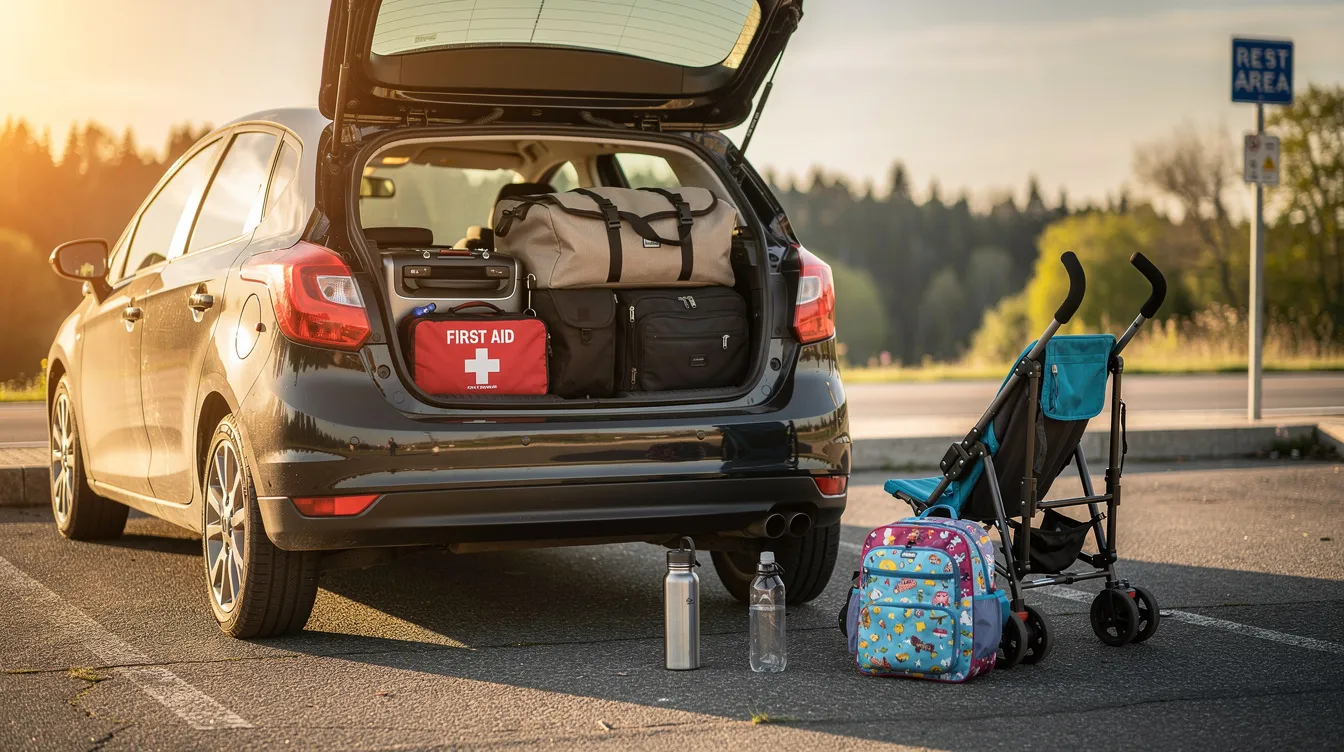
Organize all first aid supplies into color-coded or labeled pouches inside one shared aid bag. At 3 a.m. in a dark rental, you don't want to rummage through a car full of luggage looking for children's medicine.
Photo 6: Family Road-Trip Kit in a Compact Car
Packing Smart: Where to Store Medical Kits in Tiny Rooms and Tight Baggage
Cramped hotel rooms, tiny house rentals, and overhead-bin-only flights are the reality for 2026 travelers. Here's how to pack and store your kit:
- Keep the main travel first aid kit in a carry-on or personal item
- Put a mini pouch with bandages, pain relievers, and antiseptic wipes in your daypack
- Stash duplicates of critical prescription medications in a separate bag
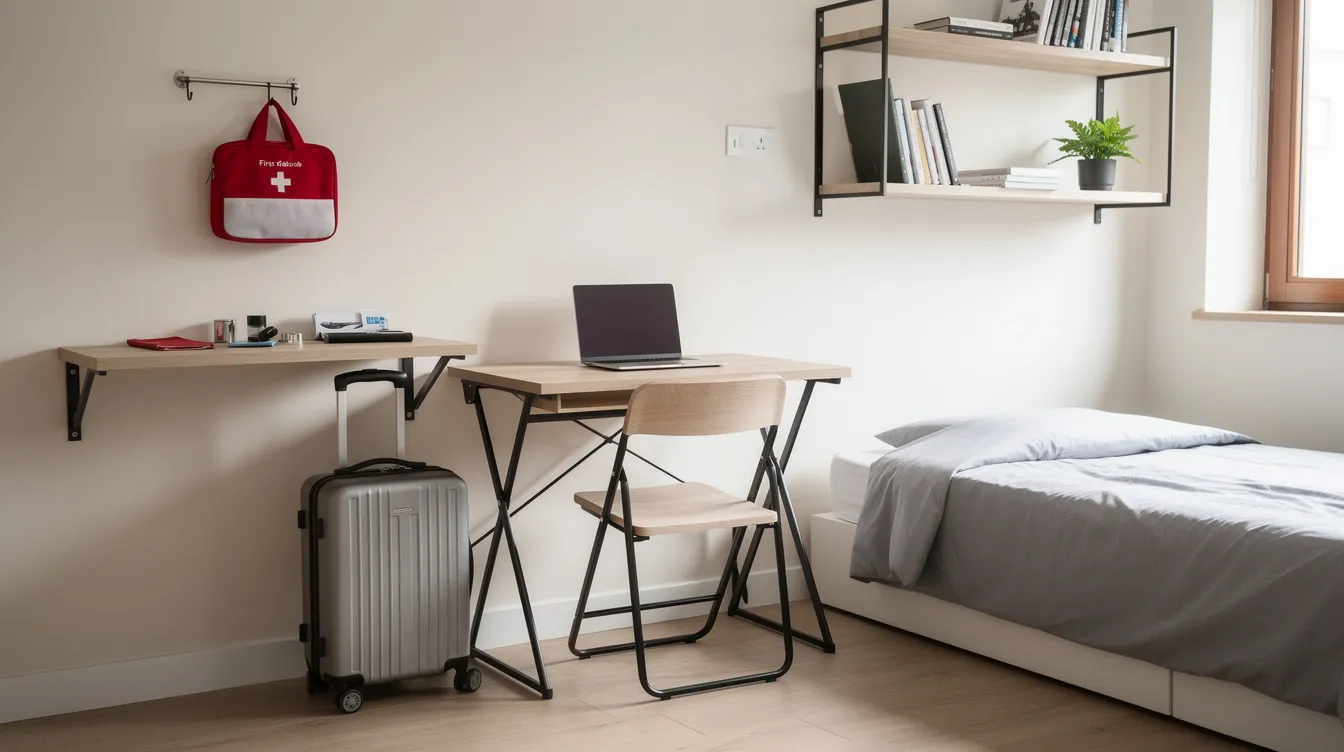
- Slide the kit into a suitcase lid pocket, under a van seat, or hang a soft aid bag on a wall hook in an Airbnb
- Use a bright, easily recognizable color for the kit so everyone in the group can find it quickly in low light
Store medications in a durable, water-resistant container. In hot climates, never leave medical supplies on dashboards or against windows - heat degrades ointments, adhesives, and medicines rapidly. Keep a list of emergency contact information and medical history while traveling, stored both digitally and on paper inside the kit.
Photo 7: Medical Kit in a Tiny Hotel Room or Studio Apartment
TSA, Borders, and Safety: What You Can (and Can't) Fly With
Many travelers worry about Transportation Security Administration rules for first aid kits. Here's what you need to know in 2026:
Generally allowed in carry-on:
- Bandages, gauze, hemostatic gauze, adhesive tape
- Ointments and creams under 3.4 oz (100 ml)
- Pills and tablets
- Scissors with blades under 4 inches from the pivot point
Potential issues:
- Sharp scissors over allowed blade length
- Loose syringes without medical documentation
- Large liquid bottles without medical necessity declaration
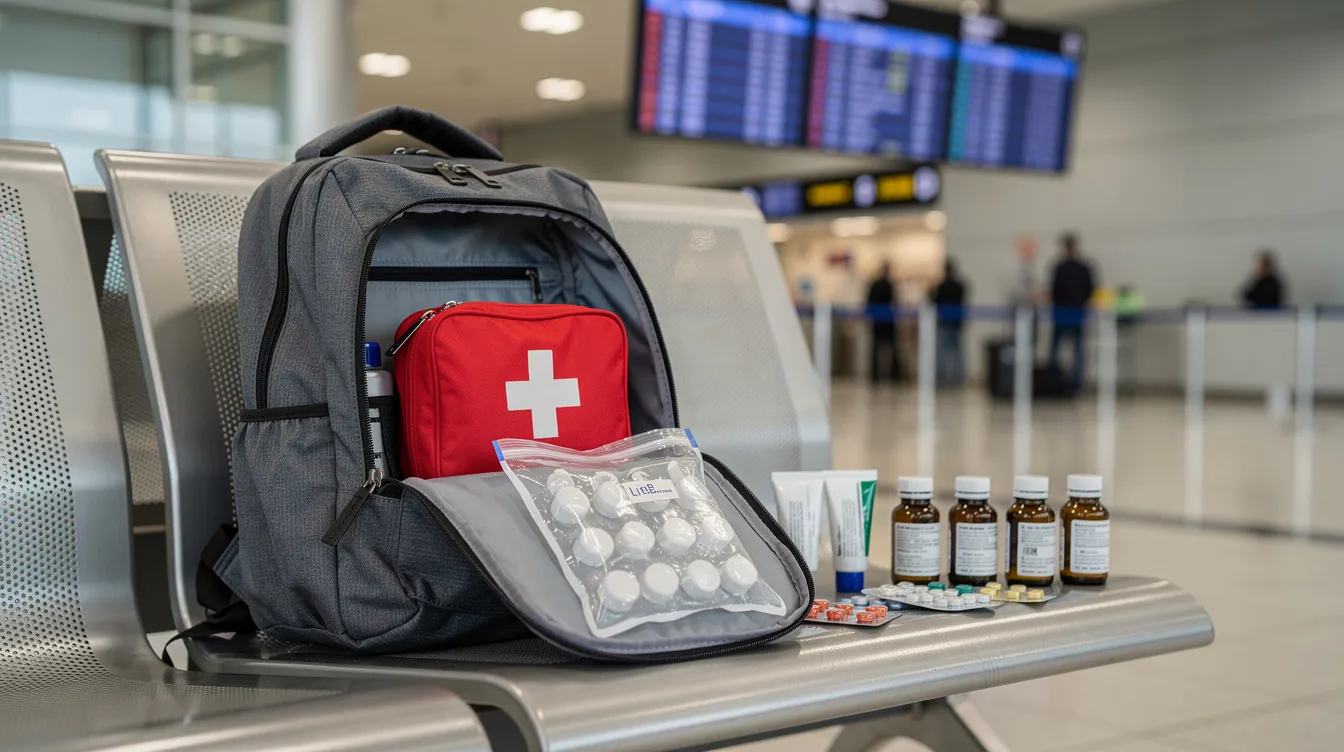
Keep prescription medications in original labeled containers, and carry a simple doctor's note for injectable medication or EpiPens when crossing international borders. Each country may have different rules about what you can carry, so verify destination-specific restrictions before departure.
Pack a backup mini kit in checked luggage when possible, while keeping life-critical medicines always on your person.
Photo 8: Medical Kit at Airport Security Prep
Keeping Your Travel Aid Kit Updated and Ready
A well-packed kit fails if medicines are expired or items are used up. Build a simple routine:
- Check expiration dates on your first aid kit 2–4 weeks before every trip - medications, ointments, and hemostatic gauze all have shelf lives
- Restock used bandages, wipes, and medication
- Store a laminated checklist inside the kit listing the following items that should always be present
- Between trips, keep the kit in a cool, dry part of your home - not a hot car trunk or damp bathroom cabinet
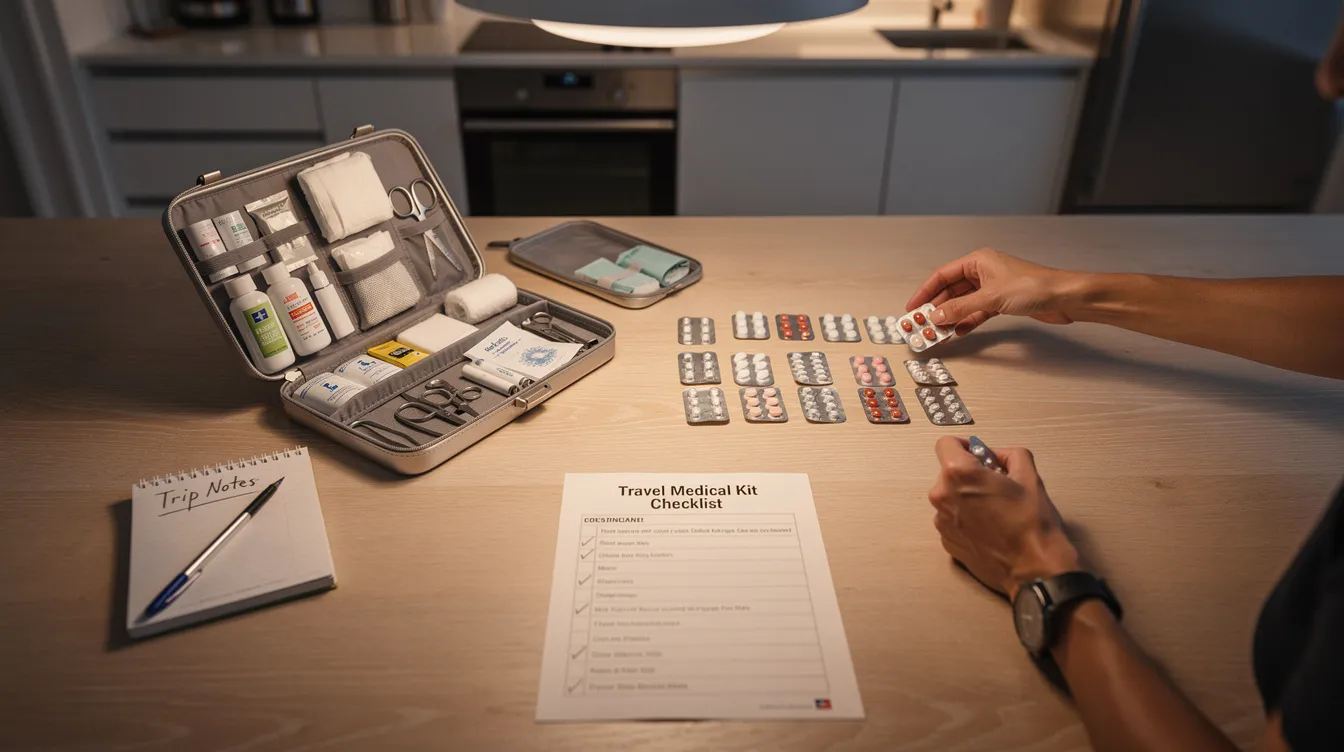
- Small Space Emergency readers can maintain a "home base" kit in their apartment plus a grab-and-go travel kit that clips to their daily backpack
Photo 9: Restocking the Kit on a Kitchen Counter
Small Space Emergency's Approach to Compact Travel Medical Kits
Small Space Emergency specializes in emergency preparedness for apartments, tiny homes, and carry-on-only lifestyles. Our recommended aid kits focus on flat, modular packing: slim pouches, folding organizers, and wall-hanging options that work in micro-apartments and small hotel rooms.
We prioritize high-utility, space-efficient first aid supplies over bulk item counts. A single multi-use triangular bandage replaces three single-purpose items. A compact hemostatic gauze packet takes the same space as two extra bandages but handles a far more serious situation.
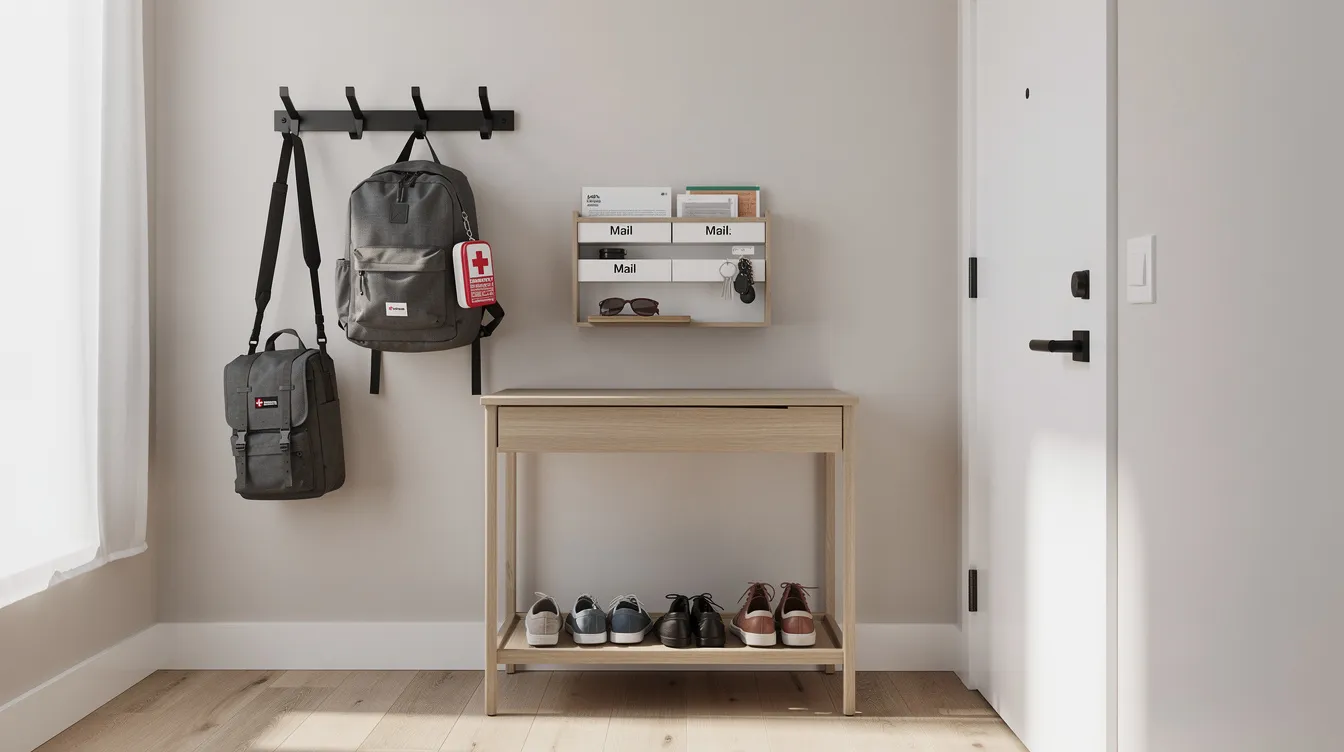
Build your travel-ready medical kit once, store it in an accessible place near the front door or with your go bag, and any last-minute trip is automatically safer. Adapt this guide to your own specific needs, your doctor's suggestions, and your destination's risks. Being prepared doesn't require a closet full of gear - just the right supplies in the right pouch.
Photo 10: "Ready to Go" Small-Space Emergency Corner
FAQ: Travel Medical Kits and First Aid on the Go
How big should my travel first aid kit be for a week-long international trip?
Most travelers can fit an effective kit into a pouch roughly the size of a paperback book - around 8×6×2 inches. Focus on a core set of first aid supplies: bandages, gauze, tape, antiseptic wipes, pain relievers, allergy tablets, and digestive medicines. If you have chronic conditions or plan wilderness activities, add a second slim pouch for trauma items and extra prescriptions.
Do I really need hemostatic gauze in my travel medical kit?
For low-risk city trips, hemostatic gauze is optional. For road trips, scooter-heavy destinations, hiking, or remote travel where emergency physicians may be far away, it's a meaningful upgrade. It doesn't replace basic wound care - it complements regular gauze and direct pressure for controlling more serious bleeding until professional aid arrives.
What's the best way to handle first aid supplies when I only travel with a personal item?
Create an ultra-compact kit using flat packets and mini tubes that fits into a small zip pouch, then slide it into a laptop sleeve or front pocket. Prioritize: a few high-quality bandages in assorted sizes, pain relievers, allergy tablets, antiseptic wipes, a small ointment, and critical prescriptions. Fewer items, but carefully chosen.
How often should I replace items in my travel medical kit if I don't travel much?
Check expiration dates at least once a year, even without a trip planned. Ointments, liquid medicines, and hemostatic gauze degrade over time. Bandages and tools last longer but can lose adhesion or elasticity, so refresh them every few years or after exposure to extreme heat or humidity.
Is it safer to buy a pre-made first aid kit or build my own from scratch?
Pre-made first aid kits are a solid starting point for beginners, provided they come from a reputable source and aren't just stuffed with low-quality bandages. Customize any purchased kit by removing duplicates and adding missing items - personal medicines, hemostatic gauze, allergy treatments - so it genuinely fits your travel style and risks. The best approach combines a reliable pre-made base with targeted personal add-ons.
Editorial note: this guide provides general preparedness information, not emergency, medical, legal, or engineering advice. Recommendations are cross-checked against public emergency-management guidance and adapted for small-space living. During an active emergency, follow your local authorities and emergency services. See our editorial standards and affiliate disclosure.