EMT Kits for Small Spaces
EMT kits go far beyond standard first aid kits - they contain life-saving tools for severe bleeding, airway compromise, and trauma that can stabilize a patient until paramedics arrive. If you live in a studio apartment, tiny home, or work from a compact office, this page helps you find the right EMT kit that fits your space, your training level, and your daily life.
Browse our curated category of compact, well-organized EMT kits designed for urban living, home responders, and small workplaces. Below you'll find a breakdown of kit types, the features that actually matter, a visual guide showing how these medical kits fit into real small spaces, and answers to the questions we hear most.
Types of EMT Kits
EMT and EMS kits are organized by function, environment, and acuity of the patient - but every type listed here is compatible with tight storage and limited square footage.
Compact Home & Apartment EMT Kits
These slim, wall-mounted or under-sink kits are built for studios, one-bedroom apartments, and tiny homes where every inch counts. An effective EMT kit should include essential equipment for assessing patients and controlling bleeding, even in a household setting. Primary use includes managing minor, everyday injuries and common household incidents, but these kits also cover serious scenarios like deep cuts, falls, and kitchen burns that require more than a basic first aid kit.
Expect neutral colors, flat profiles, and labeled internal pouches for quick access. Around 1 cubic foot of storage is enough for a single occupant; scale to roughly 2 cubic feet for a couple or small family. The goal is low visual clutter without sacrificing trauma-ready supplies.
Vehicle & Commuter EMT Kits
Glove-box kits, trunk-friendly trauma pouches, and backpack inserts serve rideshare drivers, cyclists, and daily commuters who spend hours in vehicles. Typical contents prioritize bleeding control, airway basics, protective gear, and reflective elements for roadside response. Many kits feature MOLLE-compatible mounts for portability, strapping to a seat back or tucking under a seat in compact hatchbacks.
A well-regarded vehicle IFAK runs about 5 liters of capacity - roughly 8×10×4 inches and 3.3 pounds - holding 95+ medical supplies without eating into passenger space.
Workstation & Small Office EMT Kits
Designed for coworking desks, home offices, and micro-business suites covering 1–5 people. These kits are optimized for workplace-safe medications, burn dressings (critical near kitchens and equipment), and CPR masks. Discreet storage options - desk drawer, filing cabinet, mounted behind a door - keep them accessible without violating lease restrictions or looking out of place.
Outdoor & Adventure Micro EMT Kits
Pocket-sized or belt-mounted EMT kits for urban hikers, dog walkers, cyclists, and weekend campers. Weather-resistant materials and quick-release designs define this everyday carry category. Contents are pared down to life-saving essentials: tourniquet, pressure bandage, gloves, and airway adjuncts where appropriate. Wilderness EMT kits are designed for emergencies in locations where access to hospitals is delayed, making these micro kits critical on the trail.
A compact bleeding-control pouch can measure as little as 6×3×2 inches and weigh under a pound - small enough to clip to a belt or drop into a day pack.
Advanced Trauma EMT Kits for Trained Responders
Larger but still space-aware trauma kits aimed at EMTs, nurses, or medically trained individuals living in small homes. Advanced EMT kits contain additional medical equipment for personnel with advanced training - airway management devices sized from infant through adult, multiple tourniquets, chest seals, and trauma shears. Professional trauma kits contain over 500 medical supplies and trauma kits exceed ANSI Standard Z308.1.2009 requirements, making them serious field-grade tools.
EMT equipment does not determine what an individual can legally perform; it depends on certification level and state regulations. These kits are recommended for people with formal training and clear storage like a closet shelf or under-bed bin.
What to Look For in EMT Kits
Quality EMT kits differ in organization, contents, and construction - differences that become critical when your storage space is measured in inches, not feet.
Compact, Smart Layout for Tight Spaces
A slim profile and fold-out design matter enormously in apartments, RVs, and small offices. Look for tri-fold panels, labeled compartments organized by clinical priority (bleeding, airway, burns), and color-coded pouches. Kits can include color-coded modular organization for quick access, letting you find what you need in seconds rather than dumping the bag. Vertical storage options - hanging from a closet rod, behind a door, or on a narrow wall strip - free up shelf and drawer space.
Trauma-Focused, Evidence-Based Contents
An essential EMT emergency medical response kit is organized by clinical priority. Primary use includes life-threatening injuries where severe hemorrhage or airway compromise occurs, so every item should earn its place. Must-have supplies include a genuine tourniquet, hemostatic gauze, pressure bandages, nitrile gloves, and - for advanced kits - chest seals. Trauma kits include supplies for bleeding control and splinting at a minimum. The kit should go beyond basic band-aids without becoming cluttered with low-value filler that wastes precious space and slows response time.
Durable, Apartment-Friendly Bags & Cases
Tough zippers, tear-resistant high-denier nylon, and wipe-clean surfaces matter in urban environments where medical bags may share space with cleaning products or get jostled in a backpack. High-quality kits use premium medical supplies for effectiveness, and the bag itself should match. Low-profile colors blend with home decor, while reflective or high-vis accents help you find the kit during a power outage. Soft cases are better for flat stowage in drawers; rigid-bottom bags stack neatly on closet shelves.
Clear Labeling and Quick-Grab Design
External labels - "EMERGENCY MEDICAL," a red cross symbol - need to be visible on a crowded shelf or in a dark hallway. Features like tear-away panels, grab handles, and hook-and-loop patches make rapid retrieval possible even under stress. Date labeling space lets small-space users track expirations without emptying the whole kit, which is especially helpful when the kit lives behind other items.
Right-Sized Inventory for Your Household
Small homes don't need bulk clinic quantities. Focus on enough supplies for 1–4 people for the first 30–60 minutes of an emergency - the window before EMS arrives. Disaster-response kits are designed for situations involving multiple injured people or large disasters, but for most apartments, a right-sized inventory means two to four pairs of gloves, a handful of gauze pads, two pressure bandages, and one tourniquet. Overstuffed kits are harder to store and slower to use in cramped rooms or hallways.
How to Choose the Right EMT Kit
A few key decisions - space, training level, and lifestyle - will narrow your options fast.
- Living Space & Storage Constraints - Measure your likely storage spot (closet shelf depth, drawer width, wall space) before you buy. A kit that doesn't fit where you need it won't get used. Studios do well with kits around 1 cubic foot; one-bedroom homes can handle up to 2–4 cubic feet.
- Number of People You're Covering - Scale from a solo kit to a small-family or small-team setup. If you're in a multi-level apartment, consider adding a second micro-kit on a different floor.
- Your Training & Comfort Level - Layperson-friendly kits come with clear instructions and limit contents to items anyone can use safely. If you're a certified first responder, advanced kits with airway and respiratory tools and cardiac emergency supplies are appropriate. EMT equipment should meet the standards of the local EMS protocols and medical director requirements.
- Primary Use: Home, Car, or Work - Mounting systems matter for vehicles, discreet cases for offices, wall-mount options for home hallways. First aid kits can be tailored to specific lifestyles, so match the form factor to where you'll actually reach for it.
- Local Risks & Typical Activities - Earthquake zones, hurricane corridors, dense urban traffic, or active hobbies like cycling all shift what trauma capacity you need. Pediatric EMT kits contain equipment specifically sized for infants and children - worth noting if you have small kids.
- Budget vs. Upgrade Path - Start with a compact core EMT kit and add modules over time (extra bleeding control, burn care, airway management) instead of buying an oversized kit up front. Emergency medical services utilize modular or specialized kits tailored for different problems, and you can adopt the same approach.
Visual Guide: EMT Kits in Real Small Spaces
These photos show how EMT kits actually live in small apartments, vehicles, and compact offices. Each image uses consistent photorealistic HDR style with natural lighting, shallow depth of field, and warm neutral tones accented by red medical markings.
1. Wall-Mounted EMT Kit in a Studio Apartment Hallway
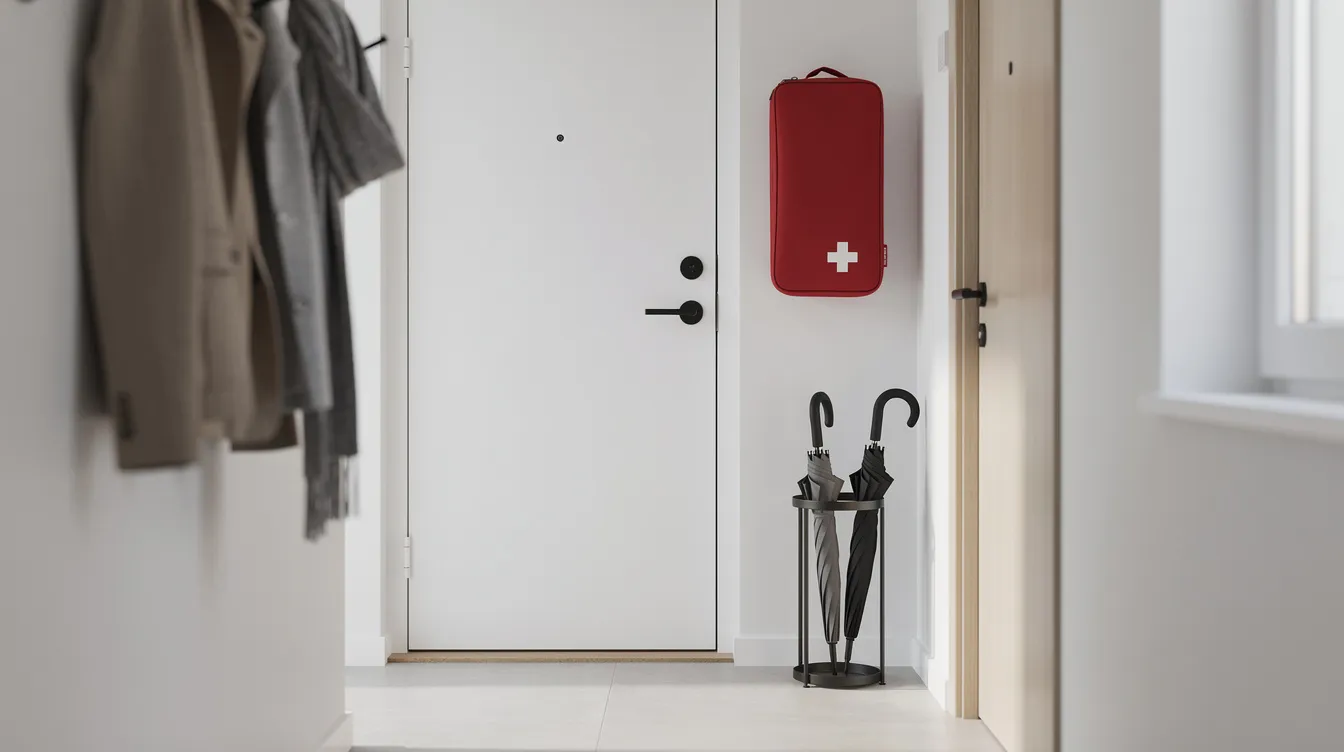
Bright, natural window light floods a narrow white hallway in a modern studio. A slim EMT kit is mounted near the front door above a small shoe rack - clearly labeled, easy to spot, with clean lines that blend into minimalist decor. Through the open door, a city-view glimpse reinforces urban living.
2. EMT Kit Stored Under a Small Sink Cabinet
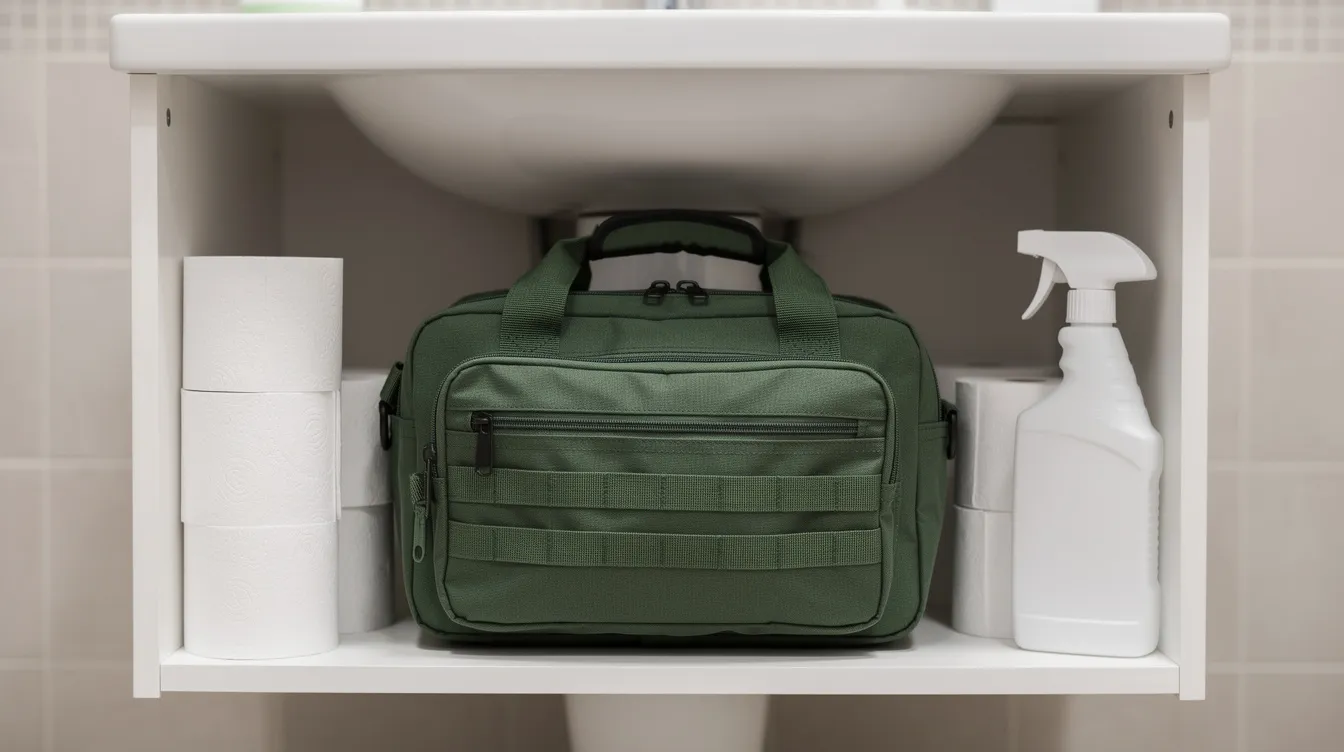
A photorealistic close-up captures a compact EMT bag inside a shallow bathroom vanity beneath a pedestal sink. Everyday items - toilet paper rolls, cleaning spray, a small basket - share the space, demonstrating realistic storage. Soft, even HDR lighting reveals the texture of the durable bag fabric.
3. Desk Drawer EMT Kit in a Home Office Nook
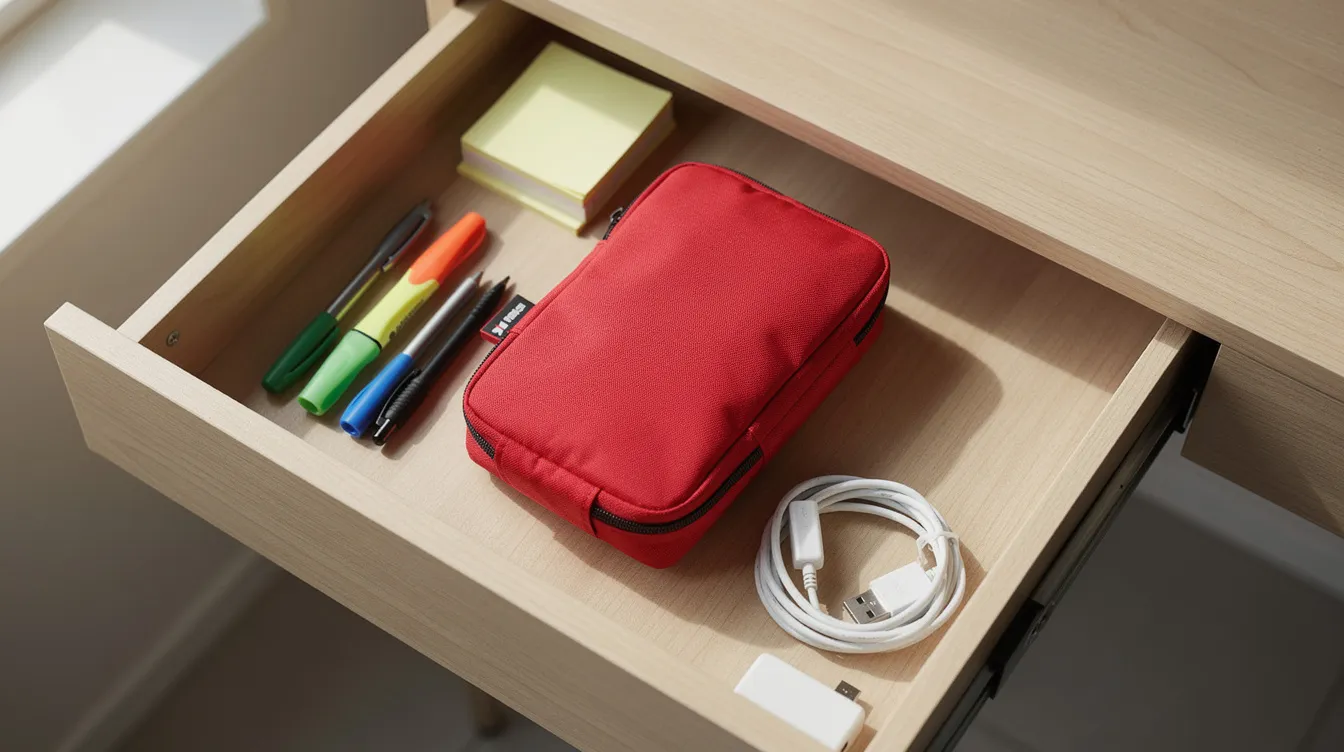
An overhead shot of a shallow wooden desk drawer, pulled open in a tiny home office. A flat EMT pouch sits alongside pens, notepads, and a laptop charger - one bold red accent against neutral tones. Natural side light from a nearby window provides slightly contrasted clarity that shows multiple pockets and clear labeling.
4. Car Seat-Back EMT Kit in a Compact Hatchback
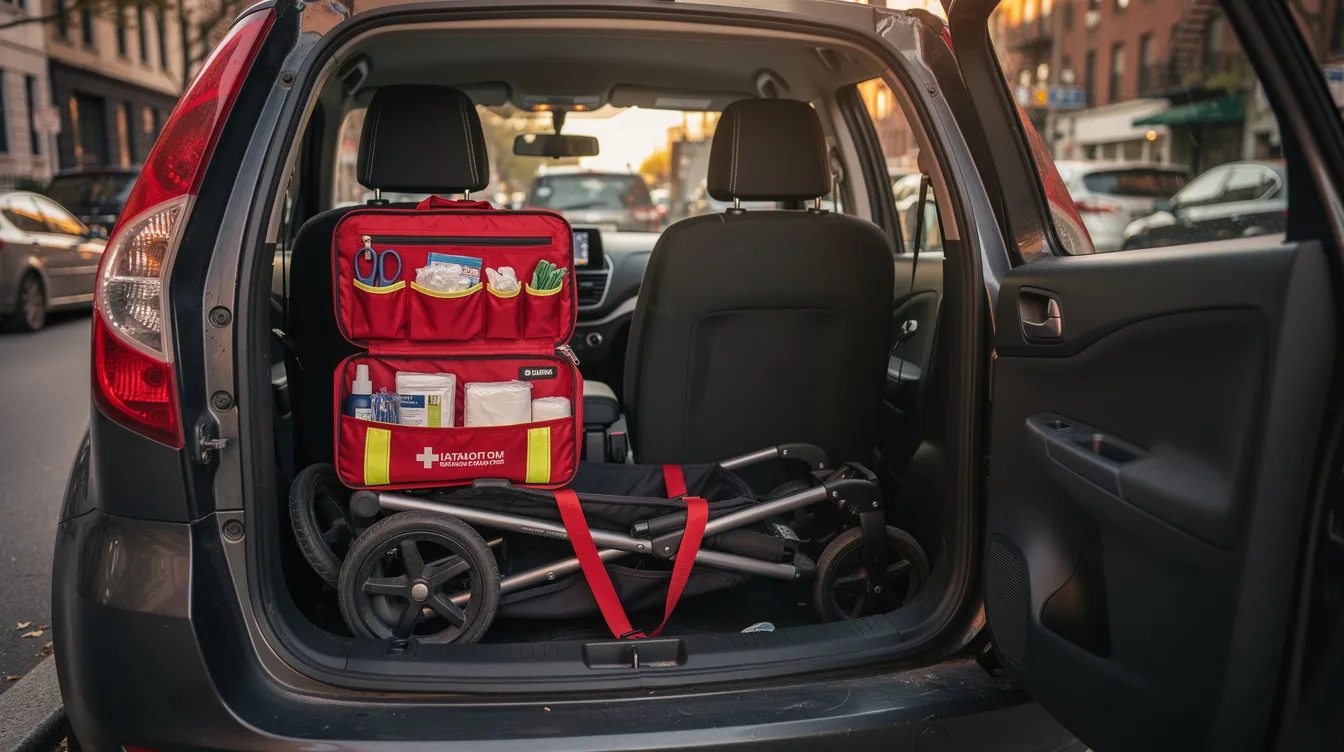
The rear passenger door of a small hatchback swings open to reveal an EMT kit strapped firmly to the seat back. City street parking is tight between vehicles, and a folded stroller in the footwell reinforces the reality of compact car life. Late-afternoon HDR lighting catches reflections on the car paint without harsh glare on the kit's contents.
5. EMT Kit Inside a Minimalist Tiny House
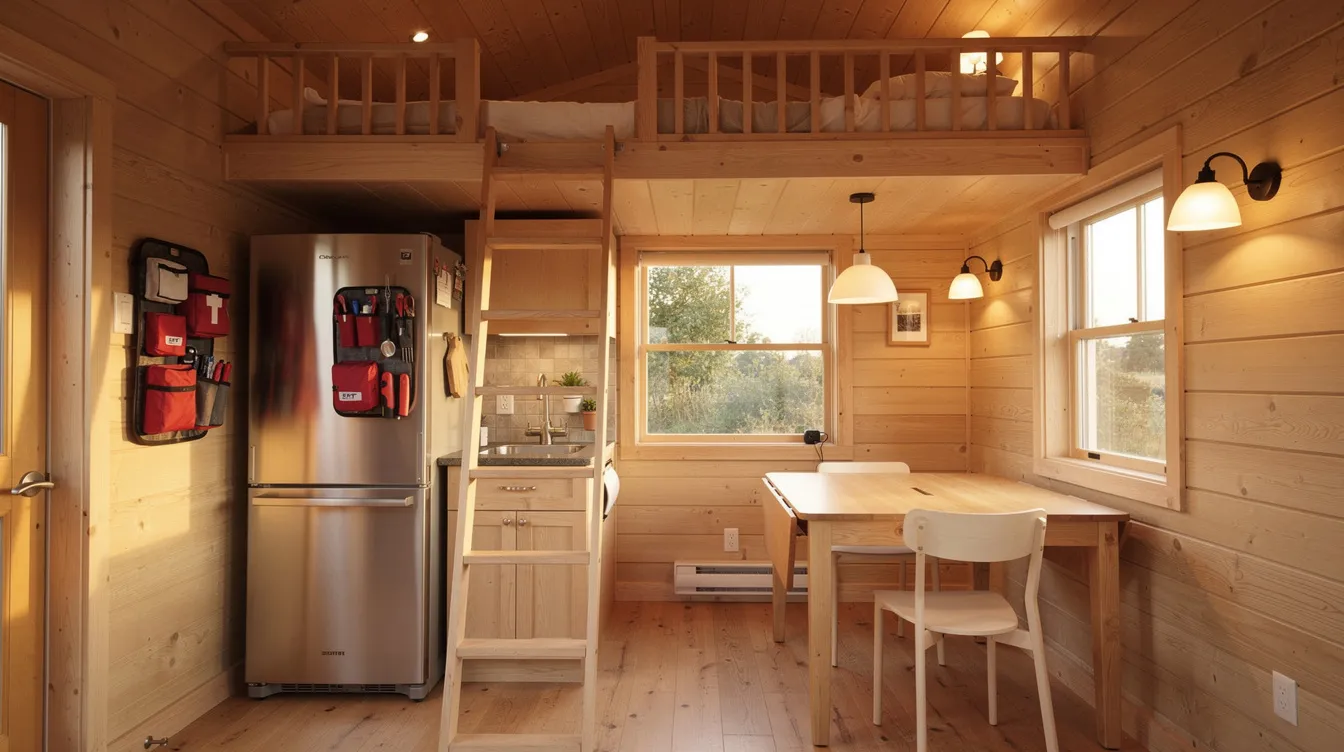
A wide interior shot of a tiny house living area: loft bed above, fold-out table below, and a compact EMT kit magnet-mounted to the side of a narrow stainless steel fridge. Warm, inviting tones make the space feel lived in. The kit is clearly visible yet fully integrated into daily life - no tactical aesthetic, just prepared readiness.
6. Open EMT Kit on a Small Kitchen Counter
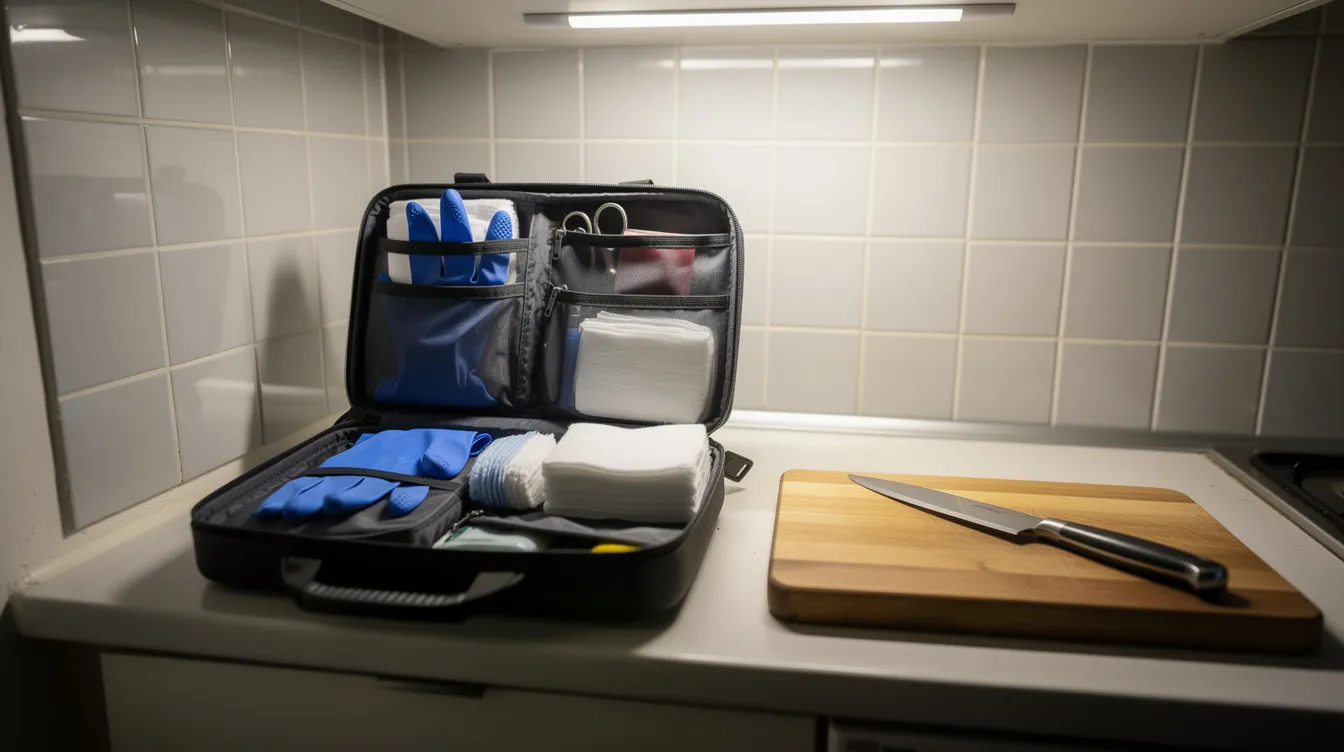
A small apartment kitchen scene: an open EMT kit sits on a narrow countertop beside a cutting board and knife. Organized contents - labeled pouches, nitrile gloves, gauze, bandages - are visible with no gore, just the implied response to a minor kitchen injury. Strong overhead light bounces off a tile backsplash, with HDR balance revealing the interior of the medic kit.
7. EMT Kit in a Shared Coworking Phone Booth
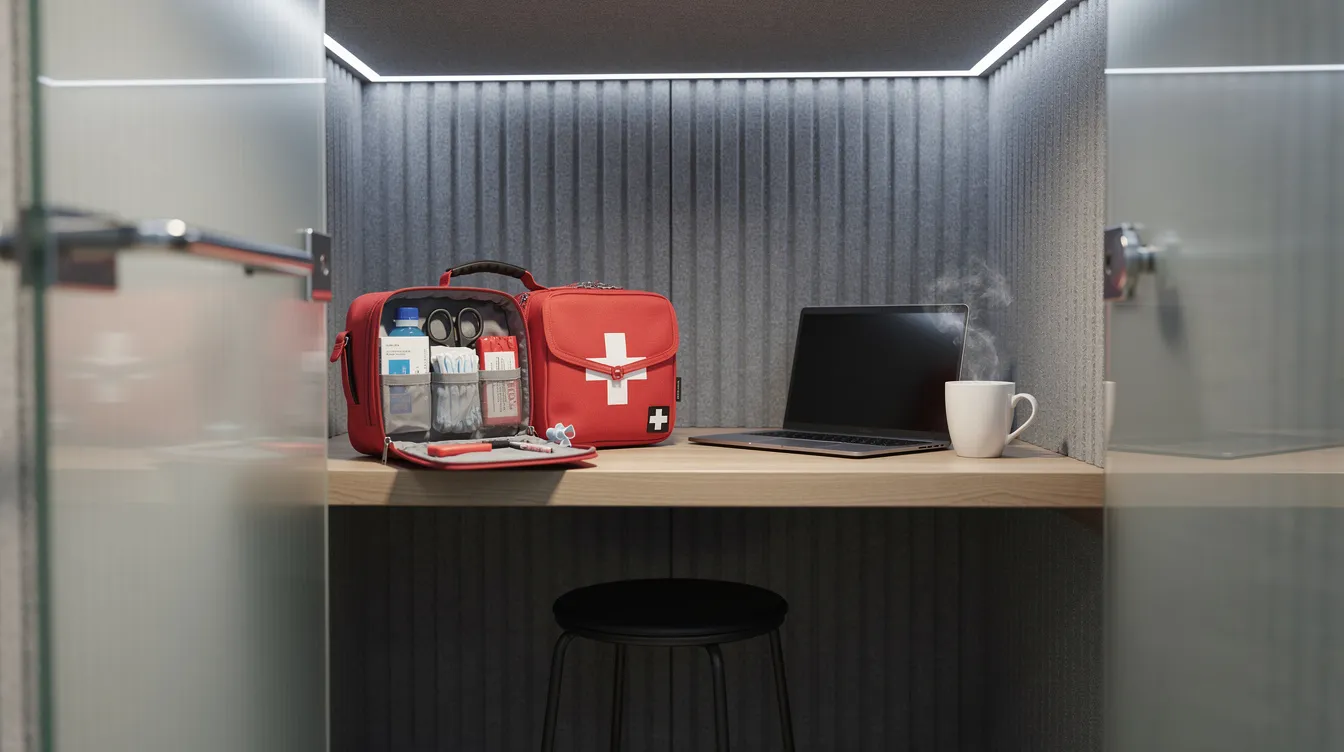
A compact EMT kit rests on a shelf inside a single-person phone booth at a modern coworking space. Soundproofing panels, a small stool, a laptop, and a coffee cup provide context. Mixed ambient office light and an LED strip inside the booth create an HDR scene without blown highlights - showing how a small team can keep emergency medical supplies within arm's reach.
8. Backpack EMT Insert for Daily Commuters
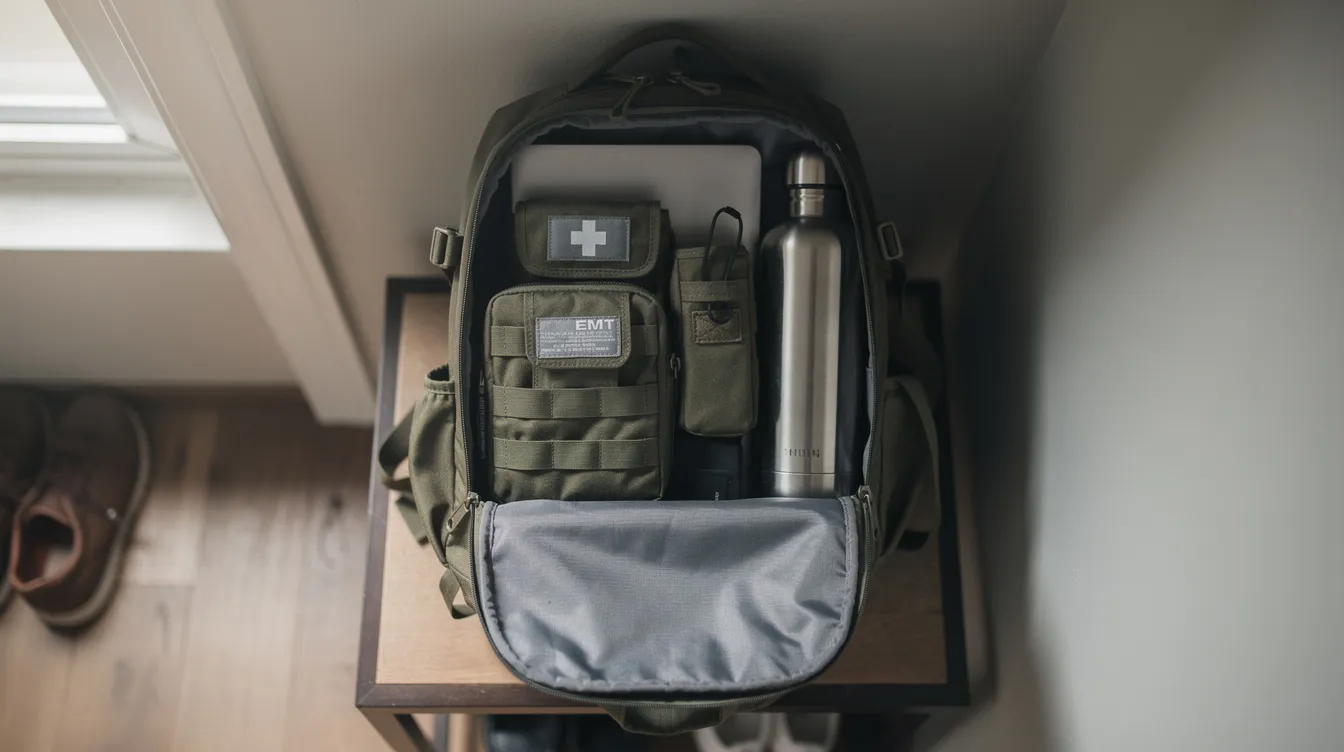
A top-down view into an open commuter backpack on a tiny apartment entry bench. A slim EMT insert sits flat beside a laptop and water bottle, demonstrating how medical items stay organized rather than bulky in an everyday carry setup. Diffuse window light and shallow depth of field keep focus on the insert's zippers and labels while the background gently blurs.
9. Bedside EMT Kit on a Narrow Nightstand
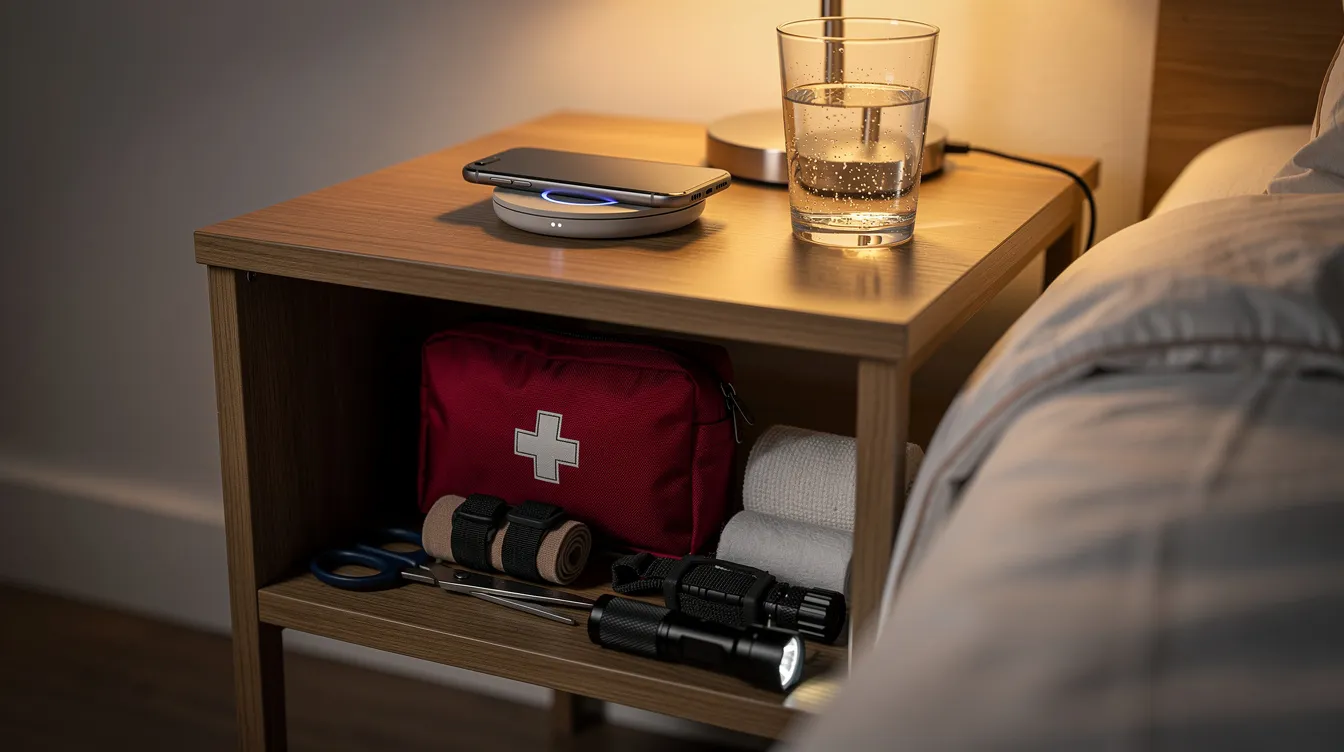
A small bedroom with barely enough space for a bed and a slim nightstand. A compact EMT kit rests on the lowest shelf - always within reach. A phone on a wireless charger and a glass of water sit on top, showing a realistic bedtime setup. Warm bedside lamp light fills the scene with HDR detail preserved in the shadows under the table.
10. EMT Kit in a High-Rise Balcony Storage Box
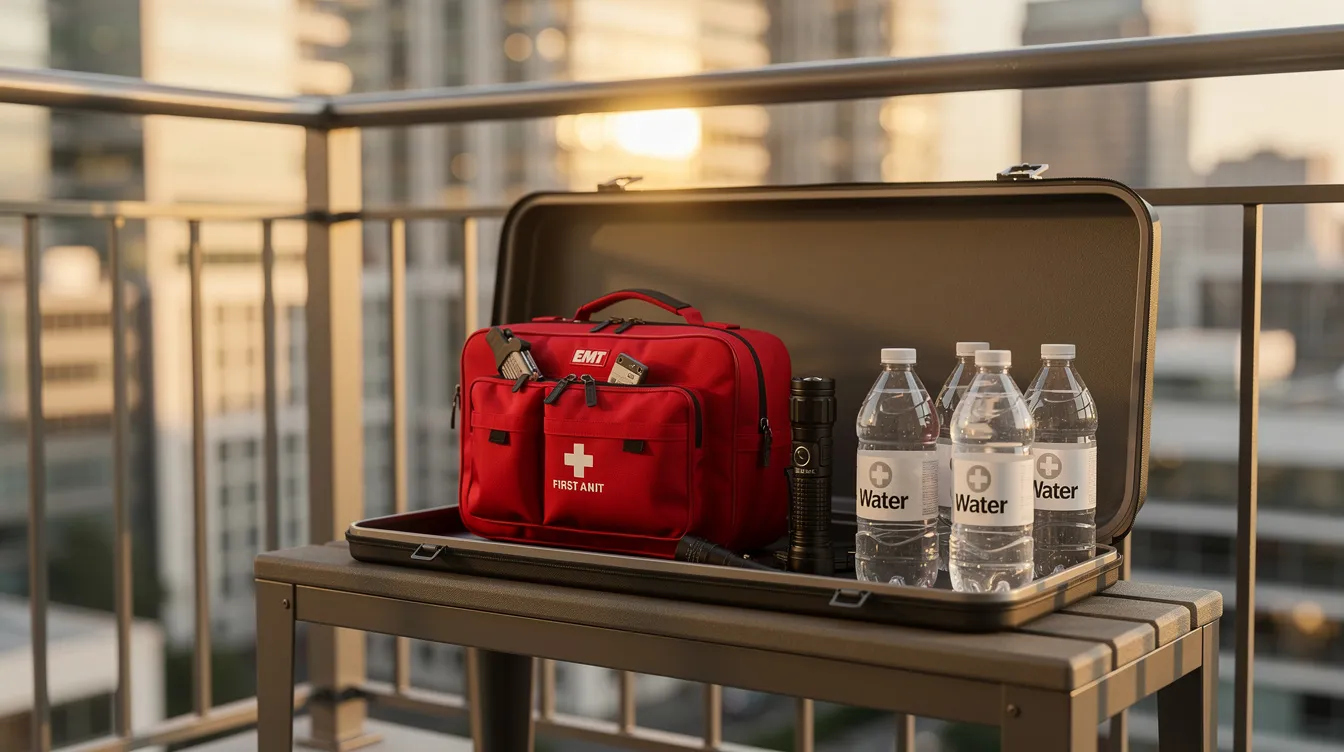
A small balcony on a city high-rise: a narrow weatherproof storage bench sits open, revealing an EMT kit next to a flashlight and small emergency water bottles. The skyline glows in soft focus behind, reinforcing urban small-space living. Golden-hour HDR light produces rich colors while keeping the kit crisp and clearly identifiable.
Frequently Asked Questions About EMT Kits
These FAQs address the most common questions from people choosing and maintaining EMT kits in space-constrained homes and small offices.
What's the difference between a standard first aid kit and an EMT kit?
A standard first aid kit focuses on minor cuts, scrapes, and everyday injuries - adhesive bandages, antiseptic wipes, small gauze pads. EMT kits are categorized by their scope, intended environment, and severity of injuries, and are built for serious trauma: severe bleeding, fractures, and airway issues. They include items like tourniquets, hemostatic gauze, and pressure bandages that a basic first aid box simply doesn't contain. First aid kits help save lives during emergencies, but an EMT-level kit provides the trauma-focused tools that bridge the gap until paramedics arrive. Even if you already own a first aid kit, adding EMT-grade supplies to your home gives you options when seconds count. Personal protective equipment is standard across all EMT setups to ensure responder safety.
How much EMT gear do I really need in a small apartment?
For 1–4 people, focus on quality trauma items over large quantities of minor supplies. One main kit in a central, accessible spot - stocked with a tourniquet, pressure bandages, gloves, gauze, trauma shears, and basic airway adjuncts - covers the critical first 30–60 minutes. Add an optional micro-kit by the door or in a backpack for on-the-go preparedness. Basic EMT kits are designed to handle minor injuries and provide initial care, while a well-curated compact kit handles serious emergencies without overwhelming your closet. ANSI Standard Z308.1.2009 sets minimum first aid supply requirements, which is a useful baseline to sort your needs.
Where is the best place to store an EMT kit in a tiny home or studio?
The best spots balance speed and accessibility:
- Near the entrance - hallway wall or coat closet at chest height for rapid grab-and-go.
- Central hallway wall - visible and reachable from multiple rooms.
- Under the sink - works if the cabinet isn't buried behind cleaning supplies.
- Closet shelf at chest height - easy to reach without a step stool.
Avoid spots that are likely to be blocked during an emergency - deep behind stacked boxes, high overhead cabinets, or locked storage. The kit should be organized, portable, and stocked according to your certification level and local protocols.
Do I need formal medical training to use an EMT kit?
Many components - gloves, dressings, pressure bandages - can be used safely with basic instruction. First responder kits are designed for full-scene emergency response, but even laypersons can effectively apply a tourniquet or pack a wound with a short training course. Advanced tools like airway devices and chest seals do require formal training. We recommend taking a local first aid and CPR course, reviewing your kit instructions regularly, and practicing with housemates or team members. Emergency medical kits are used by EMS agencies across North America, and the same core skills transfer to home use.
How often should I check and refresh my EMT kit?
Check expiration dates and restock used items every 6–12 months - many people find it easiest to do this at the start of each season or when they change their clocks. Keep a small checklist or photo inventory on your phone for quick reference. Medical supplies like hemostatic gauze, adhesive chest seals, and certain medications have firm expiration dates; replace these on schedule. Clear interior panels on well-designed kits let you view date markings without unloading everything.
Can I fly with my EMT kit or keep it in a commuter bag?
For daily commuting, compact, non-restricted items - bandages, gloves, tourniquets, gauze - can easily live in a backpack or work bag with no issues. When flying, keep sharps (trauma shears, certain cutting tools) and liquids in checked luggage rather than carry-on. First responder kits often exceed ANSI Standard Z308.1.2009, but that doesn't mean they contain anything prohibited by air travel rules - just use common sense and check TSA guidelines before you pack. Airway and respiratory kits focus on breathing difficulties and airway obstruction emergencies, but most of their contents (masks, adjuncts) are carry-on friendly. Cardiac emergency kits are intended to support patients experiencing heart-related emergencies - if yours includes medications, verify airline policies before your flight.
Browse EMT Kits Optimized for Small Spaces
Start with a compact core EMT kit, stock it with trauma-focused essentials, and store it where you can reach it in seconds - not buried behind boxes or locked in a cabinet. Add modules as your needs, experience, and training grow: an extra bleeding control pouch, a burn care add-on, or a dedicated airway management insert. Some kits contain over 500 pieces of medical supplies, but the right kit for your space is the one you'll actually find and use when it matters.
Explore our curated EMT kits filtered by home size, number of occupants, and storage style. Pair a main home kit with a small car or commuter kit for full coverage without clutter - because being prepared shouldn't require a spare room.
Editorial note: this guide provides general preparedness information, not emergency, medical, legal, or engineering advice. Recommendations are cross-checked against public emergency-management guidance and adapted for small-space living. During an active emergency, follow your local authorities and emergency services. See our editorial standards and affiliate disclosure.