Go Kits: How to Build a Space-Smart Emergency Go Bag That Actually Works
When disaster strikes, you won't have time to think. You'll have seconds to grab what matters and get out the door. This guide walks you through building a go kit that fits your life, your apartment, and your actual ability to carry it down ten flights of stairs.
Key Takeaways
- A go kit is a portable collection of essential items for emergencies, designed to sustain each person for at least 72 hours with food and water, first aid, light, power, and critical documents.
- It's important to maintain a separate portable go kit from larger household emergency supplies - one lives by your door, the other supports sheltering in place for at least two weeks.
- Every go kit should be tailored to meet individual household needs, including pets, children, prescription medications, and the specific disasters common to your area.
- A well-organized go kit improves self-sufficiency during emergencies and allows you to evacuate quickly without panic or forgotten essentials.
- Store go kits in easily accessible locations, check your emergency kit twice a year, and replace expired supplies so your bag is always ready when you need it.
What Is a Go Kit (and Why You Need One in 2026)
A go kit - also called an emergency go bag - is a grab-and-go pack containing everything you need to survive if you must leave your home or office immediately. It's not the same as a larger disaster supply kit you keep at home for sheltering in place. The go kit is what you carry out the door.
- The Federal Emergency Management Agency and Ready.gov recommend having enough basic supplies in your go bag for at least 72 hours, because emergency services may be delayed that long after major events.
- Between 2020 and 2025, wildfire evacuations gave residents minutes to leave. Hurricane Ian left communities without power for several days. Texas winter storms trapped apartment dwellers without heat or running water.
- Emergency preparedness isn't optional for urban and small-space dwellers - it's survival planning. Small Space Emergency exists to help people in apartments, studios, and tiny homes build compact go bags and home kits that actually fit limited closets and cabinets.
Go Kit vs. Emergency Kit vs. Go Bag: What's the Difference?
These three terms are related but serve different roles. Understanding each one helps you plan smarter and pack leaner.
- Go bag: The physical bag - a backpack, duffel, or rolling case - packed with essential emergency supplies you grab when it's time to leave. It's the vessel.
- Go kit: The planned contents inside one or more go bags. A household might have separate go kits for family members, children, and pets, each tailored to their specific needs.
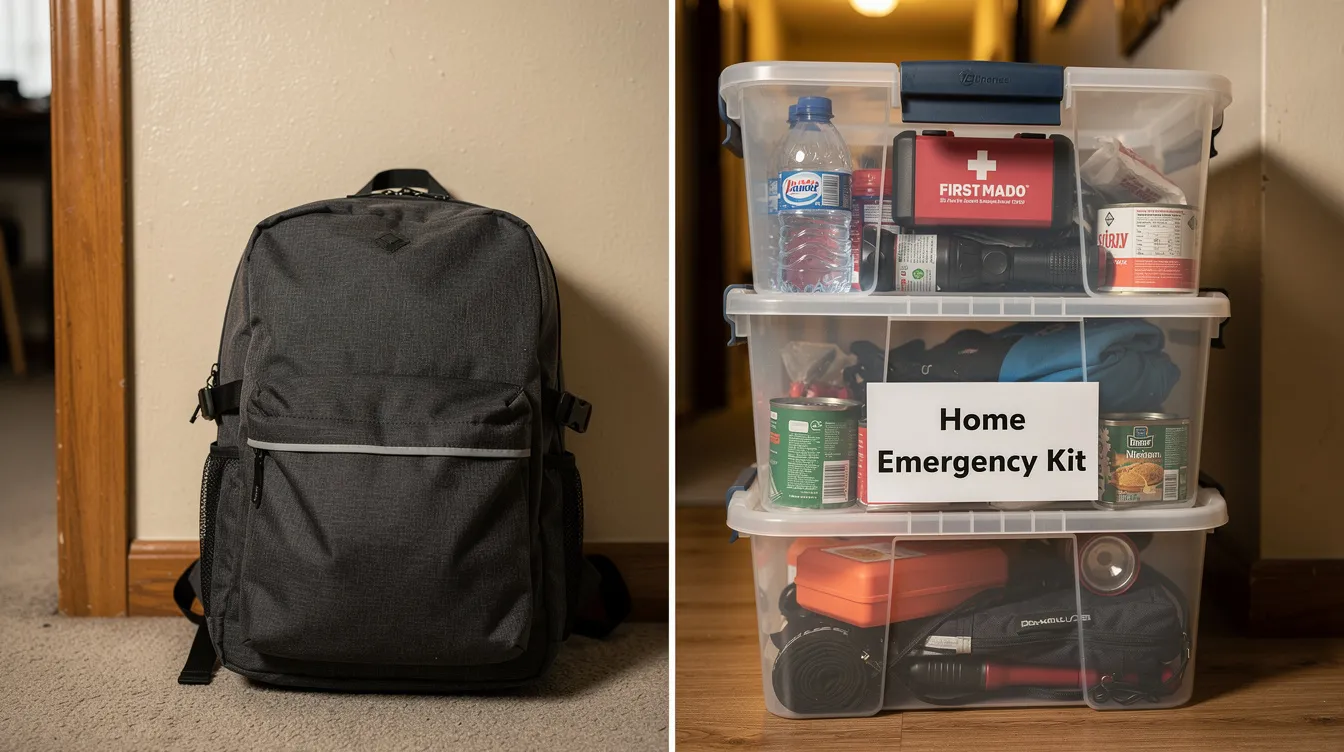
- Emergency kit (or disaster supply kit): A larger, usually stationary set of gear, non perishable food, bottled water, and basic items stored at home. An emergency kit should last at least two weeks and supports sheltering in place.
- Office go kit: Covers at least 24 hours at work - water, snacks, a first aid kit, walking shoes, and a phone charger - in case transit shuts down.
A well-stocked go kit helps ensure safety and allows for quick evacuation during emergencies. Ensure enough supplies are included for each family member based on their specific needs, including pets and children.
The Five Core Pillars of a Space-Smart Go Kit
Every well-designed emergency go bag covers five pillars: water, food, first aid, light and power, and communication with documents. Even in a studio apartment, these are non-negotiable. Small Space Emergency prioritizes compact, multipurpose items - collapsible containers, flat-packed food bars, roll-up pouches - that don't eat your closet alive.
Water: Staying Hydrated When Taps Go Dry
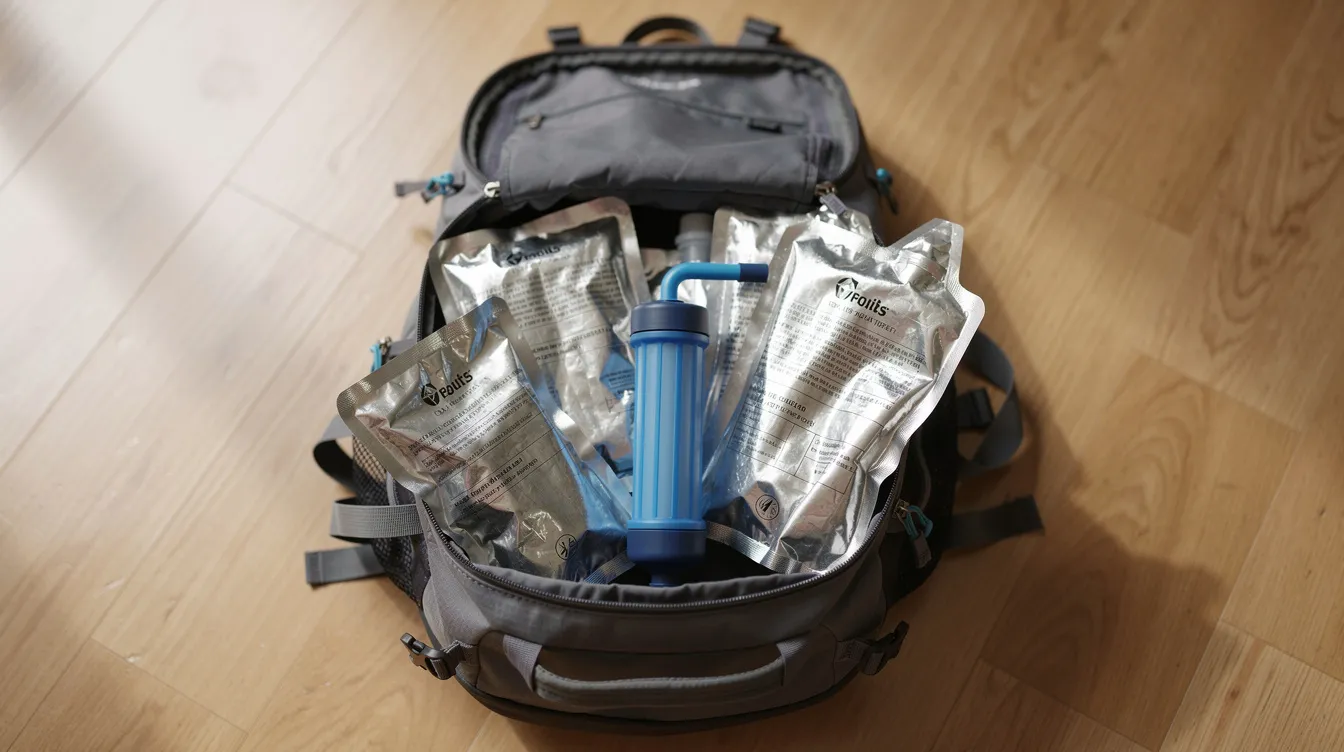
FEMA recommends one gallon of water per person per day for drinking and minimal personal sanitation. For a 72-hour go bag, that's roughly three gallons per person - about 25 pounds of water alone, which is unrealistic to carry.
- Pack 4–8 sealed water pouches per person in the go bag for immediate supply (many last 5 years on the shelf).
- Add compact purification options: water purification tablets or a straw filter let you safely use tap or surface water if bottled water runs low.
- Store extra gallons at home in your stationary emergency kit where possible.
- Label purchase dates and rotate water during twice-yearly kit checkups.
Food: Compact Calories for 72 Hours
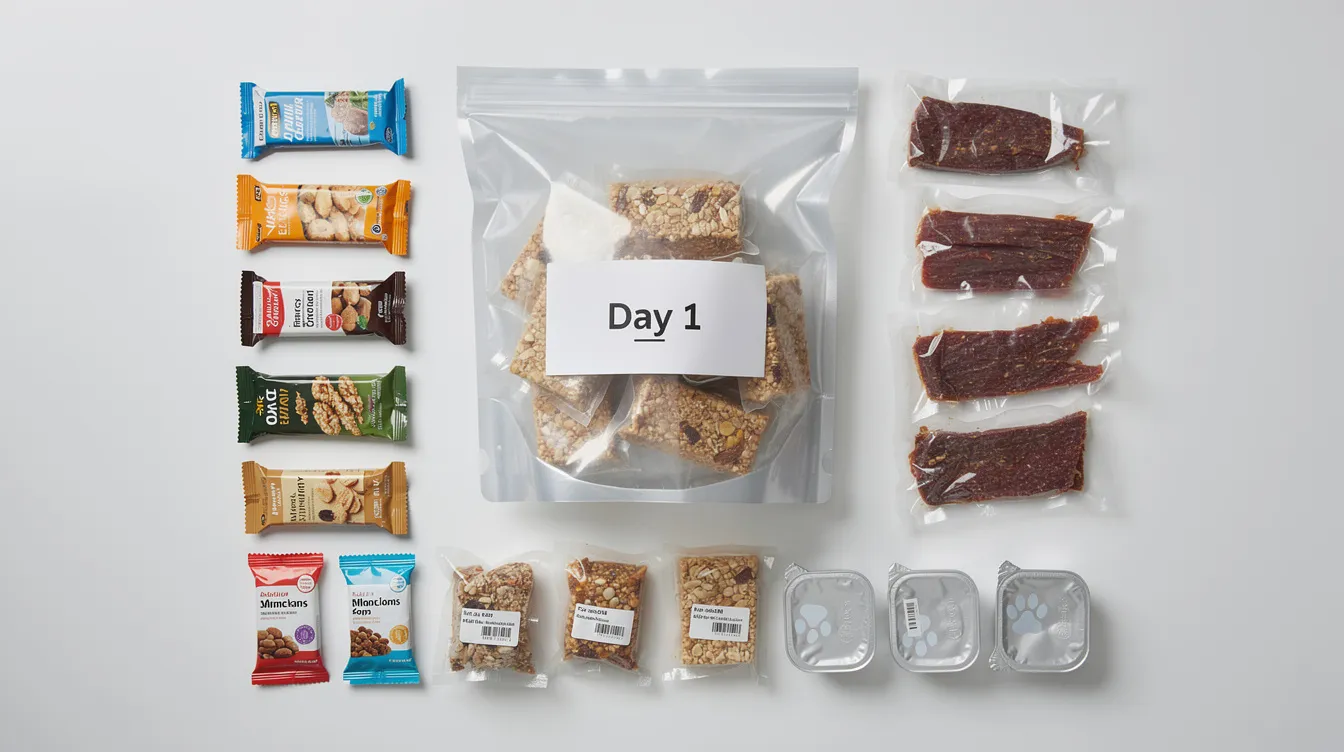
Go kit food should be ready-to-eat, require no manual can opener or cooking, and stay shelf-stable for 3–5 years. Plan for at least 1,500–2,000 calories per adult per day. Enough food for each person means thinking in terms of calorie density, not volume.
- Emergency food bars, nut mixes, jerky, and shelf-stable pouches are ideal for go bags.
- Include pet food: pack several days of compact kibble or foil pouches in labeled bags for cats and dogs.
- Group food by day in zip-top bags so rationing under stress is simple and expiration dates are easy to check.
- Customized go kits can include specific items for different emergencies - flood zones might need extra water; hurricane areas might need more calorie-dense options.
First Aid: Treating Injuries When Help Is Delayed
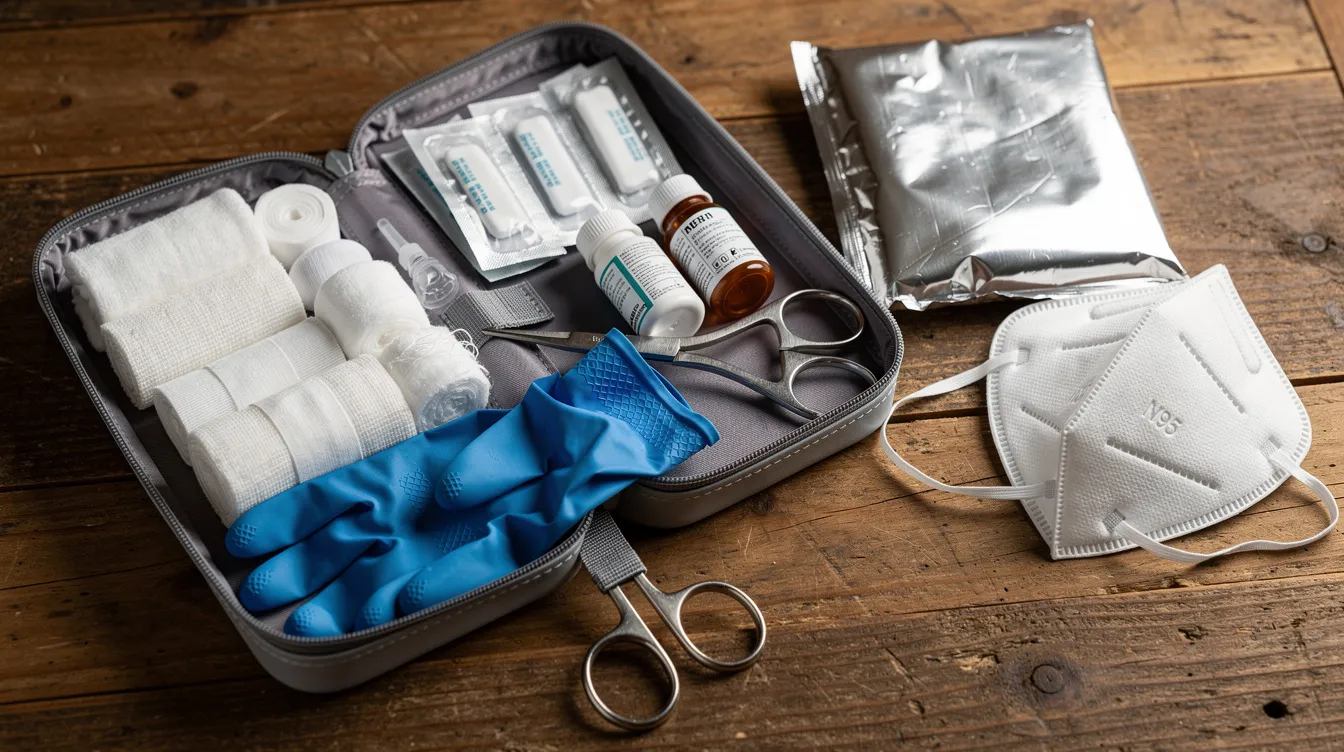
A compact but complete first aid kit is vital when hospitals are overwhelmed after disasters. Include a first aid kit in your go bag - it's one of the basic supplies that can save a life.
- Must-haves: bandages, sterile gauze, antiseptic wipes, antibacterial wipes, blister pads, adhesive tape, small scissors, moist towelettes, sterile gloves.
- Pain relievers, allergy tablets, and any prescription medications (keep at least a 7-day supply in original labeled bottles).
- Flat-packed dressings and roll-up pouches tuck efficiently into a go bag's outer pocket.
- Add personal items like EpiPens, inhalers, or blood pressure meds based on household medical needs.
- Include a printed list of medications and dosages for each person.
Light and Power: Seeing and Charging in the Dark
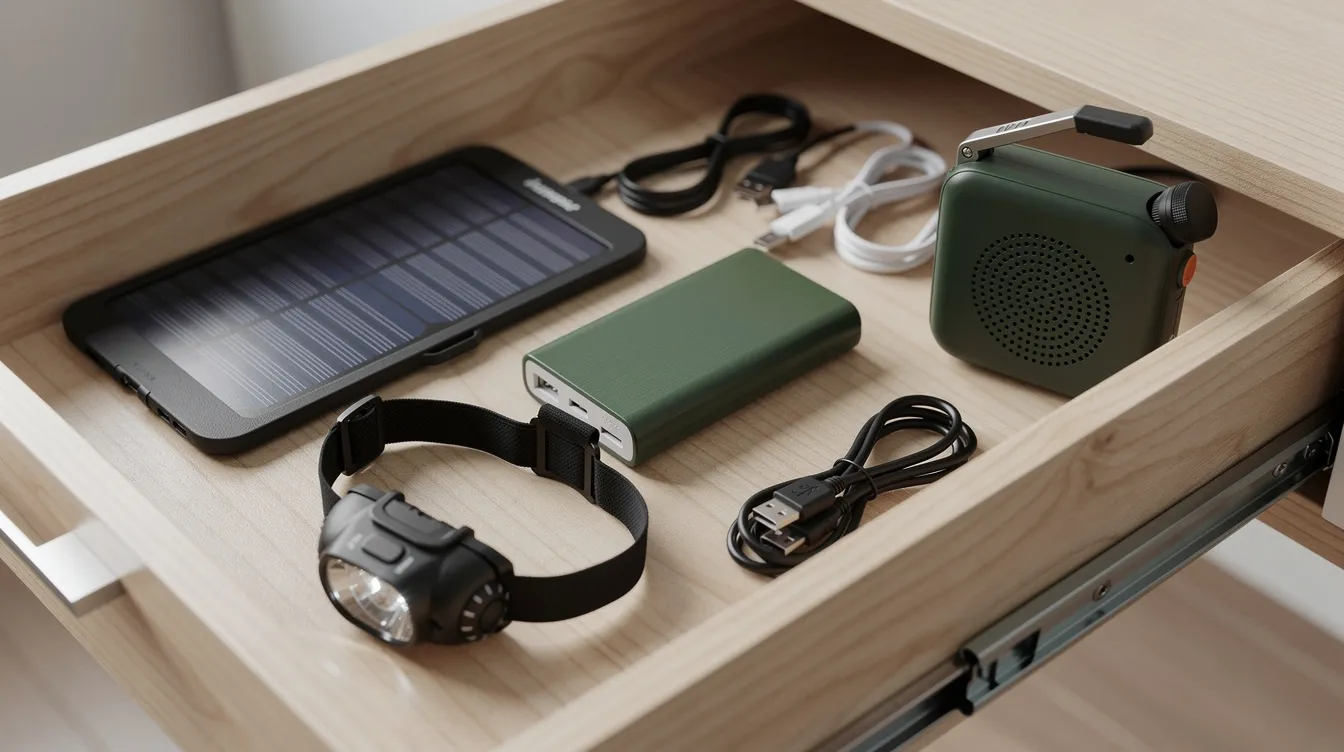
Relying only on your phone flashlight is a plan that fails fast - battery drain is brutal, and if your phone dies, you lose navigation and communication too.
- Pack a compact headlamp and a small LED flashlight with extra batteries. A hand crank flashlight that doubles as a phone charger earns its space.
- Include at least one battery powered power bank per person (10,000–20,000 mAh gives 2–4 full phone charges) plus short, durable charging cables.
- Urban evacuees navigating dark stairwells need reliable, hands-free light. A headlamp weighing under 4 ounces is essential gear.
Communication and Documents: Staying Connected and Proving Who You Are
When cell service goes down and the internet follows, you need backup communication. The American Red Cross and FEMA both recommend a NOAA weather radio - ideally one with tone alert features so it wakes you during overnight warnings. A battery powered or hand crank model is best.
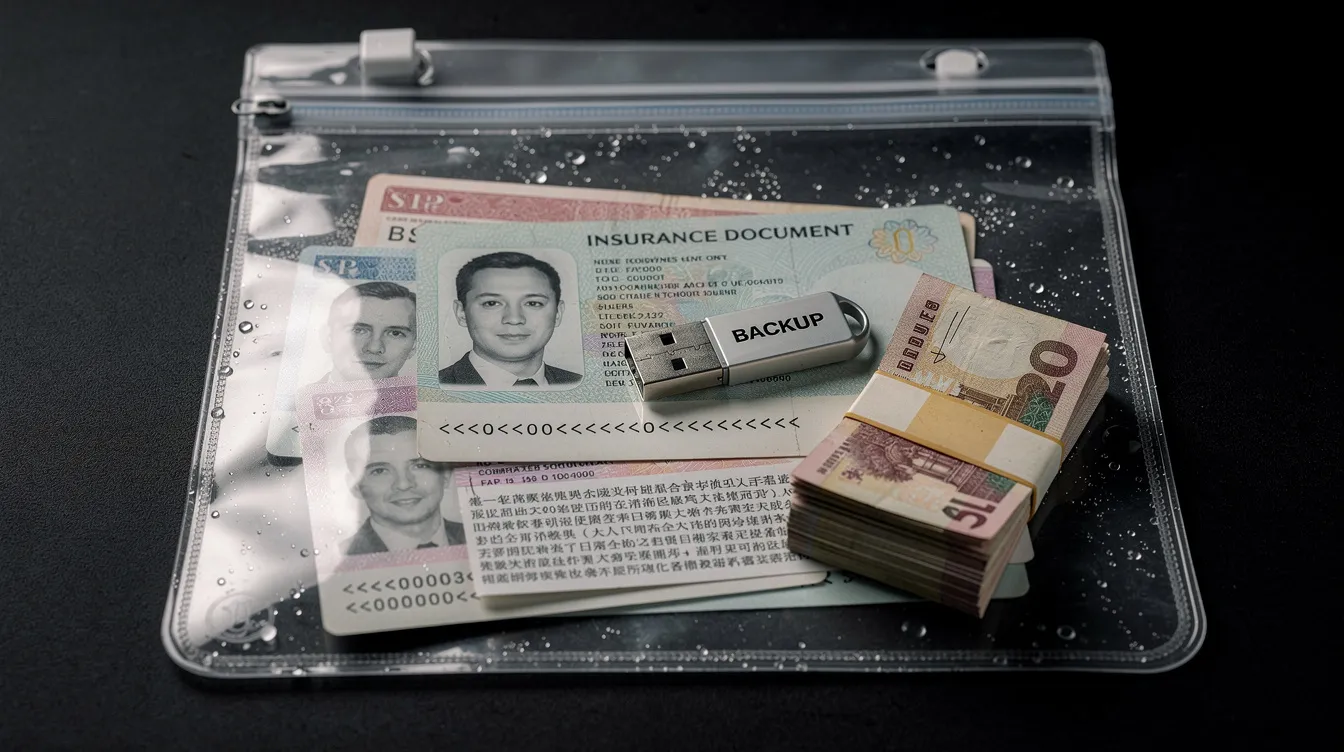
- Keep critical important documents in a waterproof pouch: copies of IDs, birth certificates, insurance papers, lease or mortgage info, medical summaries, and pet vaccination records.
- Store encrypted digital copies in secure cloud storage, plus a USB drive if privacy allows.
- Pack cash in small bills - ATMs and card readers won't work without power.
- Include a whistle for signaling rescuers in debris or smoke.
- Carry a paper card with emergency phone numbers in case your phone is dead or locked.
Beyond the Basics: Comfort, Hygiene, and Clothing
Once the five pillars are handled, staying reasonably clean, warm, and mentally grounded matters more than most people expect - especially over several days of displacement.
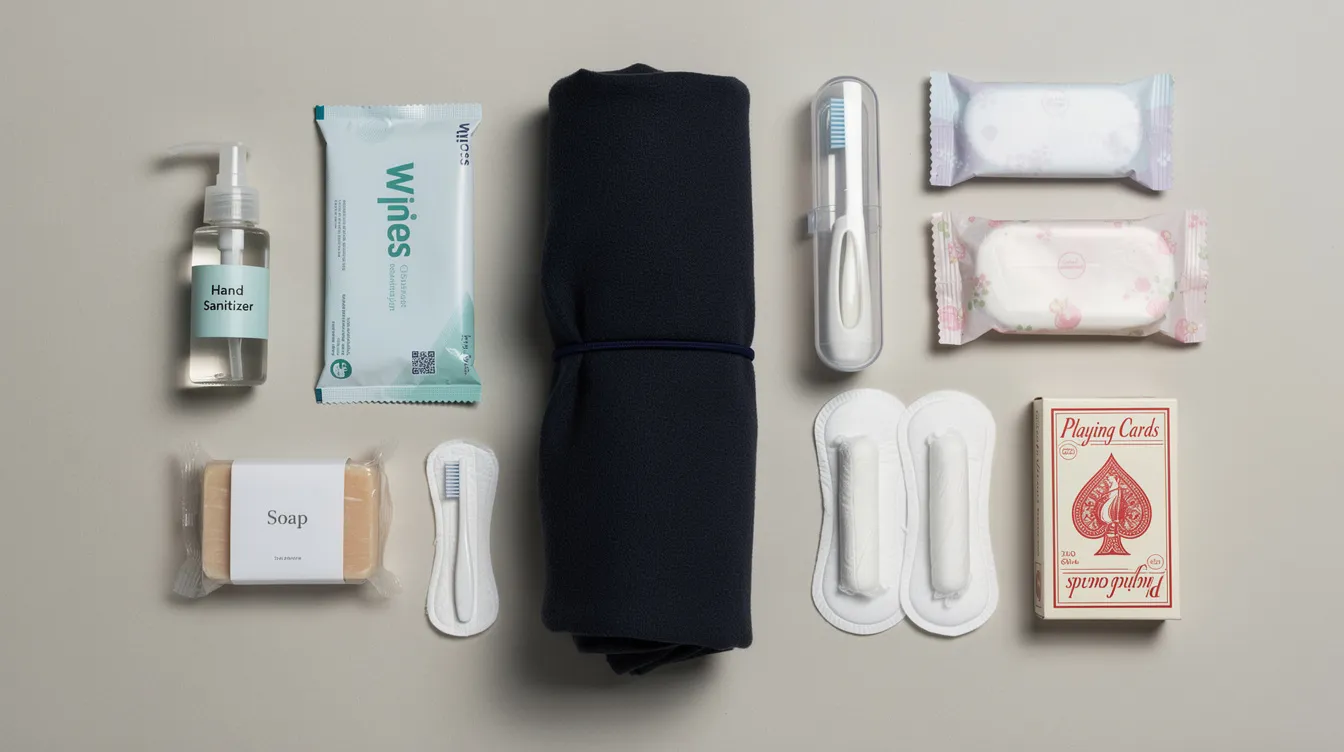
- Hygiene: Travel-size hand sanitizer (60%+ alcohol), biodegradable wipes, toothbrush and paste, menstrual products, tissues, a tiny bar of soap. These are your personal sanitation essentials.
- Clothing: One change of underwear and socks, a moisture-wicking base layer, and a lightweight compressible jacket or emergency blanket per person. Pack work gloves if your evacuation route involves rubble or broken glass.
- Comfort items: A compact card game, downloaded offline playlists, a small stuffed toy for children, or printed coloring pages. These weigh almost nothing but reduce stress dramatically.
- Extras that earn their space: Duct tape, plastic sheeting, plastic ties, garbage bags (shelter, waterproofing, waste), and moist towelettes.
Pack everything in compression cubes or flat pouches. One bag packed efficiently holds more than a cluttered duffel twice its size.
Choosing the Right Go Bag for Small Spaces
The bag itself matters. It must be comfortable to carry, sturdy enough to survive rough handling, and sized for both your body and your storage space.
| Format | Best For | Watch Out For |
| Backpack | Hands-free stair climbing, walking | Can be heavy on shoulders if overloaded |
| Duffel bag | Car trunk storage, car-based evacuation | Hard to carry long distances on foot |
| Rolling bag | Paved evacuations, mobility needs | Fails on rubble, broken sidewalks, stairs |
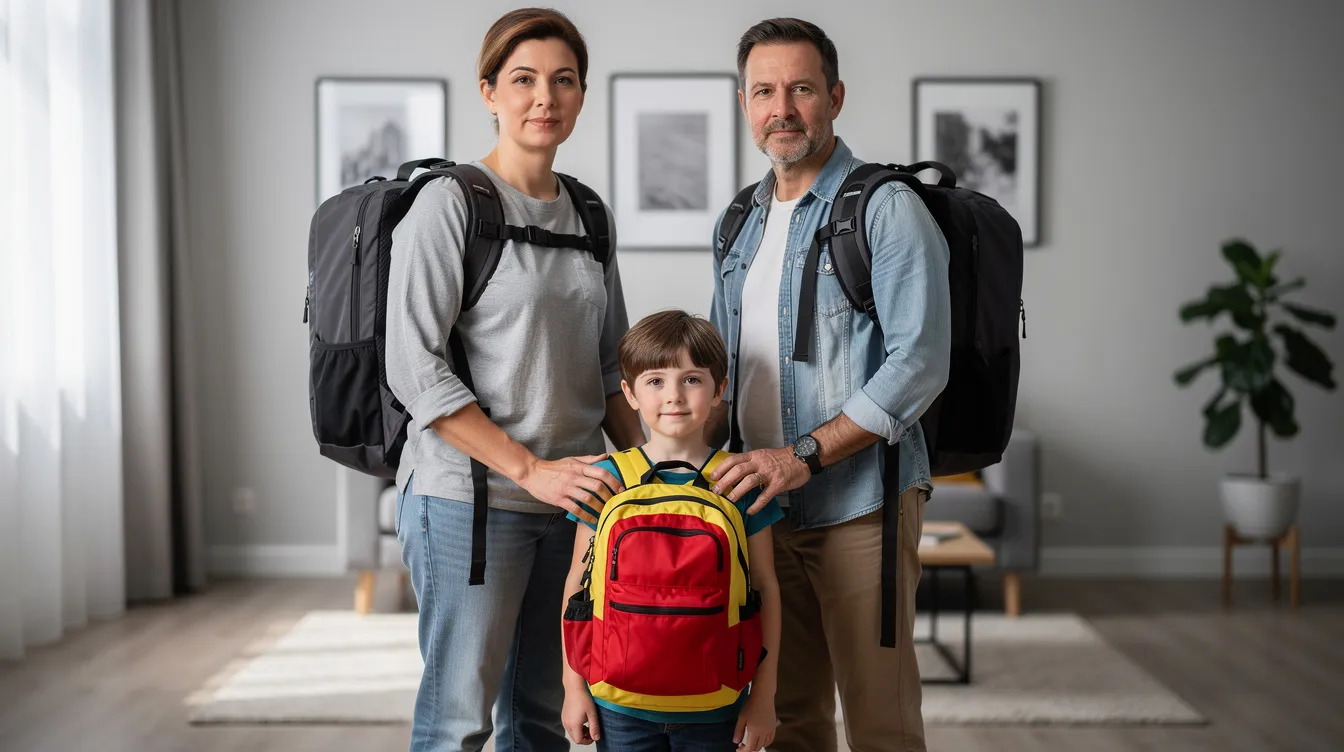
Keep total bag weight around 15–25 pounds for most adults - roughly 10–20% of body weight. For children, seniors, or people with limited mobility, split supplies among multiple smaller go bags so each person can carry what they manage.
Small Space Emergency favors neutral, low-profile bags that blend into city environments while using bright internal compartments for quick access. Before you call your bag packed, wear it fully loaded and walk up and down the actual stairs in your building. That test reveals everything a go bag list on paper cannot.
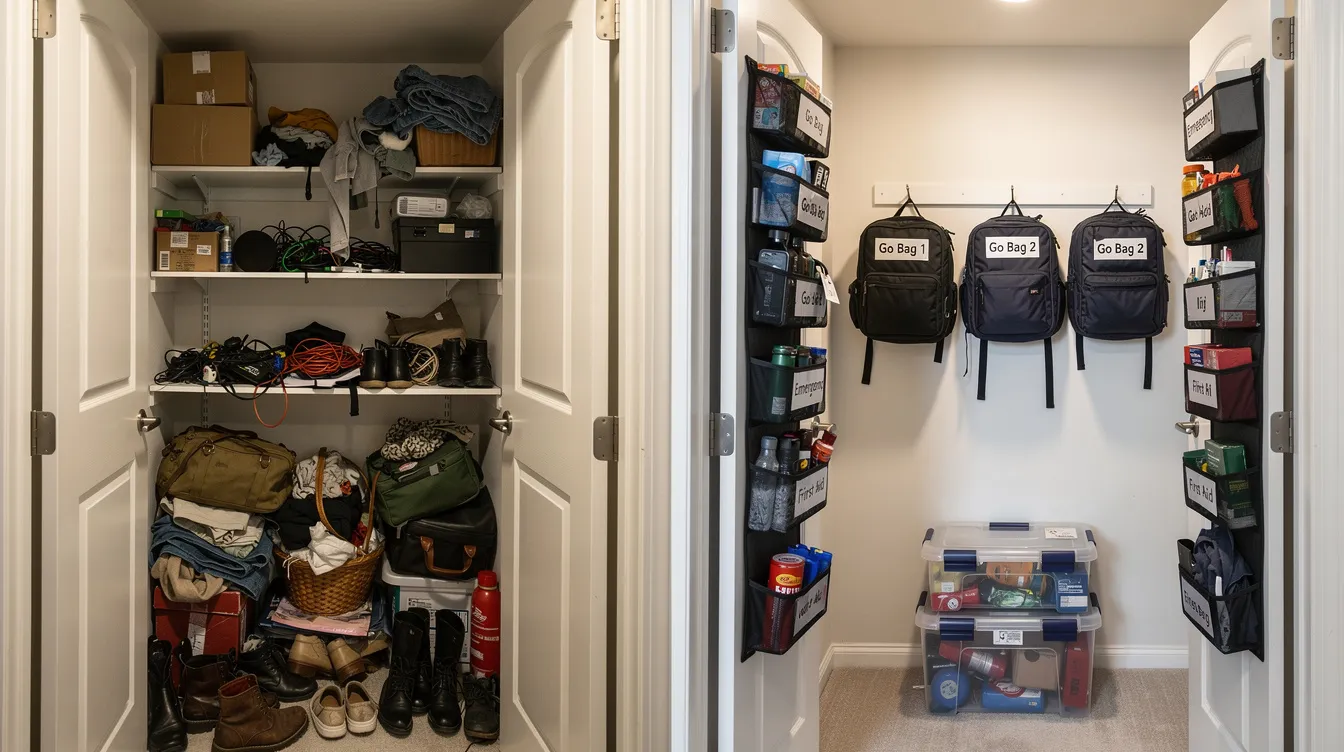
Image Guide: 10 Photorealistic Go Kit Photos That Make Preparedness Feel Real
Every image in this guide uses natural light, clean urban interiors, and real gear - no generic stock imagery. Here are the final three visual concepts completing the set of ten:
Where to Store Your Go Kits in a Small Home or Apartment
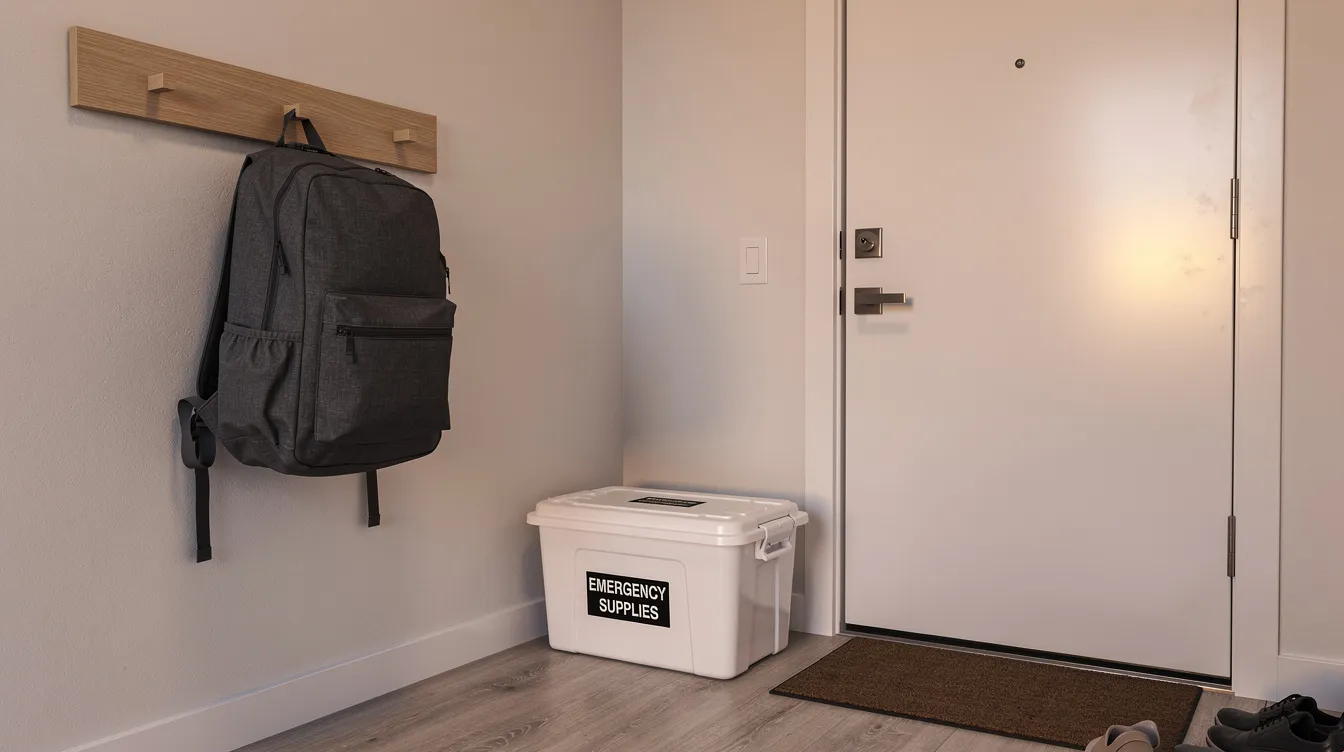
If you can't reach your go bag in 30 seconds, it's not doing its job. Accessibility matters as much as what's inside. Store emergency kits in a dry, clean location near your actual exit route.
- Keep the primary go bag near the door you'd actually use - apartment door or back stairs - on a hook or low shelf at easy lifting height.
- Never hide bags behind bikes, boxes, or deep in storage units. If you have to move three things to grab your kit, relocate it now.
- Secondary locations: under the bed (flat kit), in a car trunk, or in a desk drawer at work, each with enough basic supplies for at least 24 hours.
- Label each kit with the owner's name and last-checked date so roommates or family members know which bag is theirs.
- Use vertical storage, hooks, and under-furniture organizers to keep kits out of the way but instantly reachable.
Maintaining and Updating Your Go Kits Over Time
Go bags are not "set and forget." They require simple, regular maintenance. The agency that recommends assembling these kits - FEMA - also stresses keeping them current. Regularly check supplies and update every 6 to 12 months to maintain your go kit.
- Schedule a twice-yearly checkup (daylight saving time changes work well) to inspect expiry dates and swap seasonal clothes.
- What to check: expired food, water, medications, extra batteries, documents, children's clothing sizes, pet supplies, and electronics that need recharging.
- Replace anything past its date. Many emergency food bars and water pouches last 3–5 years, but prescription medications may need more frequent rotation - schedule this alongside regular pharmacy refills.
- Keep a simple checklist taped inside the bag or stored digitally. A full review takes 10–15 minutes.
- After real events - power outages, evacuations, severe weather - note what you used or wished you had, and update your plan accordingly. Use a NOAA weather radio to stay informed about incoming threats even when cell service is unreliable.
Non perishable food, a manual can opener (if you include canned goods in your home kit), and a filter to filter contaminated air like N95 masks should all be part of your broader emergency preparedness strategy.
FAQ: Common Questions About Go Kits and Small-Space Preparedness
How heavy should my go bag be if I live on the 10th floor?
Most adults should keep bags under 20–25 pounds, but apartment dwellers who must use stairs should aim closer to 15–20 pounds depending on fitness. Do a practice run: wear the fully packed bag and walk down and up several flights. If you're gasping by floor three, cut weight. Prioritize water, first aid, and a day supply of food first, then add comfort items only if weight allows.
Do I really need both a home emergency kit and a go bag in a small apartment?
Yes - they serve different purposes. The home emergency kit supports sheltering in place with bulk water, enough food for two weeks, and larger supplies. The go bag supports several days away from home and must be lean enough to carry. Store bulkier important items in a single home kit bin, and keep a carefully curated go bag by the door.
What's the minimum I should pack if I'm on a tight budget?
Start with a few liters of water, inexpensive calorie-dense food like peanut butter and crackers, a basic first aid kit, hand sanitizer, a flashlight with batteries, and a photocopy of key documents. Build gradually over several paychecks - lifesaving items first (water, first aid, light), comfort extras later.
How often should I rotate food, water, and medications in my go kit?
Check your go bag at least twice a year and follow manufacturer expiration dates. Most emergency food bars and water pouches last 3–5 years. Prescription medications often need more frequent rotation - sync this with your regular pharmacy refills when possible.
Should my kids have their own go bags?
School-age children can carry small, lightweight go bags with personal items: snacks, a water pouch, a comfort toy, and a family contact card with emergency phone numbers. Keep their bags well under 10–15% of their body weight. Coordinate contents with the main adult go bag so nothing essential is duplicated unnecessarily - the goal is distributing weight across family members, not creating redundancy.
Editorial note: this guide provides general preparedness information, not emergency, medical, legal, or engineering advice. Recommendations are cross-checked against public emergency-management guidance and adapted for small-space living. During an active emergency, follow your local authorities and emergency services. See our editorial standards and affiliate disclosure.