Survival Gear Kits for Small Spaces
Survival gear kits give you 72-hour readiness without demanding a basement or garage. Whether you live in a studio apartment, a tiny home, or work from a compact office, the right kit fits your space, matches your local hazards, and stays accessible when seconds matter. Below you'll find a visual guide to space-saving survival kits, a breakdown of kit types, what to look for, how to choose, and storage ideas designed for small-space living.
Photo Guide: Survival Gear Kits at a Glance
Before diving into specs and checklists, it helps to see how compact, organized gear actually looks in real small-space settings. Here are ten photorealistic setups showing what's possible-even with limited square footage.
1. Compact 72-Hour Apartment Survival Kit - Under-the-Bed Tote
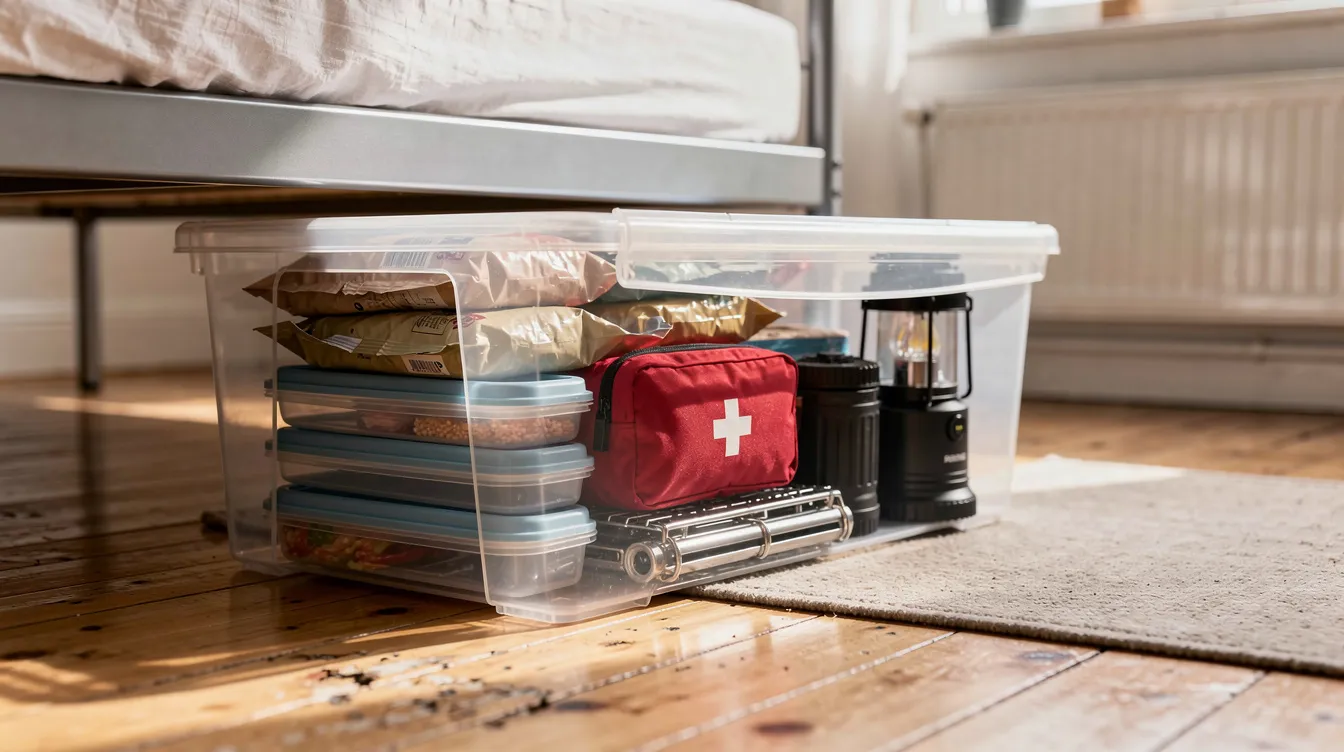
- Fits beneath a standard bed frame on a low-rolling platform.
- Covers one person for 72 hours: water, high-calorie emergency food, first aid supplies, light, and a compact cooking setup.
- Store emergency supplies in a waterproof container with desiccant packs to guard against dust and moisture.
2. Urban Go-Bag Survival Gear Kit - Door-Hook Backpack
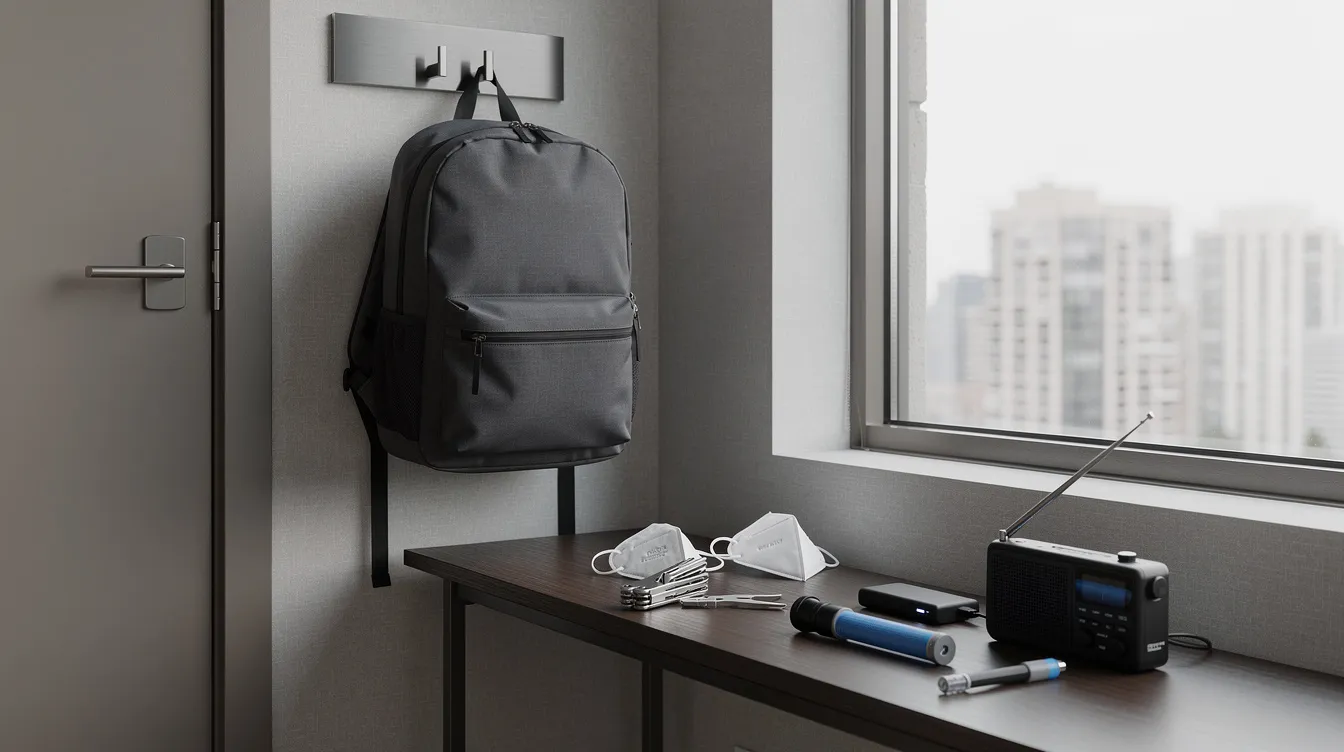
- A grab-and-go bug out bag ready for fast evacuation from apartments or offices.
- Portable water filters provide essential hydration for outdoor survival when municipal water is compromised.
- Emergency communication tools like whistles and mirrors assist in attracting rescuers if you're lost in a crowd or debris field.
3. Tiny-Home Survival Bin - Multi-Use Ottoman Storage
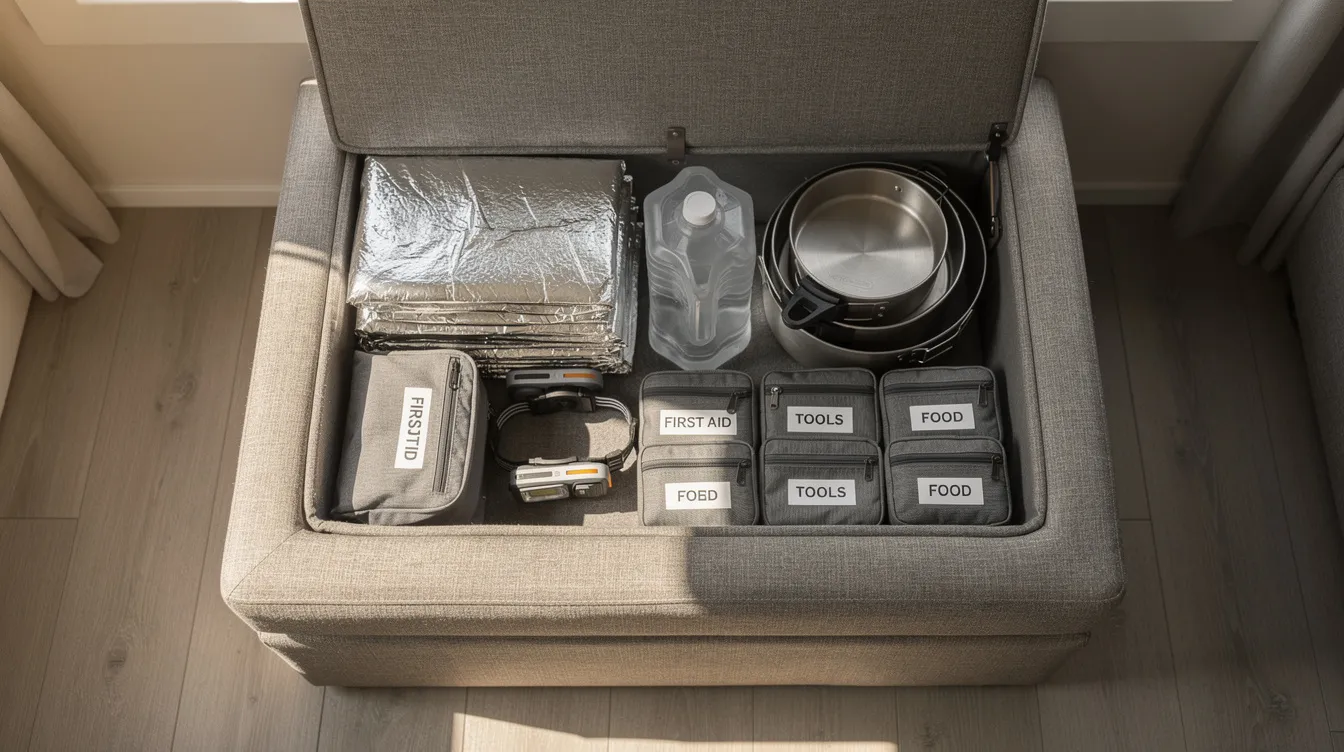
- Doubles as furniture-ideal for studio apartments and tiny houses where every item must earn its footprint.
- Emergency blankets provide insulation and warmth without taking up more than a few cubic inches.
- Shelter materials are necessary for protection from elements, and a compact tarp folds flat beneath the other contents.
4. Desk Drawer Emergency Survival Kit - For Remote Workers
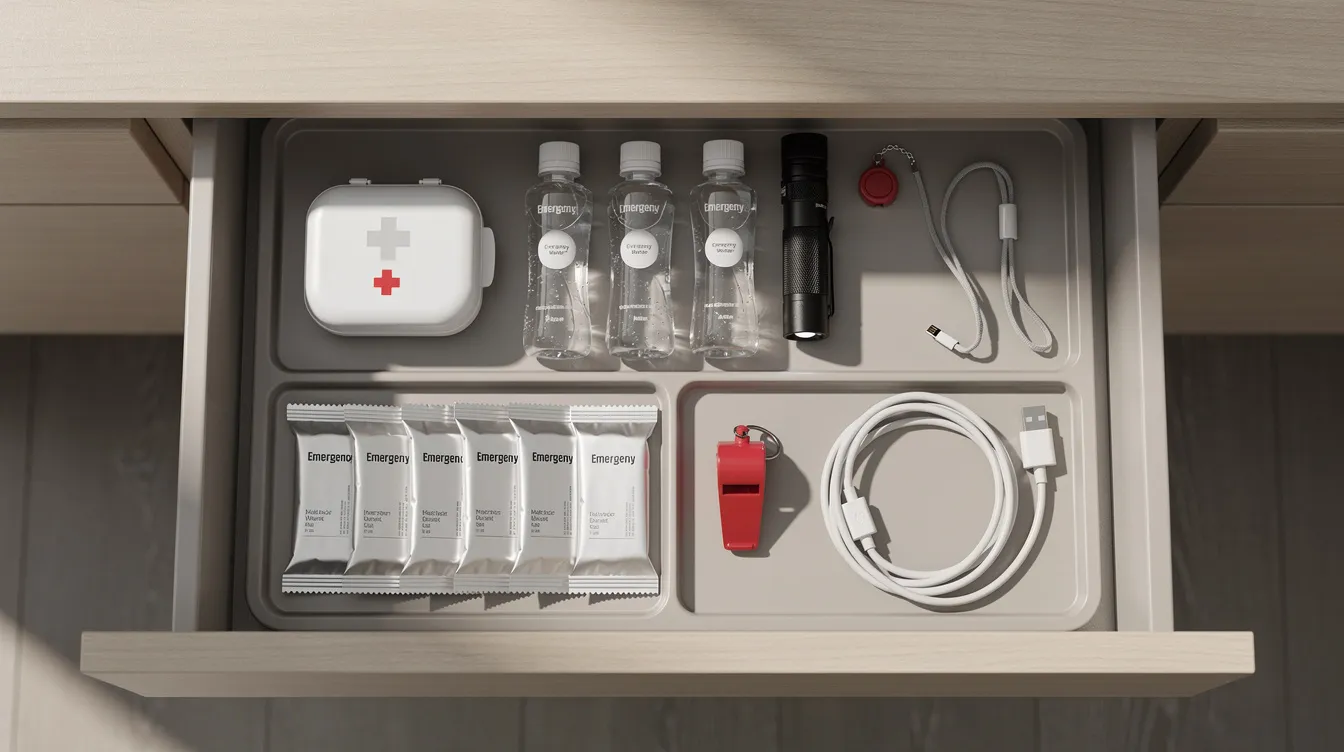
- Designed for freelancers and remote workers who need to sustain focus during power outages or earthquakes without leaving their workstation.
- Lightweight, non-perishable snacks are recommended for nutritional needs during emergencies-energy bars and sealed nut packs fit a single drawer.
- Include spare batteries in survival kits for reliable lighting equipment, especially a compact flashlight kept within arm's reach.
5. Family Closet Survival Gear Kit - Stacked Backpacks
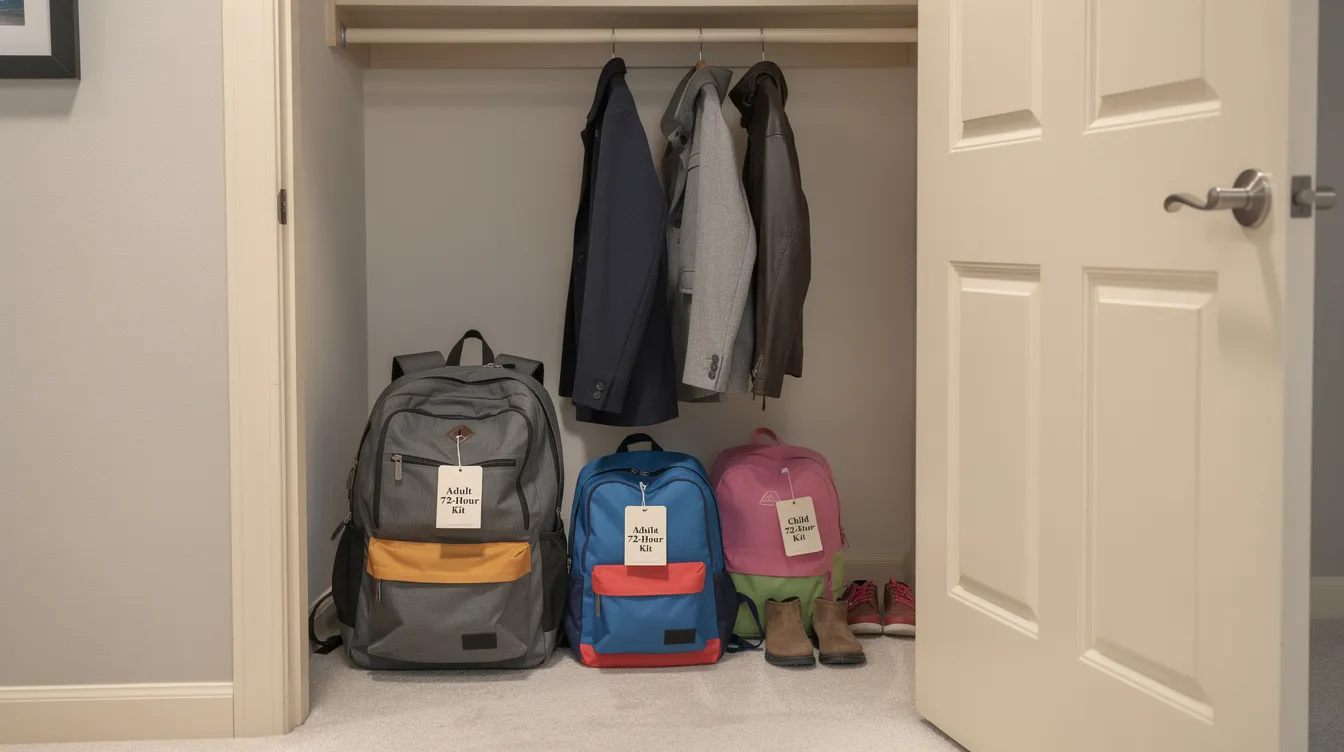
- For families in condos or small homes who can't store large bins but can line up packs in a single closet.
- Each bag is color-coded so every family member knows which one to grab, making evacuation faster and less chaotic.
- Pet-specific gear (collapsible bowls, leash, extra food) fits inside the largest adult pack or in a separate small pouch clipped to the outside.
6. Balcony Survival Kit - Weather-Resistant Box
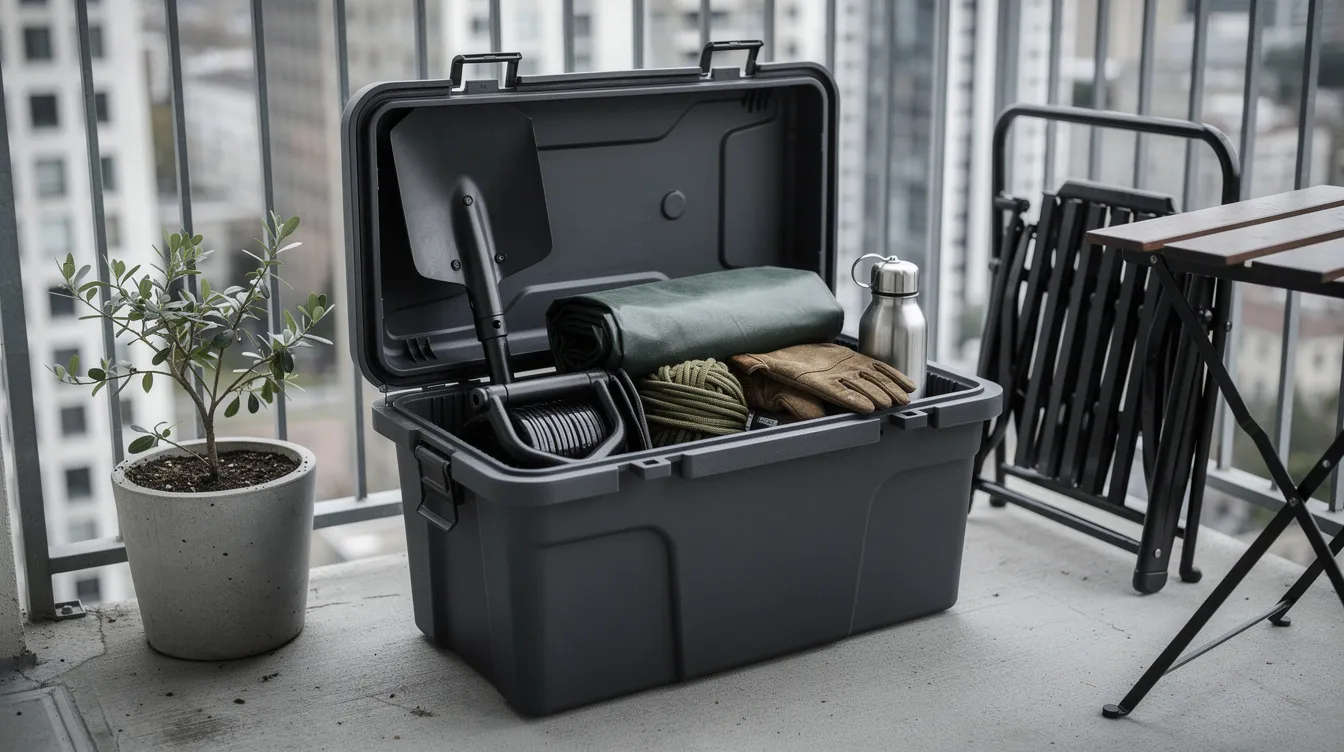
- Frees up indoor space while protecting gear from rain, wind, and UV exposure.
- Paracord, a folding shovel, and weather-rated gloves handle debris clearing and improvised shelter building.
- Use waterproof matches or lighters for reliable fire-starting in emergencies-store them in a sealed bag within the box to prevent moisture damage.
7. Car Trunk Survival Gear Kit - Slim Organizer for Urban Drivers
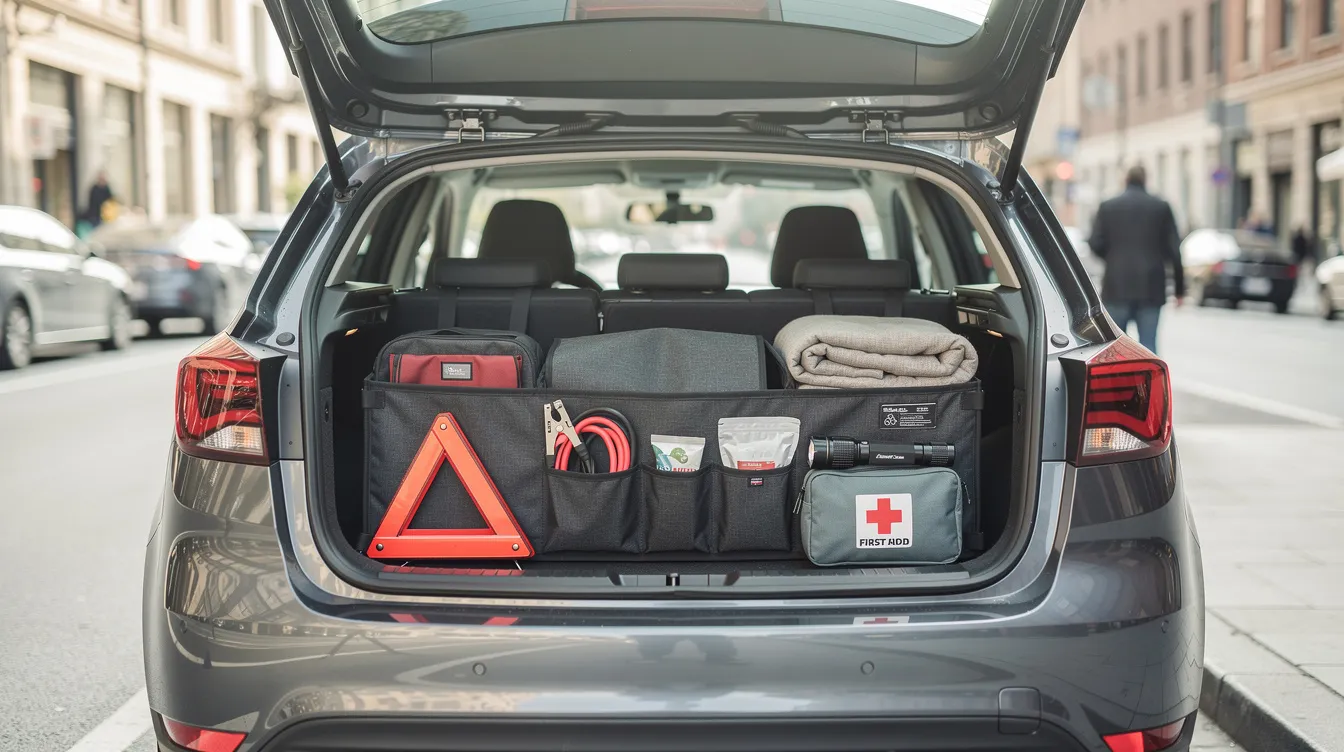
- Supports both commuting emergencies and evacuation if you need to leave the city by car.
- Fire starters are crucial for cooking and warmth if you're stranded roadside overnight in cold weather.
- High-SPF sunscreen and insect repellent protect against environmental hazards during emergencies-tuck travel-sized bottles along the organizer's edge.
8. Wall-Mounted Survival Panel - Pegboard System
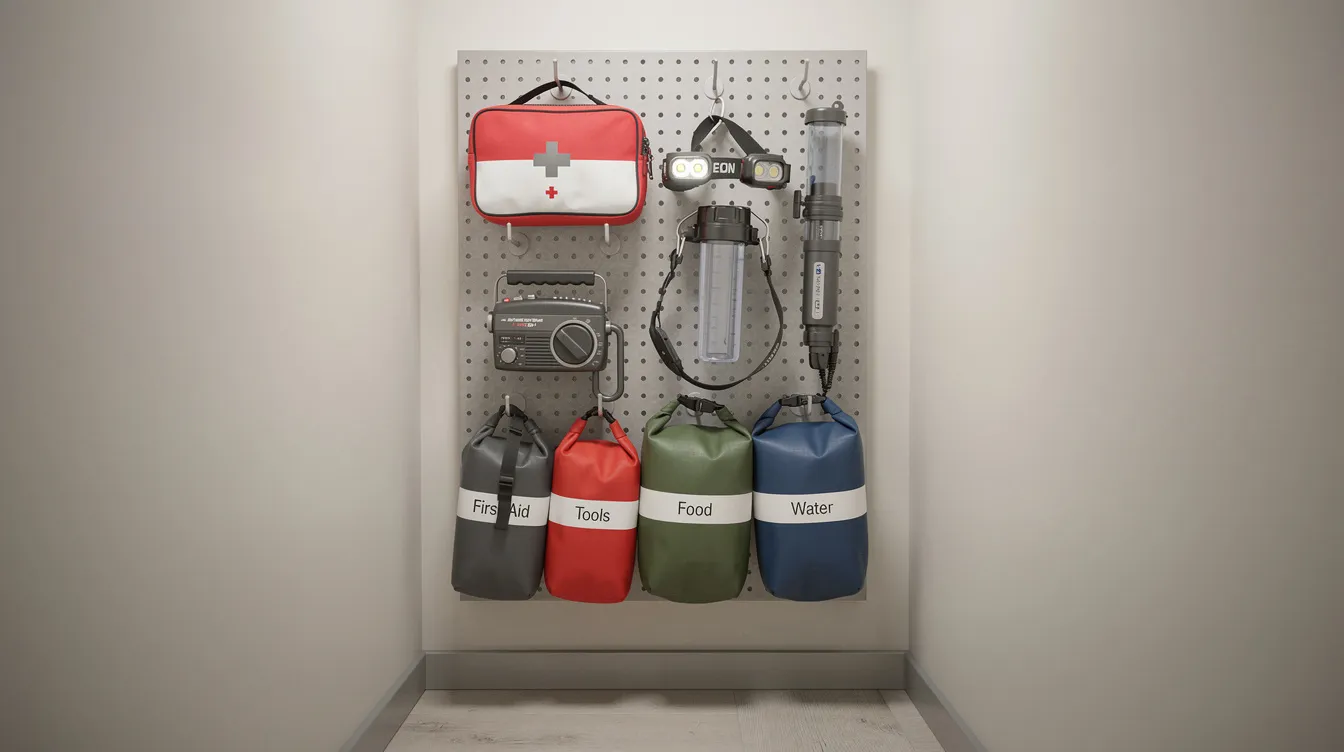
- Vertical storage for very small homes-keeps survival gear visible and grab-ready without using any floor space.
- A signaling mirror reflects sunlight for attracting attention from rescuers; hang one on the board for quick access.
- Navigation gear should include a compass, map, and GPS device-clip a small compass and a laminated local map to the lower hooks.
9. Minimalist Everyday Carry (EDC) Survival Pouch
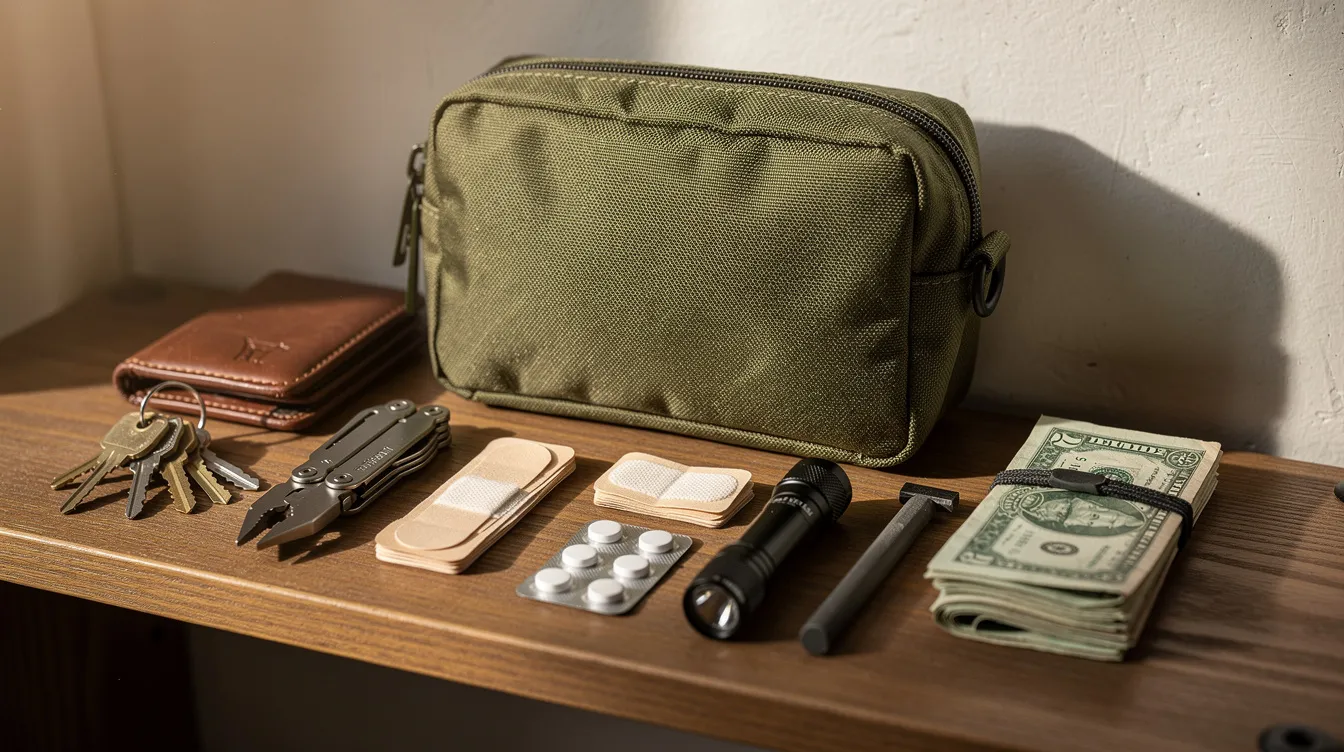
- For people who move between co-working spaces, cafés, and home but still want core survival tools on their person.
- A multi-tool can assist in various tasks including gear repair and food preparation-choose one with a blade, can opener, and screwdriver.
- Essential survival gear categories include navigation, hydration, fire, shelter, and first aid-this pouch covers fire and first aid at minimum, with the rest in your home or car kit.
10. Under-Sink Utility Survival Kit - For Water and Power Outages
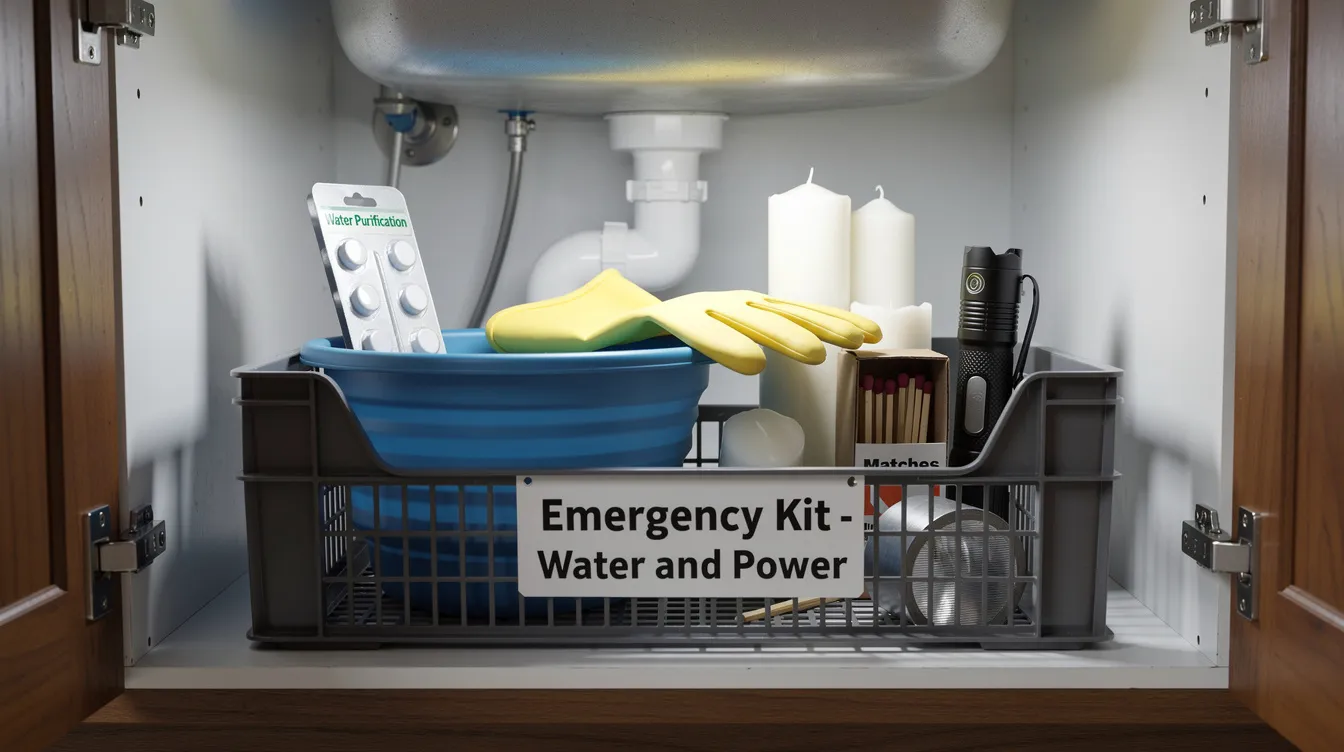
- A practical starting kit for renters who can only spare one cabinet-keep a compact emergency kit for small living spaces right where you already store cleaning supplies.
- Water purification systems are crucial for treating unsafe water sources; tablets take almost no space and treat dozens of liters.
- Water filtration systems ensure safe drinking water alongside purification tablets for redundancy in contamination scenarios.
Types of Survival Gear Kits
Survival kits come in different formats depending on where you live, how much space you have, and what emergencies you're most likely to face. Below are the five main types and how each fits into small-space life.
Everyday Carry (EDC) Survival Kits
EDC kits are ultra-compact pouches or pocket setups you carry daily-wallet-sized or small pouch, rarely more than a couple of pounds. They cover immediate needs: light, a cutting tool, first aid basics, and phone charging during blackouts. These are ideal for urban commuters and people who can't store much gear at home but want to stay prepared wherever they go. Think of them as the absolute baseline-enough to help you handle the unexpected until you reach a larger kit.
72-Hour Bug-Out Bags
Bug-out bags are designed for natural disaster preparedness, packed with enough water, food, shelter materials, first aid, and communications equipment for three days of evacuation. For apartment dwellers, weight matters: a 30–40L pack in the 25–30 lb range keeps you mobile on stairs and public transit. Residents in areas with wildfire, hurricane, or earthquake risk benefit most. These packs are the backbone of personal preparedness when staying put isn't an option.
Shelter-in-Place Apartment Kits
These kits are built for staying put during blackouts, blizzards, or public safety incidents in dense urban areas. They focus on water storage, non-perishable food, lighting, warmth, sanitation, and information (a hand-crank radio). Emergency bivvy kits provide shelter in emergencies when heating systems fail. Under-bed boxes, closet shelves, and vertical storage are typical formats-designed to blend into your home without eating up living space.
Vehicle Survival Gear Kits
Vehicle kits live in a trunk or under a seat, covering breakdowns, winter storms, and sudden evacuations. Space limits in compact cars mean you should prioritize flat, multi-use items: a folding blanket, a slim first aid pouch, reflective triangles, and sealed water pouches. They're especially useful for suburban commuters or city dwellers who park in shared garages and need an off-site extension of their preparedness plan.
Family & Pet Survival Kits
Multi-person kits bundle food, water, and safety gear for households with children and pets. Store at least three days' worth of food and water multiplied by every person and animal in the household. Break them into color-coded bags or bins so each family member has a manageable load-critical in tight spaces where one massive bin is impractical. Pet-specific additions (leashes, collapsible bowls, medications, extra food) should be packed alongside human supplies so nothing gets left behind.
What to Look For in Survival Gear Kits
The quality and design of a survival gear kit matter far more than the sheer number of items stuffed inside. Here's what separates a genuinely useful kit from one that collects dust-or worse, fails when you need it.
Compact, Efficient Packing
Kits should prioritize flat, stackable, or foldable items that fit under beds, in closets, or in car trunks. Avoid bulky, single-use gadgets; prefer multi-purpose tools and nesting cookware. Survival kits include cooking kits for outdoor meals-look for cook sets that nest inside each other and double as water-boiling vessels. Compression sacks, vacuum bags, and modular pouches are signs of good space-conscious design. Compact, organized gear improves efficiency during emergency situations, letting you find what you need in the dark without dumping everything on the floor.
Core Survival Essentials (Not Gimmicks)
The must-have categories are water, food, shelter and warmth, light, first aid, communication, and tools. First aid kits are essential for injury recovery during emergencies-don't settle for a token bandage packet. Warn against kits padded with novelty items at the expense of these essentials. According to a SafeHome national survey, only about 5% of U.S. households have a complete emergency kit meeting all recommended criteria-many people think having "some supplies" is enough, but it often isn't. Check for realistic quantities: at least one gallon of water per person per day and roughly 2,000 calories of high-calorie emergency food per person per day for 72 hours.
Durability and Shelf Life
Look for food and water with 3–5+ year shelf life and clearly printed expiration dates. Rugged pouches, tear-resistant bags, and IPX-rated flashlights indicate durable products built to last through years of storage and rough handling. Avoid bargain-bin survival tools that bend, rust, or break in cold or wet conditions. Emergency kits often include fire starters for warmth and cooking-make sure yours are sealed and weather-resistant. Pre-made kits may contain low-quality components, so inspect what's inside rather than trusting the packaging alone.
Weight and Portability
Urban dwellers may need to carry kits down several flights of stairs or across multiple blocks. A good rule: keep a 72-hour bag under 25–30 lbs for a typical adult, lighter for children or anyone with limited mobility. Adjustable, padded straps help distribute weight across the body. A slightly smaller, lighter kit you can actually carry is always better than an overloaded one you leave behind. The key is finding the right fit between comprehensive coverage and practical portability.
Organization and Labeling
Labeled pouches (first aid, power, food) and clear internal dividers mean fast access during blackouts and high-stress situations. Transparent or color-coded containers keep things tidy in small homes where the kit is partially visible. Kits that include packing lists and quick-start cards in waterproof sleeves help you audit contents at a glance and teach household members what's inside without a lengthy explanation.
Adaptability to Your Location and Hazards
Apartment dwellers in high-rises face different challenges (stairwell evacuation, limited water pressure) than rural homeowners. Emergency preparedness kits should be tailored to specific environments or disasters-earthquake-prone zones need pry bars and heavy gloves; wildfire areas need N95 respirators; hurricane corridors need tarps and window-sealing supplies. Choose kits that accept own additions and modular add-ons so you can scale up or down as hazards change with the seasons or a move to a new area.
How to Choose the Right Survival Gear Kit for Your Space
Turning those features into a decision comes down to five criteria. Work through them in order and you'll land on the right kit type, size, and configuration.
- Your Living Situation (apartment, tiny home, shared house, office) - Building type and square footage dictate format. A 400 sq ft studio calls for an under-bed tote or wall-mounted panel; a shared house with a hallway closet can hold stacked bug-out bags; a small office needs a desk-drawer set. Match the kit's form factor to the space you actually have, not the space you wish you had.
- Most Likely Emergencies in Your Area - Research local risks: earthquakes, hurricanes, blizzards, wildfires, or power grid failures. A kit weighted toward hydration and cooling makes sense in hot, wildfire-prone regions; one focused on warmth and shelter suits northern climates. Don't stock firewood-splitting gear if you live on the fourteenth floor-match your kit to your reality.
- Number of People (and Pets) You're Supporting - Multiply 72-hour needs per person: water, food, medications, and comfort items add up quickly. Decide between one large family kit and multiple smaller packs that each person can carry. DIY kits can be tailored to individual needs-building your own kits ensures higher quality gear and the right quantities for your household.
- Mobility and Physical Ability - If you have limited mobility, no vehicle, or rely on public transit, favor lighter, modular kits and shelter-in-place setups over heavy backpacks. A wheeled bin works on flat ground but not on stairs. Testing gear in real situations improves preparedness-try carrying your loaded bag down the stairwell once to see if the weight is manageable.
- Budget and Upgrade Path - Assembling a full 3-day kit for a family of four costs roughly $150–$300. If that's too much at once, start with a compact core kit covering water, food, light, and first aid, then add modular pouches (power, medical, cooking) over time. Pre-packaged survival kits save time and streamline emergency preparation, but building gradually lets you control quality and spread cost. Don't wait for a "perfect" expensive kit-start now with what you can afford and build from there.
Small-Space Storage Ideas for Survival Gear Kits
Making survival kits fit seamlessly into small homes without clutter is half the battle. Here's where to put them.
Under-Bed and Sofa Storage
Use low rolling bins or vacuum-bagged soft kits that slide under standard bed frames and sofas. Label bins on the side so contents are visible without pulling everything out. This approach is easy to set up but watch for dust and moisture-add desiccant packs inside each container and check quarterly. Store emergency supplies in a waterproof container to prevent damage from accidental spills or small leaks.
Hallway Closets and Entryways
Hang bug-out bags on sturdy wall hooks behind doors or inside closets-keeping evacuation gear near exits for fast grab-and-go access. Stack clearly labeled shoe-box-sized bins on high closet shelves for backup food and water. This is where your line of defense begins: the first thing you reach on the way out the door.
Vertical and Wall-Mounted Systems
Pegboards, over-door organizers, and wall-mounted cabinets work in very tight spaces. Group items by function (power, medical, tools) and keep a visual inventory-what you can see, you remember to maintain. This approach keeps floors clear and works especially well in studio apartments where every square foot of floor space serves double duty.
Vehicle and Off-Site Storage
Use car trunks, under-seat boxes, or storage lockers for overflow gear. The benefit of diversified locations: if your apartment becomes inaccessible, your vehicle kit still holds. Avoid storing items that degrade in extreme heat or cold (chocolate bars, certain medications, cheap batteries), and rotate those regularly-practice using your emergency gear regularly to confirm everything still functions.
Frequently Asked Questions About Survival Gear Kits
These FAQs address real questions from people in apartments, small homes, and compact offices trying to stay prepared without turning their living space into a warehouse.
How much survival gear do I really need in a small apartment?
A realistic minimum is a 72-hour supply of water (one gallon per person per day), food, and basic safety items per person. FEMA's 2024 National Household Survey found that while 69% of U.S. adults had assembled some supplies, only 34% of those could last more than two weeks. Start with one small under-bed or closet kit and scale to secondary locations like your car or office. Even a single well-stocked tote puts you ahead of most households.
Are premade survival gear kits worth it, or should I build my own?
Quality premade kits save time and ensure you don't forget essentials, but pre-made kits often lack essential items for specific emergencies and may give a false sense of security. Building your own kits lets you control component quality and tailor contents to your environment. The best approach: use a premade kit as a foundation, then customize with medications, copies of important documents, and location-specific items. Include a first aid kit in your emergency supplies regardless of which route you choose-it's the one category you cannot afford to skip.
How often should I update or rotate my survival gear kit?
Do a full check at least once a year, plus after any major life change-new baby, new pet, a move, or a change in health condition. Rotate food and water before expiration dates, recharge power banks every few months, and test-run flashlights and radios to make sure they still work. Survival gear includes cooking kits for food preparation; confirm that fuel tablets or stove canisters haven't corroded. Set a recurring calendar reminder so maintenance doesn't slip through the cracks.
Where should I keep my main survival kit in a small home?
Balance protection with accessibility. Place your primary kit near an exit but away from obvious damage points-not directly under heavy shelving that could topple in an earthquake. An entry closet floor or under the bed closest to the door are strong options for most apartment layouts. High-rise residents who've lived through earthquakes report that door-hung backpacks near exit routes are far more usable than under-bed bins when stairwell evacuation is the only way out.
What survival gear is most important if I'm on a tight budget?
Prioritize safe water (purification tablets cost a few dollars and treat dozens of liters), basic calories (sealed energy bars and non-perishable snacks), light (a durable flashlight with spare batteries), and first aid above specialized gadgets. Cost is cited as the top barrier to preparedness-52% of respondents in one survey said supplies were too expensive. Build a small essentials-only kit first, then add tools, comfort items, and redundancy over time. A $30 starter kit assembled this weekend is infinitely more useful than a $300 dream kit you never get around to putting together.
Get Started With Survival Gear Kits in Your Small Space
You don't need a garage, basement, or dedicated prep room to be ready for the unexpected-just a compact, well-thought-out survival gear kit matched to your space, your hazards, and your household. Pick one type of kit today (an under-bed 72-hour bin, a door-hung bug-out bag, or even a desk-drawer essentials set) and start building it this week. Learn more from our guides and compact kit recommendations-everything here is designed for apartments, tiny homes, and small offices where space is tight but preparedness still matters.
Editorial note: this guide provides general preparedness information, not emergency, medical, legal, or engineering advice. Recommendations are cross-checked against public emergency-management guidance and adapted for small-space living. During an active emergency, follow your local authorities and emergency services. See our editorial standards and affiliate disclosure.